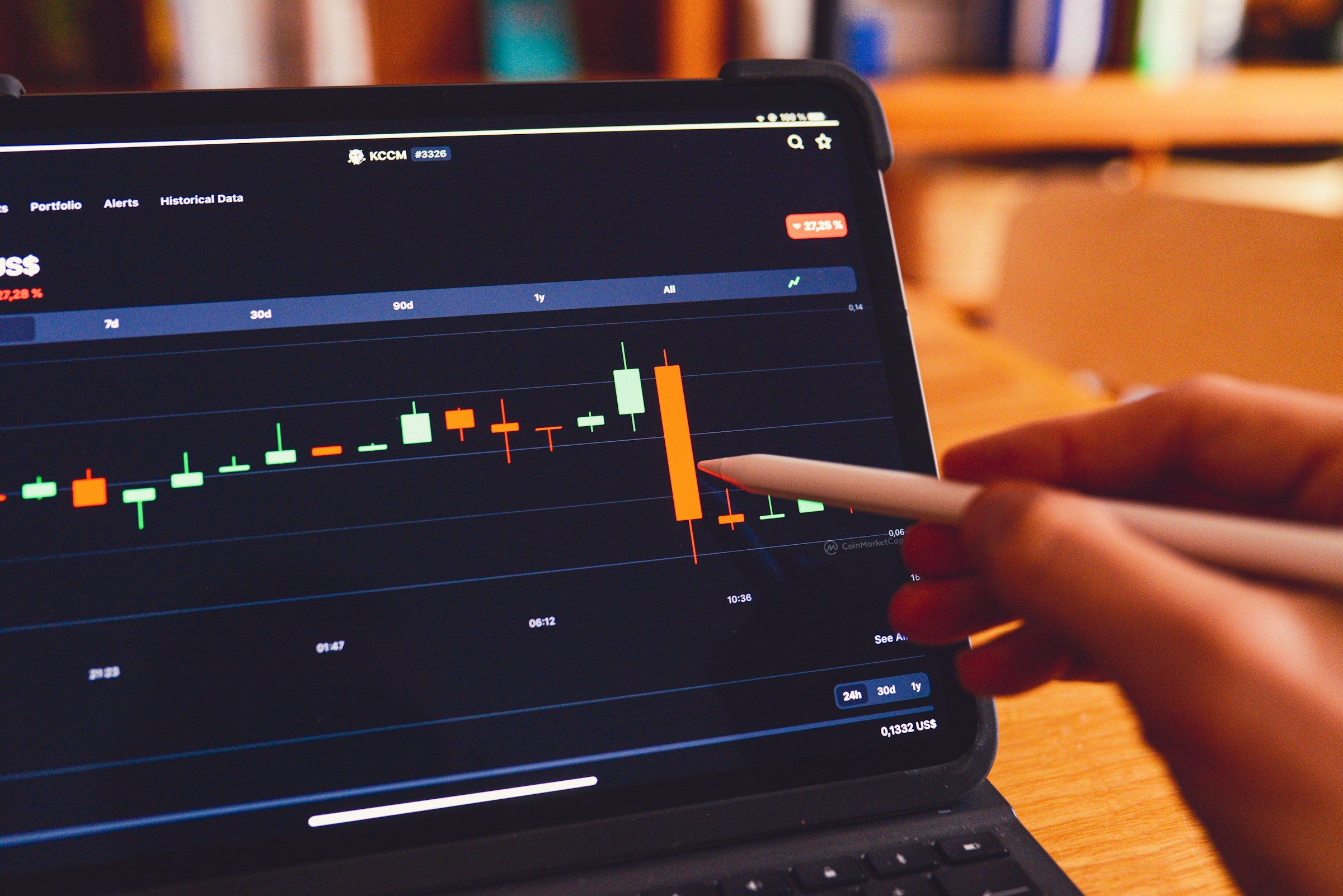
Trading Capital

Trading Capital

Safwan RamzanSafwan Ramzan

When traders ask how much stock traders make, they're really asking about survival. Because the answer depends less on market conditions and more on how you protect and grow your trading capital. Poor capital management turns promising traders into cautionary tales, while smart allocation strategies separate those who last from those who don't. This article outlines eight practical tips to help you preserve your funds, manage risk effectively, and position yourself for consistent returns, whether you're comparing funding options or searching for the right trading partner.

If you're looking to find the best prop firms and compare them efficiently, TradingPilot streamlines the entire process. Instead of jumping between websites and spreadsheets, you get clear comparisons of funding amounts, profit splits, evaluation rules, and fee structures from top proprietary trading firms in one place. This lets you make informed decisions about where to deploy your skills and which firm aligns with your trading style and capital needs.

Summary

  • Trading success depends far more on protecting capital than finding perfect entries. Research analyzing 360,000 day traders found that fewer than 20% were profitable over six-month periods, with only around 1% consistently generating abnormal profits over the long term. The differentiator wasn't account size or strategy sophistication. It was execution discipline, consistent risk management, and controlled decision-making under pressure.

  • The mathematics of drawdown recovery reveals why capital preservation matters more than aggressive growth. A 10% loss requires an 11.1% gain to recover. A 25% loss demands a 33.3% return. A 50% drawdown requires a 100% gain just to break even. According to industry analysis, 90% of traders fail due to poor capital management rather than an inability to identify profitable setups.

  • Fixed percentage risking creates automatic position scaling that protects accounts during losing streaks. When you risk 1% per trade, position sizes shrink automatically after losses and grow gradually after wins. This removes emotional escalation entirely. A trader risking 1% survives ten consecutive losses with 90% of capital intact. A trader risking 5% per trade loses 14% of their account after just three losses, and the psychological damage often compounds beyond the mathematical drawdown.

  • Scaling capital safely requires validation across diverse market conditions, not just a single profitable month. After growing an account by 10%, risk increases from 1% to 1.25%. After another 10% growth, it moves to 1.5%. Each step validates that the strategy still works at a slightly higher exposure before committing further, preventing the biggest capital killer: sudden jumps in exposure after confidence spikes.

  • Research on capital preservation preferences shows that 50% of respondents prefer stable value funds over growth optimization, reflecting a broader preference for downside protection. That same instinct applies to active trading. The trader who compounds 2% monthly for two years outperforms the trader who grows 8% monthly for six months before blowing up and restarting.

Best prop trading firms help traders compare drawdown structures, maximum position sizes, and holding-period restrictions across firms, matching capital-preservation approaches to firms whose rules actually accommodate them rather than forcing repeated evaluation failures due to incompatible risk parameters.

How Much Trading Capital Do You Need

Man Trading - Trading Capital

You don't need a large account to succeed as a trader. What you need is disciplined behavior, consistent risk management, and a strategy that fits your psychology. Traders fail because of poor execution and emotional decision-making, not because their accounts are too small.

The belief that bigger capital guarantees better results is one of the most damaging myths in trading. It persists because social media highlights six-figure accounts, screenshots of massive profits, and funded trader payouts. New traders see these examples and assume capital is the main barrier.

The truth is simpler and harder to accept: larger accounts magnify whatever habits you already have. A trader with poor discipline can lose $100,000 just as quickly as $1,000. The account size changes the stakes, not the outcome.

Most Traders Fail Due to Behavior, Not Lack of Capital

Brad M. Barber and Terrance Odean analyzed approximately 360,000 day traders using data from the Taiwan Stock Exchange. Less than 20% were profitable over six-month periods, and around 1% consistently generated abnormal profits over the long term. The study didn't identify account size as the primary differentiator. Successful traders demonstrated better execution, stronger discipline, and more consistent decision-making. More capital does not automatically create profitable behavior.

Professional traders evaluate performance using metrics like maximum drawdown, profit factor, risk-adjusted return, and expectancy. Notice what's missing: account size. A trader with $5,000, consistent risk management, and controlled drawdowns often has a stronger foundation than someone with $50,000, poor position sizing, and uncontrolled losses.

According to NewTrading.io, you can start trading with a minimum of $500, but starting capital matters far less than how you manage it.

Why Larger Accounts Can Create Larger Mistakes

Behavioral finance research shows that traders often become more aggressive as account size increases. Common problems include overconfidence, larger position sizes, excessive leverage, and emotional decision-making. A trader risking 10% per trade loses $100 on a $1,000 account and $10,000 on a $100,000 account. The behavior remains the problem. The account size simply magnifies the consequences.

ForTraders report that 1–2% risk rules are standard among professionals because they protect against catastrophic losses while allowing compounding to work over time. Traders who ignore position-sizing rules blow up their accounts regardless of their starting capital.

Evaluating Prop Firms for Funded Capital

The industry increasingly values skill and discipline over personal account size, which is why proprietary trading firms now evaluate risk management, consistency, and adherence to rules before allocating larger capital pools.

If you're looking to access funded capital without risking your own, TradingPilot helps you compare prop firms based on drawdown structures, evaluation rules, and profit splits that match your trading style, reducing the hidden cost of repeated failed evaluations that stem from poor firm-trader fit.

But here's what most traders miss: the real challenge isn't about how much you start with.

Related Reading

Why Capital Management is Important in Trading

Person Working - Trading Capital

It's about protecting your ability to stay in the game. Without a disciplined approach to capital, even the best strategy becomes irrelevant because you won't have the resources left to execute it when market conditions finally align with your edge. Capital management ensures that no single mistake or losing streak ends your trading career before you've had a chance to develop real skill.

Every Dollar Lost Makes Recovery Exponentially Harder

The mathematics of drawdown recovery reveals a harsh truth most traders discover too late. Lose 10% of your account, and you need an 11.1% gain to break even. Lose 25%, and you need a 33.3% return to break even. Lose 50%, and you're now facing a 100% gain requirement just to get back to where you started.

According to FinKuber Capital, 90% of traders fail due to poor capital management, not because they can't identify profitable setups. A few oversized positions can create a recovery challenge that takes months or years to overcome, while professional traders prioritize capital preservation over profit generation.

Poor Capital Management Creates Constant Psychological Pressure

When too much capital sits exposed on a single trade, every price movement becomes emotional. Every pullback feels threatening. Every losing trade feels personal. This psychological pressure forces traders into irrational decisions:

  • Moving stop-losses mid-trade

  • Revenge trading after losses

  • Increasing position sizes out of frustration

  • Abandoning carefully constructed trading plans

At that point, the market isn't the biggest threat anymore. The trader's own behavior becomes the risk, and once emotions take control, recovery becomes nearly impossible because discipline has already collapsed.

Losing Streaks Are Guaranteed

No strategy wins all the time. Even consistently profitable traders experience four, eight, sometimes ten losing trades in a row. The difference between professionals and failed accounts isn't avoiding losing streaks; it's surviving them with enough capital intact to continue operating. Effective capital management frameworks assume losses are unavoidable and build position-sizing rules to ensure that a bad week doesn't destroy an account.

When traders choose prop firms without understanding how drawdown structures align with their strategy's expected volatility, they often fail evaluations not because of poor trading decisions, but because the firm's rules were incompatible with their approach from the start.

TradingPilot helps traders compare firms based on drawdown policies, evaluation rules, and profit splits that align with their actual trading behavior, reducing the hidden cost of repeated failed evaluations stemming from choosing firms with incompatible risk parameters.

One Oversized Trade Can Erase Months of Progress

It takes dozens of disciplined trades to build meaningful gains. One reckless position can destroy them all. This pattern recurs across trading communities: entire profitable months are erased in two sessions because capital exposure isn't controlled. Many traders spend years searching for the perfect entry signal while ignoring the factor that ultimately determines survival, protecting the engine that makes future profits possible.

That engine is your capital, and without it, even perfect market timing becomes worthless. But knowing capital management matters is different from knowing how to apply it when real money is on the line.

8 Practical Tips to Use Your Trading Capital Wisely

Stuff Laying - Trading Capital

Application separates traders who understand capital management from those who survive it. The difference isn't theoretical knowledge; it's behavioral discipline under pressure when real positions are open and account balances fluctuate. What follows are eight specific actions that protect capital when emotion runs highest.

1. Define Your Risk Before the Trade Exists

The fastest path to capital destruction starts with uncertainty. When you don't know your exit point, maximum loss, or whether the trade fits your plan before entry, you've already surrendered control to emotion. Professional risk frameworks emphasize pre-trade clarity because decisions made during live positions are contaminated by hope and fear.

Before every trade, answer four questions:

  • Entry price

  • Stop-loss level

  • Maximum dollar loss

  • Risk-to-reward ratio

If you can't answer all four with precision, the position doesn't belong in your account. This isn't perfectionism; it's the minimum standard for intentional capital allocation.

2. Keep Position Sizes Small Enough to Survive Streaks

Blown accounts rarely result from a single catastrophic loss. They collapse under the cumulative weight of oversized positions during inevitable losing streaks. Essential trading tips from Tickerly recommend risking only 1-2% of account equity per trade because position sizing determines survival more than entry timing ever will.

Consider two traders experiencing ten consecutive losses.

  • Trader A risks 5% per trade and suffers a 40% drawdown.

  • Trader B risks 1% per trade and loses less than 10%.

Identical strategy results, radically different account outcomes. The variable that mattered wasn't skill; it was sizing discipline.

3. Stop Trying to Recover Losses Quickly

The most dangerous trading happens immediately after a loss. The psychological need to "get it back" drives traders to increase position size, accept lower-quality setups, and trade more frequently. All three behaviors accelerate capital destruction rather than reverse it.

Capital preservation principles recommend the opposite response.

  • Reduce size

  • Become more selective

  • Prioritize survival over recovery

Trying to recoup losses quickly turns a manageable drawdown into an account-threatening spiral. When you're in a hole, the first rule is simple: stop digging.

4. Avoid Over-Leveraging Your Account

Leverage attracts traders by magnifying potential profits. What gets overlooked is how it transforms normal market volatility into existential threats to accounts. A 2% adverse move becomes a 10% loss when you're using 5x leverage, and suddenly you're fighting for survival instead of managing a routine pullback.

Before increasing leverage, ask two questions:

  • Can my account comfortably absorb this loss?

  • Would I still take this trade without leverage?

If either answer is no, the position size exceeds your actual conviction. Leverage doesn't create opportunity; it reveals whether you've mistaken hope for edge.

5. Implement a Daily Loss Limit

Most accounts aren't destroyed by the first bad trade of the day. They're destroyed by the fourth, fifth, and sixth trades that follow, each one an attempt to fix what came before. Professional risk systems recommend predefined daily loss limits because they interrupt emotional decision-making before it compounds.

Set a maximum daily loss at 3% of your account. When reached, stop trading, review what happened, and return tomorrow. This simple rule prevents frustration from becoming financial damage. The market will be there tomorrow, but only if your capital survives today.

6. Accept Missed Opportunities Without Regret

Chasing trades damages capital as effectively as losing trades. When you enter late, chase breakouts, or force setups that aren't there, you're paying a premium for impatience. Capital preservation principles emphasize accepting missed opportunities because markets constantly create new setups, whereas lost capital requires exponentially larger gains to replace.

Missing a trade costs nothing. Your account balance remains unchanged, your risk capacity intact. Forcing a trade to avoid feeling left out costs real money and real opportunity. The difference between profitable traders and everyone else often comes down to this: knowing when to do nothing.

7. Calculate Position Size Before Every Entry

Most traders don't realize how much capital they're risking until the damage appears in their account balance. This gap between intention and reality creates the recurring problem throughout this discussion: positions that feel reasonable but violate every risk rule you claim to follow.

Best prop trading firms help traders calculate position size, determine maximum loss, and measure leverage exposure before entry, rather than after the damage is done. Instead of estimating risk in your head and hoping you're close, you see the exact account impact of every position. This visibility transforms risk management from aspiration into enforceable discipline.

The Importance of Position Sizing

Suppose you have a $10,000 account and spot an attractive setup. Without calculations, you might accidentally expose 8-10% of your account to one trade. Using proper position-sizing tools, you instantly see the actual risk percentage, dollar exposure, and whether the trade violates your rules. This directly addresses the biggest capital management failure: oversized positions disguised as reasonable risk.

8. Focus on Survival, Not Perfection

You don't need to avoid every loss to succeed at trading. You need to avoid losses large enough to threaten your ability to continue. Many professional traders view survival as the foundation of compounding because profitable opportunities only matter if you still have capital available to take them.

Maintaining a minimum 2:1 risk-reward ratio helps ensure that even with a 50% win rate, traders can remain profitable over time. This isn't about perfection; it's about mathematical sustainability. Define risk before entry, risk only small percentages per trade, avoid overleveraging, stop revenge trading, use daily loss limits, accept missed opportunities, and calculate position size before every trade.

Prioritizing Capital Preservation Over Strategy

Most traders spend years searching for better strategies. The evidence consistently shows that capital preservation, position sizing, and risk control determine long-term survival more than the search for perfect setups. Strategy matters, but only if you protect the engine that enables future profits.

But knowing these rules and actually following them when money is on the line are two completely different challenges.

Related Reading

  • Futures Options Trading

  • Fixed Income Derivatives Trading

  • Day Trading Leverage

  • Leverage In Forex Trading

  • Trading Futures Vs Stocks

  • Trading Futures Vs Options

  • Initial Margin Vs Variation Margin

  • Leverage Stock Trading

  • Best Time Frame For Crypto Trading

  • Ai Futures Trading

  • Crypto Trading Profit

10 Capital Management Strategies for Beginners

People Discussing - Trading Capital

Capital management strategies don't just protect your account. They create the conditions where learning becomes possible, where bad days don't turn into career-ending weeks, and where you can trade long enough to develop the judgment that only comes from surviving real market conditions.

1. Use Fixed Percentage Risking

The simplest capital management approach is also one of the most powerful: risk the same percentage of your account on every trade, regardless of how confident you feel.

When you risk 1% or 2% per trade, your position sizes automatically scale with your account. If you have $5,000 and risk 1%, your maximum loss per trade is $50. When your account grows to $7,000, that same 1% becomes $70. When it drops to $4,000, risk decreases to $40.

This creates a natural circuit breaker. After a series of losses, your position sizes shrink automatically, giving you breathing room to reset without depleting capital. After wins, sizes grow gradually rather than jumping recklessly.

Most traders who blow up accounts don't lose because their strategy failed. They lose because they risked 10% on a trade that felt certain, then 15% trying to recover, then 25% in desperation. Fixed percentage risk removes that emotional escalation entirely.

2. Preserve Capital Before Seeking Growth

Beginners obsess over how much they can make. Professional traders obsess over how much they can lose. The question "How much can I lose if I'm wrong?" should precede every entry. Not because you expect to be wrong, but because the market doesn't care about your expectations.

Before entering any position, calculate your maximum loss. Then ask whether your account can comfortably absorb it. If a single trade would create stress, anxiety, or force you to watch every tick, the position is too large.

Capital preservation isn't pessimism. It's realism about the fact that you'll often be wrong, and survival depends on keeping those losses manageable enough that recovery remains realistic rather than requiring a miracle performance.

3. Diversify Capital Allocation

Putting 20% of your account into a single position feels bold. It's actually just concentration risk disguised as conviction.

When you spread risk across multiple opportunities instead of loading everything into one trade, a single bad outcome becomes less damaging to overall performance. You're not betting your week on one setup working perfectly.

This doesn't mean taking random positions to fill space. It means that when you identify multiple valid setups, you allocate controlled risk to each rather than choosing one and hoping it carries you through the entire month.

4. Set a Maximum Drawdown Limit

A drawdown is the decline from your account's peak value. Setting a maximum acceptable drawdown creates a circuit breaker before serious damage occurs.

Many traders decide to stop trading and review their approach if their account declines 10% or 15% from its highest point. This isn't admitting defeat. It's recognizing that continuing to trade while losses accumulate often leads to emotional decision-making that accelerates the decline.

Account blowups rarely happen because of one bad trade. They happen because traders keep taking on more risk while losses pile up, convinced that the next trade will turn everything around. A drawdown limit interrupts that cycle before it becomes irreversible.

5. Use Position Sizing Instead of Emotions

When you determine position size based on excitement, confidence, or fear of missing out, results become wildly inconsistent.

Position sizing should be calculated using three inputs: your account size, your stop-loss distance, and your risk percentage. This removes emotion from the decision entirely.

If your account is $10,000, you risk 1%, and your stop-loss is 50 cents away from your entry, you can buy 200 shares. The math doesn't care how you feel about the trade. It only cares about protecting your capital according to the rules you set when thinking clearly.

6. Maintain a Capital Reserve

Experienced traders rarely commit 100% of their available capital. They keep a portion in reserve, creating flexibility that becomes valuable when opportunities appear or drawdowns occur.

When every dollar is already deployed, you lose the ability to take advantage of new setups. You also increase psychological pressure, because there's no cushion, no room for error, no space to think clearly.

A reserve doesn't need to be large. Even keeping 20% uncommitted gives you options when the market moves unexpectedly or when you need to step back without feeling forced to close positions prematurely.

7. Increase Size Gradually

The fastest way to give back gains is to increase position size too quickly after a few wins.

You win three trades in a row, feel invincible, double your position size, and suddenly one normal loss wipes out weeks of careful progress. This pattern repeats endlessly because winning creates overconfidence faster than experience creates wisdom.

Better approach: scale position sizes gradually as your account equity increases. If you started risking $50 per trade with a $5,000 account, keep risking 1% as the account grows rather than jumping to $200 per trade because you had a good week. Growth compounds when you protect it, not when you bet it.

8. Match Capital Management to Trading Style

Day traders and swing traders face different risks, which means they need different capital management approaches. Day traders often use strict daily loss limits and smaller risk per trade because they're making multiple decisions under time pressure. A 1% risk per trade with a 3% daily loss limit creates clear boundaries.

Swing traders hold positions longer, which requires wider stop losses and typically smaller position sizes to account for overnight risk and broader price movement. Their capital management needs to accommodate multi-day volatility rather than intraday noise.

Your capital management should support your strategy, not conflict with it. If your rules make it impossible to execute your approach properly, one of them needs to change.

9. Use Tools to Calculate Risk Before Every Trade

Most beginners don't lose money because they can't find trades. They lose money because they miscalculate risk and discover they were exposed to far more than intended, only after the position moves against them.

Calculating proper position size, understanding maximum dollar risk, and evaluating leverage exposure before entering prevents this entirely. When you know exactly what you're risking beforehand, you can adjust position size to match your rules rather than hoping the trade works out.

Aligning Prop Firm Rules With Your Strategy

The problem isn't finding this information. The problem is that most traders choose prop firms based on profit splits or evaluation costs without checking whether the firm's drawdown rules, position limits, and risk parameters actually accommodate their trading behavior. You can manage capital perfectly and still fail an evaluation if the firm's rules conflict with the natural volatility of your strategy.

Best prop trading firms allow you to filter by maximum drawdown tolerance, allowed holding periods, and strategy restrictions, so you're comparing firms based on whether their rules match how you actually trade, not just which sounds cheapest. This reduces the hidden cost of repeatedly failing evaluations at firms that were never compatible with your approach in the first place.

10. Track Capital Efficiency, Not Just Profits

Two traders can earn $5,000 in a month. The one who risked $500 to make it has a stronger long-term approach than the one who risked $5,000.

  • Beginners focus on account growth and winning trades.

  • Professional traders also monitor drawdown percentage, risk-to-reward ratios, capital utilization, and risk-adjusted returns.

These metrics reveal whether you're growing your account through skill and discipline or just getting lucky while taking excessive risk. Luck runs out. Discipline compounds.

The real test isn't whether you can grow capital when everything goes right. It's whether you can protect it when conditions turn against you, and whether your growth rate justifies the risk you're taking to achieve it.

How to Scale Capital Safely as You Grow in 10 Steps

Person Working - Trading Capital

Scaling capital safely isn't about increasing position size when you feel confident. It's about validating performance under different conditions, then expanding exposure in controlled increments tied to measurable consistency rather than emotion. The traders who compound wealth do it through structured progression that respects both opportunity and fragility.

1. Scale Only After Consistent Performance (Not One Lucky Month)

The most dangerous moment in trading is right after your first profitable month. You feel validated. You want to press the advantage. But one winning streak doesn't prove your strategy works across market conditions; it just proves you got lucky during a specific volatility regime.

Professional capital scaling requires 2-3 months of consistent profitability, stable drawdowns, and repeatable execution. That means your win rate, average loss size, and maximum drawdown should remain within predictable ranges across different weeks. If your results swing wildly from month to month, you're trading randomness for skill.

Scaling too early creates a false sense of competence. When volatility shifts or correlation patterns change, the account breaks because the foundation was never tested. You need proof that your edge survives different market personalities before you risk more capital on it.

2. Increase Size Gradually (Not Suddenly)

Safe scaling follows step-based growth, not emotional jumps.

  • Start with a $10,000 account, risking 1% per trade.

  • Once you grow the account by 10%, increase the risk to 1.25%.

  • Grow another 10%, move to 1.5%.

Each step validates that your strategy still works at a slightly higher exposure before you commit further.

This prevents the biggest capital killer: sudden jumps in exposure after confidence spikes. A trader who goes from risking $50 per trade to $200 overnight hasn't just quadrupled position size; they've quadrupled emotional pressure. Even small increases compound risk dramatically if done too fast, turning manageable losses into account-threatening drawdowns.

3. Scale Risk, Not Just Account Size

Many traders think scaling means trading bigger lots, increasing leverage, or taking more positions simultaneously. But safe scaling focuses on controlled risk expansion rather than capital exposure. There's a difference between doubling your position size and doubling your actual dollar risk per trade.

What to scale:

  • Position size gradually

  • Number of trades carefully

  • Exposure per setup based on validation

What not to scale too early:

  • Leverage multiples

  • Revenge trading frequency

  • Correlated positions that create hidden concentration risk

Your risk percentage should expand more slowly than your confidence does.

4. Respect Drawdowns Before Scaling Up

A critical rule used in professional capital allocation: never scale during a drawdown. If your account is down from its peak:

  • Reduce size

  • Reduce frequency

  • Tighten risk limits

This is when discipline matters most, and it's exactly when most traders do the opposite.

Scaling during losses compounds emotional decision-making rather than skill. You're not thinking clearly about probabilities; you're thinking about recovery. This is one of the fastest paths to account failure because you're layering increased exposure onto a period where your strategy is already underperforming.

5. Use Fixed Risk Bands (Instead of Emotional Decisions)

A structured scaling system uses risk bands that remove discretion.

  • Conservative phase: 1% risk per trade.

  • Growth phase: 1.5% risk per trade.

  • Aggressive phase: 2% risk per trade.

Each stage is only unlocked after performance validation, not when a trade "feels good" or you're "on a winning streak."

This helps eliminate the most dangerous phrases in trading: "I should size up now" or "This setup looks perfect." Those aren't strategic decisions; they're emotional reactions. Risk bands force you to prove consistency before expanding exposure, which protects you from your own overconfidence.

6. Scale Across Time, Not Just Capital

Safe scaling isn't only about increasing size. It also means accumulating more data, more trades, and more validated setups across different market conditions. A strategy that works beautifully during low volatility might collapse when VIX spikes or when correlation structures shift.

Increase capital exposure only when your strategy performs across trending markets, choppy ranges, and high-volatility environments. Results need to be stable over time, and risk metrics need to remain consistent. If your edge only works in one type of market, you don't have an edge; you have a conditional pattern that will eventually fail.

7. Avoid the Recovery Scaling Trap

One of the most dangerous patterns: losing money, then increasing size to recover faster. This is how small drawdowns become account blow-ups. The psychology makes sense (you want to get back to break-even quickly), but the math destroys you because you're now risking more during the exact period when your judgment is compromised.

Scaling is for growth, not recovery. If you're trying to recover losses, scaling should be paused and risk reduced. You need to rebuild confidence and consistency first, then expand exposure once you're profitable again. Recovery requires patience, not aggression.

8. Keep Risk Per Trade Constant Relative to Equity

Even when scaling up, your percentage risk discipline should remain stable. If you risk 1% at $10,000, you should still risk roughly 1% at $12,000, not 3% just because the account grew. Most account blowups occur during scaling phases, not startup phases, because traders allow their risk percentage to drift upward as capital increases.

This is where position sizing discipline separates professionals from amateurs. The amateur sees a bigger account and thinks, "I can afford to risk more now." The professional sees a bigger account and thinks, "I need to protect more now." The difference in mindset determines who survives long enough to compound.

9. Use Data, Not Emotion, to Decide When to Scale

Scaling should be based on win rate stability, drawdown behavior, expectancy consistency, and trade execution quality. Not confidence, recent wins, or "feeling ready." Your trading journal should show clear evidence that your edge is repeatable before you expand exposure.

Track metrics like: 

  • What's my average win vs. average loss?

  • How many consecutive losses can I handle before my strategy breaks?

  • What's my maximum drawdown across different market conditions?

If you can't answer these questions with data, you're not ready to scale. You're guessing, and guessing with more capital is just expensive guessing.

10. Match Your Scaling Plan to Firm Rules Before You Start

The biggest scaling mistake is increasing size without understanding how your prop firm's rules interact with larger positions. A firm with a 10% maximum drawdown limit becomes far more restrictive when you're trading $100,000 instead of $10,000, because the same percentage move now represents a much larger dollar loss that can breach your limit faster.

Most traders choose prop firms based on profit splits or evaluation costs, then realize too late that the drawdown structure doesn't accommodate their scaling plan. A firm that allows trailing drawdowns might support aggressive scaling, while a firm with static drawdown limits forces you to scale more conservatively or risk hitting your threshold during normal volatility.

Scaling Safely Within Firm Risk Parameters

Best prop trading firms let you compare how different firms' drawdown rules, profit targets, and leverage limits affect your ability to scale safely, so you're not forced to restart evaluations every time your position sizing outgrows your firm's risk parameters.

The real test of capital management isn't how you grow during winning streaks. It's whether you can protect what you've built when the market turns against you, and whether your discipline holds when every instinct tells you to press harder.

But growing capital safely is only half the equation. The other half is knowing how to think about capital in the first place.

How to Use the Capital Preservation Mindset

Man Working - Trading Capital

Capital preservation thinking starts with a question most traders never ask: "What's the maximum I can afford to lose on this trade and still trade tomorrow?" If you can't answer that before entering a position, you're not preserving capital. You're gambling with it. The shift from "how much can I make" to "how much can I lose" sounds simple, but it rewires your entire approach to position sizing, stop placement, and trade selection.

Calculate Your Survivability Threshold First

Before analyzing any setup, define your account's survivability floor. This is the capital level below which your trading becomes psychologically or strategically impossible. For most traders, that's 20-30% below current account value. If you're trading a $10,000 account, dropping to $7,000 might trigger emotional decision-making or force you into positions too small to execute your strategy effectively.

Once you know this floor, work backward. If your threshold is $7,000 and you're at $10,000, you have $3,000 of total risk capacity across all open positions and future trades. Divide that by your expected number of concurrent positions to find your per-trade risk ceiling.

This math forces uncomfortable clarity. According to PSCA's 2025 capital preservation research, 50% of respondents prefer stable value funds in their plan's lineup, reflecting a broader preference for downside protection over growth optimization. That same instinct applies to active trading. You can't compound gains if you've already destroyed the foundation.

Build Position Size Around Loss Tolerance, Not Conviction

The capital preservation mindset rejects the idea that strong conviction justifies larger positions. Your confidence in a trade has no mathematical relationship to its probability of success. Instead, size every position based on what you can afford to lose if you're completely wrong. If your survivability threshold allows $100 in risk per trade, that's your ceiling, whether you're 60% or 95% confident in the setup.

This approach protects against the most common capital leak: scaling risk with emotion. When traders feel certain about a trade, they convince themselves that "just this once" they can risk 3% instead of 1%. Then the trade fails, and the damage to the account extends beyond the financial loss. The psychological impact of breaking your own rules compounds the capital loss, creating hesitation on the next valid setup. Preservation isn't just about protecting dollars. It's about protecting your ability to execute without fear.

Treat Every Trade as Part of a Sequence, Not an Event

Single trades don't matter in capital preservation thinking. What matters is whether your account can survive a statistically normal losing streak. If you risk 1% per trade, you can survive 10 consecutive losses and still retain 90% of your capital. If you risk 5% per trade, three losses in a row cost you 14% of your account, and the psychological damage often exceeds the mathematical drawdown.

Most traders choose firms based on profit splits or evaluation costs without considering how the firm's rules align with their actual risk behavior. You might find a firm offering an 80% profit split, but if their drawdown limits force you to risk less than your strategy requires, you'll fail evaluations repeatedly.

Best prop trading firms help traders compare drawdown structures, maximum position sizes, and holding-period restrictions across firms, matching your capital-preservation approach to firms whose rules actually accommodate it. The right firm isn't the one with the best headline terms. It's the one whose constraints align with how you actually manage risk.

Accept That Preservation Limits Growth Speed, Not Growth Potential

The hardest part of capital preservation thinking is accepting slower growth. When you risk 1% per trade instead of 5%, your account grows more slowly during winning streaks. But preservation thinking isn't about maximizing growth during favorable conditions.

It's about ensuring you're still trading when conditions turn unfavorable. The trader who compounds 2% monthly for two years outperforms the trader who grows 8% monthly for six months before blowing up and restarting.

Surviving Long Enough to Compound

Capital preservation creates durability, and durability creates compounding opportunity. The question isn't whether you can grow faster by taking more risks. The question is whether you can survive long enough for compounding to matter.

But knowing how to preserve capital only helps if you can identify where you're losing it in the first place.

Fix Capital Leaks and Scaling Mistakes Before They Damage Your Account Using TradingPilot

The gap between knowing your risk rules and actually following them widens the moment you start scaling. You think you're risking 1% per trade, but after adding leverage, increasing position size following a win streak, or entering a second correlated position, you're suddenly exposed to 4% or more without realizing it. Most traders don't discover this until the loss appears in their account balance, and by then the damage compounds across multiple trades.

The Hidden Danger of Manual Risk Tracking

This isn't about lacking discipline. It's about lacking visibility. You can't manage what you can't measure in real time, and mental math fails under pressure. The trader who scales from one contract to three after two winning days rarely calculates how that changes their drawdown exposure after three consecutive losses. They feel confident, not reckless, because the increase in risk happens incrementally and never triggers an obvious alarm until it's too late.

Most traders track risk using spreadsheets or mental estimates because it feels manageable at a small scale. As position sizes grow and strategies diversify across multiple setups or timeframes, those manual methods break down. A winning streak creates confidence that overrides caution, and by the time you're testing a larger position or adding leverage, you've lost track of how much actual dollar risk sits in the market. What felt like prudent scaling becomes a hidden leak that only surfaces during a drawdown.

Modeling Position Size Before Execution

Best prop trading firms let you model position-size changes before execution, showing exactly how dollar risk and drawdown shift when you scale from 1% to 1.5% or add a second correlated trade. You input your account size, planned entry, and stop-loss, then compare current and scaled exposure in under five minutes. This turns abstract percentages into concrete dollar consequences before capital moves, not after.

Run this check before your next trade or any scaling decision. Input your setup, test the position size you're considering, and review whether it still respects your risk limit after consecutive losses. Most capital leaks happen because traders skip this step, trusting feel over math. Five minutes of modeling prevent weeks of recovery from an oversized loss you didn't see coming.

Related Reading

  • Trading Goals

  • Best Futures To Day Trade

  • Day Trading Average Income

  • Crypto Trading With Leverage

  • Best Crypto Leverage Trading Platforms

  • Forex Trading Profit Per Day

  • Small Account Options Trading

  • Maximum Leverage Ratio

  • Trading E Mini Futures

  • Small Account Trading

  • Futures Brokers With Low Intraday Margin