
10 Practical Tips on How to Pass a Prop Firm Challenge

Prop firm challenges fail most traders not because they lack trading skills, but because they misunderstand the specific rules, risk management protocols, and evaluation criteria that funded programs demand. Success requires more than profitable trades—it demands mastering drawdown limits, profit targets, and the psychological discipline needed during high-pressure evaluation periods. Understanding how to pass a prop firm challenge means aligning trading strategies with each firm's unique requirements and developing the consistency that separates funded traders from those who keep retrying.
Different prop firms offer vastly different challenge structures, profit targets, and scaling opportunities that can make or break a trader's path to funding. Selecting the wrong firm wastes evaluation fees and months of effort, while choosing the right match for your trading style dramatically increases success rates. TradingPilot provides comprehensive comparisons and analysis to help traders identify which programs align with their strengths through detailed reviews of the best prop trading firms.
Table of Contents
-
Are Prop Firm Challenges Easy to Pass?
-
Why Do Traders Fail Prop Firm Challenges
-
10 Practical Tips on How to Pass a Prop Firm Challenge
-
How to Choose the Right Prop Firm
-
10 Best Prop Firms With Easy Challenges
-
Find Prop Firms With Easy Challenges on TradingPilot
Summary
-
Prop firm challenges maintain a 10% pass rate across the industry, with FunderPro's 2025 analysis showing nine out of ten traders fail before reaching funded status. The difficulty isn't strategy quality or market knowledge. It's the simultaneous requirement to hit profit targets while maintaining perfect compliance with drawdown limits, daily loss caps, and consistency rules. A single rule violation on an otherwise profitable evaluation terminates the account instantly.
-
Drawdown calculation methods determine survival more than profit targets. Static drawdown never moves from the starting balance, while end-of-day trailing adjusts only at session close, but intraday trailing tightens your floor every time equity touches a new high during the session. A trade running $3,000 in profit before retracing to close at $1,500 moves your floor up $3,000 under intraday trailing, not $1,500. Traders who don't understand which model their firm uses breach accounts without realizing the floor moved during winning trades.
-
Revenge trading after losses causes most account terminations, not the initial losing trades themselves. Under stress, risk tolerance increases rather than contracts, triggering larger position sizes and loosened entry criteria to recover before session end. The solution is a hard rule: two consecutive losses in a single session means stopping for the day, with no recovery trades allowed under any circumstances. The cost of sitting out is a theoretical opportunity, while the cost of continuing is immediate account termination.
-
Position sizing below 1% risk per trade is mathematically necessary to survive normal variance. On a $50,000 account with a 5% daily loss limit, risking 3% per trade means two losses in one session end your day, while 1% risk requires five losing trades to hit the daily cap. Traders who increase risk to pass faster misunderstand the math. Larger positions don't increase the probability of profit; they increase the probability of breaching drawdown limits before reaching the target.
-
Only 28% of traders who pass initial evaluations ever receive payouts after funding, according to multi-firm retention data from Axcera's 2026 research. Passing once requires preparation and discipline, but staying funded requires consistency that most traders underestimate. The same strict rules that make passing difficult persist after funding, creating extreme churn in which traders lose accounts due to violations rather than unprofitable trading.
-
TradingPilot's comparison of the best prop trading firms centralizes rule structures across 50+ firms, allowing traders to filter by drawdown calculation method, daily loss limits, and time constraints before paying evaluation fees.
Are Prop Firm Challenges Easy to Pass?
No. Prop firm challenges are statistically difficult to pass. FunderPro's 2025 analysis found only a 10% pass rate across evaluations, meaning nine out of ten traders fail before reaching funded status. These challenges test rule compliance under pressure, not merely profitable trading.
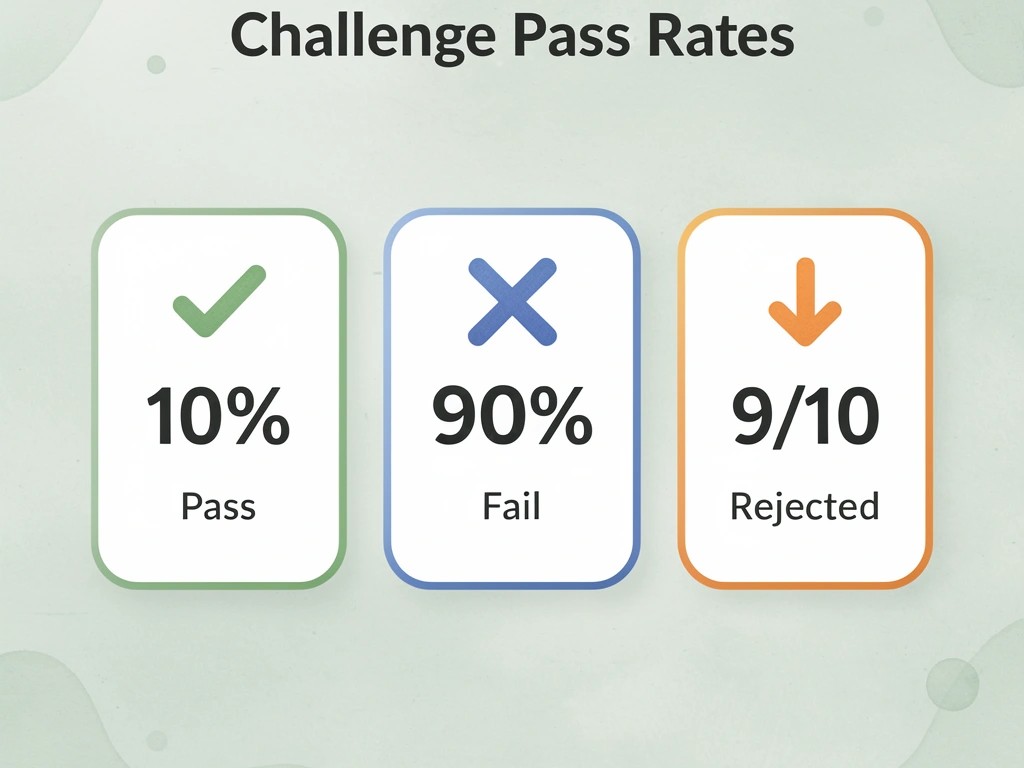
Statistics showing prop firm challenge pass rates with 10% pass rate and 90% failure rate
🔑 Key Reality Check: The 90% failure rate means prop firm challenges are designed to filter out most applicants, making them significantly more challenging than many traders anticipate.
"Only a 10% pass rate across evaluations, meaning nine out of ten traders fail before reaching funded status." — FunderPro Analysis, 2025
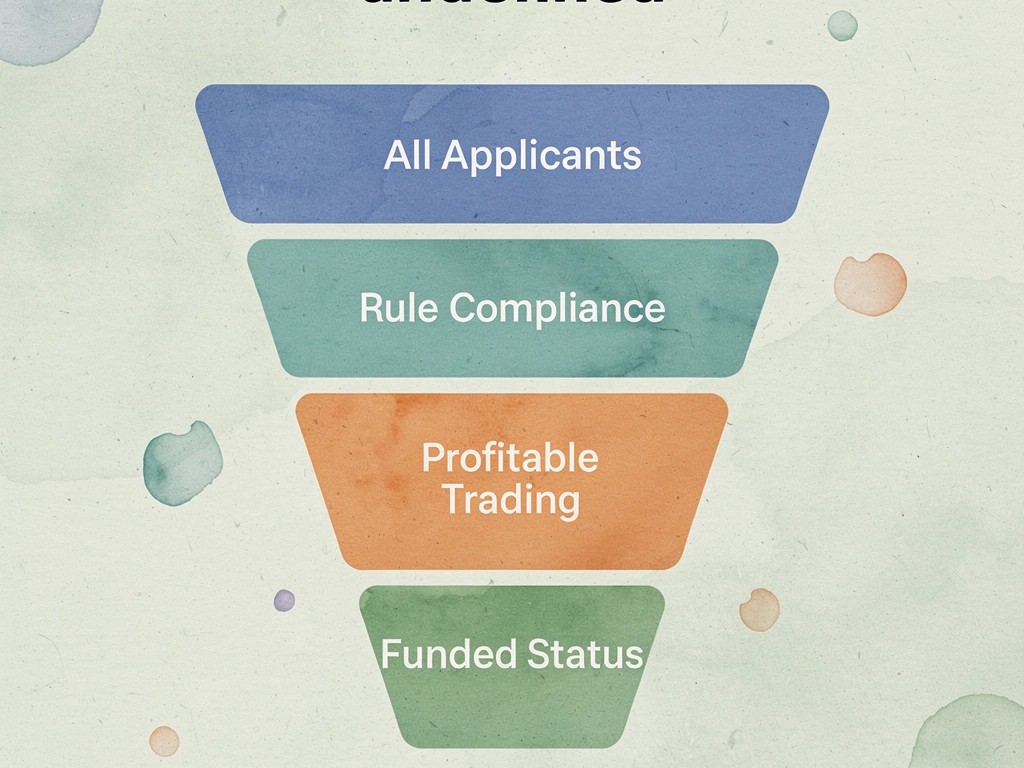
⚠️ Critical Understanding: Success requires both trading profitability and strict rule adherence - many profitable traders fail due to rule violations rather than poor performance.
Why do traders fail despite having profitable strategies?
Most traders think passing means making a profit with a working strategy. Prop firms enforce strict risk rules: maximum drawdown limits (usually 5–10%), daily loss caps, consistency requirements, and time limits that penalize even minor violations.
You can run a profitable strategy and still fail by breaking a drawdown rule on a single volatile day. The real challenge isn't whether you can make money—it's whether you can make money while staying inside a narrow risk box for weeks, every single trade.
What drawdown rules cause traders to lose challenge fees?
Traders often lose challenge fees because they misunderstand how drawdown calculations work. Does drawdown measure from your account's highest point or from your starting balance? Does the daily loss limit reset at midnight or after 24 hours?
One misunderstood rule can end an evaluation instantly.
The Numbers Tell a Harder Story
Industry data reveals the difficulty of succeeding in this space. Only about 28% of funded traders receive payouts after passing, according to multiple firms. Axcera's 2026 research on trader retention shows that many traders leave the industry due to systemic problems. Traders pass once, then lose their accounts because of the same strict rules that initially made it difficult to pass. Trading under real money pressure differs fundamentally from trading on demo or personal accounts.
Why do most traders struggle with multiple requirements simultaneously?
The real obstacle isn't market conditions or strategy quality: meeting multiple requirements simultaneously. You need profitable trades, perfect risk management, emotional control during drawdowns, and complete rule compliance. Miss one element, and the evaluation ends.
Experienced traders confirm that passing once is possible with preparation, but staying funded requires consistency that most people underestimate. Repeat attempts are common, and skilled traders often spend thousands in fees before finding success.
How do firm rules determine your success more than market conditions?
Most beginners don't realize that rules, not market changes, determine outcomes. Choosing a firm with rules that match your trading style and risk tolerance is foundational.
Comparing drawdown structures, daily loss calculations, and time limits across firms before paying evaluation fees can mean the difference between repeated failures and a clear path to funding. But understanding pass rates is only the beginning of the real question.
Why Do Traders Fail Prop Firm Challenges
Traders fail prop firm challenges because they prioritize profit over compliance with rules. According to Velotrade Blog, 90% of traders fail not because their strategies don't make money, but because they break drawdown limits, daily loss caps, or consistency requirements before reaching profit targets. The challenge isn't whether you can trade profitably—it's whether you can do so within strict risk boundaries every session, without exception.
"90% of traders fail not because their strategies don't make money, but because they break drawdown limits, daily loss caps, or consistency requirements before reaching profit targets." — Velotrade Blog
🔑 Key Takeaway: The challenge isn't trading profitably—it's maintaining discipline and risk management under pressure while pursuing profit targets.
⚠️ Warning: Traders often underestimate how strict rule compliance becomes when real money and time pressure are involved in prop firm challenges.

1. Revenge Trading After Losses
The first losing trade starts a predictable chain reaction. You take a second trade to recover the loss. It fails. You enter a third position, larger this time, convinced the next setup will work. Within an hour, you've lost three times what a single bad trade would have cost. The session ends when you breach the daily loss limit.
Why does stress make trading decisions worse?
When people are stressed, their risk tolerance increases rather than decreases. The desire to recover losses before day's end overwhelms the rules established that morning. On a prop challenge, a single emotionally driven trading session can end everything.
What rule prevents revenge trading completely?
The only solution that works: two losses in a row during a trading session means you stop trading for the day. This is not a guideline—it is a hard rule. Write it into a checklist you review before opening any position. The cost of sitting out the rest of the day is zero. The cost of breaking this rule is the account.
2. Misunderstanding Drawdown Rules
Most traders who break drawdown limits don't realize where their floor is until they enter the trade that ends their account. Drawdown rules come in two forms: static, which never moves from the initial balance, and trailing, which moves upward as your equity reaches new highs.
How does trailing drawdown affect your trading strategy?
Trailing drawdown creates a paradox: a winning trade reduces your future risk tolerance. If you make $2,000 on Monday, your drawdown floor has moved up. On Tuesday, you have less room for absolute drawdown than you started with on Monday, despite being profitable.
Tick-by-tick trailing is the most restrictive version: every intraday high immediately moves the floor. If a trade runs $2,000 in your favor before pulling back $500 to close up $1,500, your floor has moved up $2,000, not $1,500. You cannot give trades room to breathe.
What's the difference between tick-by-tick and end-of-day trailing?
End-of-day trailing adjusts the floor at session close based on closing equity, while intraday highs don't move the floor until the day's end. Knowing which model your firm uses determines how you manage every trade.
3. Time Pressure Distorts Decision-Making
Challenges typically have time limits of 30 to 60 days. These deadlines create pressure that can undermine your trading discipline.
How does deadline pressure affect trading behavior?
As the deadline approaches and the profit target is not met, traders lower their entry criteria because waiting costs more than the risk of entering. Both trading frequency and risk per trade increase.
These responses increase drawdown risk when the drawdown room is least available. Challenges fail most commonly in the final week. Traders who normally take three trades per week start taking two per day. With five days left and 30% of the profit target remaining, position sizes double.
What mindset prevents time pressure mistakes?
Think of the profit target as something that happens when you follow the right process, not as a goal to push toward. If your strategy needs six to eight weeks to reach the target, trading more aggressively to get there in three weeks will only fail faster.
4. Oversizing During the Evaluation
Traders seeking quick profits often trade with positions larger than their risk plan allows. A bigger position doesn't increase the likelihood of reaching your profit goal; it increases the likelihood of losing more money than planned before you get there.
How does position sizing affect your evaluation survival?
On a $50,000 account with a 5% daily loss limit ($2,500), risking 3% per trade ($1,500) means two losing trades end your day. Three losing trades across different sessions exhaust most of your total drawdown room.
Risking 1% per trade ($500) requires five losing trades in a single session to hit the daily limit, with ten total losing trades across the full evaluation before hitting maximum drawdown.
Why is position sizing the most important factor?
Position sizing is the single most controllable variable in how long a funded account lasts. The difference between risking 1% and risking 3% per trade transforms the evaluation from a coin flip into a process that can survive normal variance.
5. Strategy Incompatibility With Prop Rules
A strategy can make real money over 12 months and still fail a prop challenge. Profitability and challenge compliance are different requirements. Strategies with large drawdowns, news scalping without stop-losses, and infrequent-trading systems struggle in prop environments because they violate daily loss limits and time constraints.
How do you assess if your strategy fits the prop firm requirements?
Before attempting a challenge, ask: "What is the maximum drawdown this strategy has ever produced in a single day, and does that fit within the daily loss limit?" Effective strategies employ low drawdown, rule-driven systems with defined stops on every trade, consistent position sizing without averaging after losses, and clear entry criteria applied selectively.
Which prop firm rules should you compare before choosing?
Most traders compare prop firms based on profit targets and fees, overlooking drawdown calculation methods, daily loss limits, and time constraints before paying evaluation fees. Platforms like the best prop trading firms aggregate rule comparisons across 50+ firms, enabling traders to filter by drawdown model, daily loss calculation, and time limits before committing to a challenge. Our comparison tools help you match a firm's rules to your strategy's historical drawdown profile, which determines whether you'll pass.
6. Ignoring the Psychological Pressure Differential
Trading with your own money and trading in a prop challenge create different mental environments. With your own money, losing money happens gradually, and you can lower your risk, take a break, or try a new strategy. With a prop challenge, every trading session has clear stakes: exceed the daily loss limit and your day ends; exceed the total drawdown limit and your evaluation stops immediately.
How do traders typically react under prop challenge pressure?
Traders often discover their emotional responses under pressure differ significantly from expectations. Common first-challenge experiences include taking smaller position sizes out of fear and missing targets, closing winning positions too early due to hypervigilance, and failing to execute entries on good setups due to anxiety. These are not signs of a bad trader, but of one unadapted to rule-constrained environments.
Why is emotional discipline crucial for prop trading success?
Controlling your emotions when rules are strictly enforced differs from making profitable trades. Most traders underestimate how their decision-making shifts when every trade could end their account. Learning to manage this takes time and practice.
Related Reading
-
Which Forex Prop Offers The Easiest Challenges
10 Practical Tips on How to Pass a Prop Firm Challenge
Passing a prop firm challenge requires treating it as a risk control test, not a profit test. Your ability to stay within drawdown limits, daily loss caps, and consistency rules matters more than your win rate or strategy sophistication. Traders who pass consistently never break a rule, even when emotionally triggered.
🎯 Key Point: Prop firms are testing your discipline and risk management skills, not your ability to generate massive profits quickly.
💡 Tip: Focus on preserving capital first, making profits second. Every rule violation can instantly disqualify you, regardless of your account balance.
"Risk management is the foundation of successful prop trading - firms want traders who can protect capital consistently over time." — Industry Standard Practice
Priority Level
Focus Area
Impact on Success
#1 Priority
Rule Compliance
Pass/Fail Determinant
#2 Priority
Risk Management
Account Preservation
#3 Priority
Profit Generation
Secondary Consideration

1. Prioritize Rule Compliance Over Profit Targets
Your first goal is zero rule violations. Your second goal is to hit the profit target. Most traders reverse this priority and fail to do so. A profitable week means nothing if a single trade breaks your daily loss limit on Friday: the evaluation ends instantly, regardless of prior gains.
Prop firms filter for discipline under constraint, not market prediction ability. Every trade should pass this test: if this trade goes completely against me, will I still be within my daily and total drawdown limits? If the answer is unclear, you don't understand your floor well enough to trade.
2. Implement a Two-Loss Daily Limit
After two losing trades in a single session, stop trading for the day. Not three losses. Not "one more setup to recover." Two consecutive losses mean you close your platform and walk away until the next session. This rule prevents most account-ending spirals before they begin.
Why does emotional trading sabotage prop firm challenges?
Losses increase emotional arousal, shifting your brain toward risk-seeking behavior to recover what was lost. This is a documented pattern in behavioral finance research, not a personality flaw. The third trade after two losses rarely maintains the discipline of the first trade of the day: position sizes creep up, entry criteria loosen, and stop losses widen or disappear.
What are the real costs of continuing after losses?
The cost of stopping after two losses is a theoretical opportunity cost; the cost of continuing is real and immediate. Most prop firm breaches occur during recovery attempts, not normal trading. Write this rule into a pre-session checklist and enforce it without exception.
3. Calculate Your Drawdown Floor Before Every Trade
Before entering any position, state your current maximum allowable loss in dollar terms without using a calculator. If you can't do this, you aren't ready to trade the challenge. Drawdown rules vary by firm: static, end-of-day trailing, and intraday trailing models change how you manage your positions.
What are the different types of drawdown models?
Static drawdown never moves. If you start with $100,000 and a 10% static drawdown, your floor remains $90,000 throughout the evaluation. End-of-day trailing adjusts your floor only at session close: if you close Monday at $102,000, your new floor is $91,800 (10% below $102,000). Intraday trailing moves your floor each time equity touches a new high during the session, even if the trade declines before closing.
Why is intraday trailing the most dangerous model?
Intraday trailing is the most dangerous model. A trade that runs $3,000 in your favor before pulling back to close at $1,500 profit has moved your floor up $3,000, not $1,500: you cannot give trades room to breathe. If your firm uses this model and your strategy requires wide stops or a high tolerance for volatility, you're structurally incompatible from the start.
4. Ignore the Challenge Deadline Completely
Treat the 30 or 60-day time limit as if it doesn't exist. Trade as though you have unlimited time, with the only constraint being compliance with rules. Deadline pressure corrupts decision-making: as time runs out, marginal setups get traded, entry criteria lower, and position sizes increase to close the gap faster. All of these responses increase breach probability when you can least afford it.
Why do most traders fail in the final week?
Challenges most commonly fail in the final week because traders shift from process-driven to outcome-driven trading. The profit target becomes a goal to pursue rather than a result of correct execution.
How should you approach the time constraint?
If your strategy historically takes eight weeks to generate the required return, it will not do so in four weeks by trading more aggressively. It will breach faster. Treat the time limit as a constraint on indefinite waiting, not as an urgency to create.
5. Risk No More Than 1% Per Trade
Funded traders who pass challenges consistently risk between 0.25% and 1% per trade, a range mathematically necessary to survive normal variance.
How does position sizing affect your survival rate?
On a $50,000 account with a 5% daily loss limit, risking 3% per trade means two losses end your day. At 1% risk per trade, you need five losing trades in a single session to hit the daily limit, allowing ten total losing trades before hitting maximum drawdown.
Why does increasing risk reduce your chances of passing?
Traders who increase risk to "speed up passing" misunderstand the math. Larger positions don't increase the chance of reaching the profit target; they increase the chance of hitting the drawdown limit first. Position sizing is the most controllable variable in challenge success.
6. Select Firms Based on Rule Structure, Not Marketing
Prop firms differ significantly in how they calculate drawdown, enforce daily loss limits, and structure consistency requirements. A profitable trader can fail one firm's challenge and pass another's using the identical strategy, simply because the rule structures differ. Choosing the right firm is foundational to passing.
What drawdown models should you prioritize when selecting firms?
Choose firms that use end-of-day trailing drawdown instead of intraday trailing. EOD models give your trades more room to move without immediately tightening your floor. Look for clear rules with no hidden consistency requirements or scaling restrictions. Avoid firms that change their rules frequently or don't clearly explain how they verify payouts. According to Photon Trading FX, understanding the specific drawdown calculation method your firm uses is critical, as many traders fail to realize how their firm's trailing model works in practice.
How can you efficiently compare rule structures across multiple firms?
Most traders compare firms based on profit targets and fees, ignoring drawdown calculation methods, daily loss limit structures, and time constraints. Our platform at best prop trading firms centralizes rule comparisons across 50+ firms, letting you filter by drawdown model, daily loss calculation, and time limits before committing. Choosing a firm with rules that match your strategy's historical drawdown profile eliminates structural incompatibility before it costs you.
7. Only Use Strategies Compatible With Prop Constraints
Making money and working within a challenge's rules are not the same thing. A strategy can generate steady profits over 12 months yet fail a 30-day evaluation with daily loss limits. The real question isn't whether your strategy works—it's whether it works within the challenge's specific constraints.
What makes a strategy compatible with the challenges of a prop firm?
Good strategies handle tough market conditions by using fixed risk per trade without adding money to losing trades, setting clear stop losses before entry, and keeping daily losses small relative to daily limits. Apply entry rules carefully and avoid overtrading. Bad strategies include Martingale systems, news scalping without stops, high-frequency approaches during volatile sessions, and any system requiring large losses to eventually profit.
How do you test if your strategy fits daily loss limits?
The critical diagnostic: what is the maximum drawdown this strategy has ever produced in a single day? If that worst historical day exceeds the firm's daily cap, your strategy is incompatible regardless of overall profitability.
8. Enforce a No Recovery Trading Protocol
After any losing trade, take a mandatory 10 to 15-minute break before considering the next position. After two losses, stop trading for the day. No "make it back" trades allowed under any circumstances. This protocol addresses the primary cause of rule violations: emotional recovery attempts rather than normal trading losses.
Why does stress distort trading judgment?
When traders are stressed, they make poor decisions about probability. A small trading opportunity appears attractive because they want to recover losses. Position sizes increase, stop losses widen or disappear entirely—all unconscious changes driven by the need to reach breakeven before the session ends.
What causes most account breaches?
Emotionally driven trading is the primary cause of account breaches. Initial losses are survivable; the trades taken to recover from them are not. The only solution is a hard rule enforced before emotion takes over.
9. Reduce Trade Frequency Deliberately
High-frequency trading increases the chance of a breach without increasing the chance of profit. Most successful funded traders are selective, not active: they wait for setups that meet strict entry criteria rather than trading every marginal opportunity. Fewer trades with higher conviction survive rule-constrained environments better than high-volume approaches.
Why does overtrading hurt the prop firm's challenge performance?
Overtrading occurs when traders become bored and feel pressured by deadlines. Sitting for hours without finding a good trade setup feels wasteful, so traders accept lower-quality trades to stay busy. As deadlines approach, traders make more trades to reach their profit goals faster. Both patterns increase the risk of losses without improving results.
How can you maintain strict entry criteria during evaluations?
Set clear entry rules before you start trading, and skip any setups that don't meet all conditions. If that means you only take three trades per week instead of three per day, it will take longer to evaluate your results, but your chances of success increase significantly.
10. Simulate the Challenge Before Paying for It
Run a full simulation of the challenge on a demo account using the exact drawdown rules, daily loss limits, and lot sizing you'll use in the real evaluation. Trading under explicit rule enforcement creates a different emotional environment than personal account trading.
What common mistakes happen during the first challenges?
Common first-challenge experiences include taking smaller position sizes out of fear and missing profit targets, closing winning trades too early due to anxiety about giving back gains, and failing to execute entries on valid setups because of outcome pressure. These don't indicate a bad trader—they indicate one who hasn't adapted to rule-based decision-making.
How should you validate your readiness before paying fees?
Try the challenge at least once before paying the evaluation fee. If you fail the demo challenge, you'll fail the real one. If you pass the demo without breaking any rules, you've demonstrated that your strategy and risk management work within the limits. The only remaining question is whether you can maintain the same discipline when the evaluation fee is on the line.
But even if you execute these rules perfectly, it won't matter if you pick a firm whose structure doesn't align with your trading style.
Related Reading
-
Best Instant Funding Prop Firm
-
Ea To Pass Prop Firm Challenge
-
Prop Firm Challenge Rules
-
Best Free Prop Firm Challenge
-
Prop Trading Firms' Flexible Challenge Programs
-
Forex Prop Firm Challenge
-
How Do I Join A Prop Firm Trading Challenge?
-
Which Prop Firms Have The Lowest Challenge Fees?
-
One Step Challenge Prop Firm
-
How To Qualify For A Prop Firm Challenge
How to Choose the Right Prop Firm
Choosing the right prop firm means matching its rules to your strategy's past performance before paying any evaluation fee. A firm with intraday trailing drawdown will stop strategies that need swing room, while static drawdown models allow wider stop losses. The firm must align with how you trade.
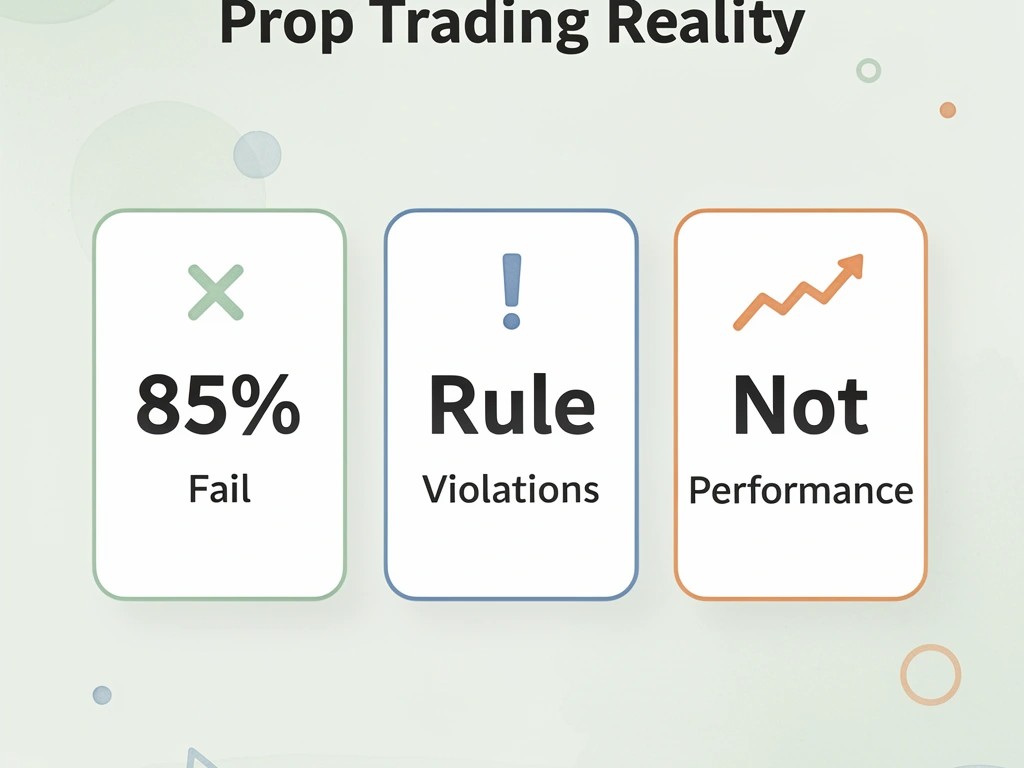
🎯 Key Point: Your trading strategy should determine which prop firm you choose, not the other way around. Mismatched rules can kill an otherwise profitable strategy.

"85% of prop traders fail their evaluations due to rule violations, not poor trading performance." — Prop Trading Analytics, 2024
⚠️ Warning: Never assume you can adapt your proven strategy to fit a firm's restrictive rules. The evaluation fee is wasted if the drawdown limits don't align with your risk management approach.
Drawdown Type
Best For
Risk Level
Static Drawdown
Swing traders, wider stops
Lower
Trailing Drawdown
Scalpers, tight management
Higher
Daily Loss Limit
Intraday strategies
Medium
Step 1: Document Your Trading Profile Before Comparing Firms
Most traders check firm websites for profit splits and account sizes without understanding the limits of their strategy. Write down four pieces of information before reviewing any firm: (1) average trade duration—scalpers holding positions for minutes face different rule risks than swing traders holding overnight; (2) largest single-day drawdown in the past six months—if your worst day lost 4%, a firm with a 3% daily limit won't work for you; (3) trades per week—high-frequency approaches can break consistency rules that penalise uneven trade distribution; (4) instruments you trade—if your edge is in cryptocurrency pairs and the firm only offers forex majors, your strategy won't work.
Why is specific documentation crucial for firm selection?
Write down these answers with specific numbers. Vague self-assessment leads to picking the wrong firm and repeated failed evaluations that could have been avoided through proper filtering from the start.
Step 2: Filter Firms by Drawdown Calculation Method
Drawdown rules determine whether your strategy survives normal variance. Static drawdown maintains the same absolute dollar room throughout evaluation. End-of-day trailing adjusts your floor at session close based on closing equity. Intraday trailing moves your floor each time equity touches a new high during the session, even if the trade retraces before closing. According to World Business Outlook, firms typically offer an 80% profit split, but that payout structure becomes irrelevant if the drawdown model terminates your account before you reach funded status.
Why does intraday trailing create more risk for swing traders?
If your strategy requires giving trades room to move, intraday trailing is structurally incompatible. A trade that runs $2,000 in your favor before pulling back to close at $1,200 profit has moved your floor up $2,000 under intraday trailing, not $1,200. Your next trade has less drawdown room than before you made money. End-of-day trailing adjusts only at session close, allowing intraday volatility without tightening constraints mid-session.
Step 3: Verify Instrument and Strategy Restrictions in FAQs
Homepage marketing rarely lists restrictions. Firms hide them in FAQ sections and terms of service. Before you commit, confirm the firm allows your specific instruments (forex pairs, indices, commodities, cryptocurrencies), trade management approach (scaling in, hedging, holding through news), and session timing (overnight holds, weekend positions, trading during high-impact news).
Some firms prohibit martingale strategies, high-frequency trading, or grid trading regardless of profitability. Others restrict trading during NFP, FOMC, or CPI releases.
If you trade news volatility and the firm bans positions during economic announcements, you cannot pass the evaluation using your actual strategy. Read the full terms document, not just the landing page.
Step 4: Compare Post-Funding Conditions, Not Just Challenge Rules
Passing the evaluation is the entry point; staying funded and receiving payouts is the actual goal. Firms differ dramatically in payout speed (24-hour guarantees versus 30-day processing windows), scaling programs (automatic increases after profit milestones versus manual requests), withdrawal limits (minimum payout thresholds and maximum monthly caps), and fee refund policies.
Some refund challenge fees after a certain number of payouts; others never do.
Why do traders make mistakes when researching prop firms?
Traders often focus entirely on challenge difficulty without considering what happens after funding. A company with an easy challenge but slow payouts and strict withdrawal rules differs significantly from one with tough evaluations, fast, reliable payouts, and clear growth pathways.
Look at the whole journey, not just how you get started.
Step 5: Use Comparison Tools to Identify Structural Fit
Most traders manually compare firms by visiting websites and building spreadsheets, which breaks down when comparing drawdown calculation methods, daily loss limit structures, and instrument availability across 50+ firms. Our platform at the best prop trading firms centralizes rule comparisons, letting you filter by drawdown model, daily loss calculation, time limits, and supported instruments.
What specific compatibility factors should you check
You can see which firms allow weekend holding, restrict news trading, or support the specific currency pairs or indices your strategy requires. This eliminates structural incompatibility before you pay evaluation fees.
Why is choosing correctly from the start important
If your strategy's worst day was a 6% drawdown and you choose a firm with 5% daily limits, you're paying to fail. Choosing the right firm from the start is faster and cheaper than learning the hard way through repeated breaches. Our TradingPilot platform helps you match your trading style with firms that align with your risk profile, so you can focus on execution rather than account restrictions.
10 Best Prop Firms With Easy Challenges
The firms below aren't easier to pass because they require less skill. They're easier because their rule structures create more room for normal trading variance. Lower profit targets, end-of-day drawdown models, and no aggressive time constraints reduce the probability that a single bad session ends your evaluation.

🎯 Key Point: These firms offer structural advantages that accommodate natural trading fluctuations rather than punishing them.
What follows is a breakdown of firms offering the most forgiving constraint environments for traders who understand their own behavioral patterns. Each firm listed provides specific structural advantages aligned with different trading styles.

"The difference between success and failure in prop trading often comes down to rule structure compatibility rather than pure trading skill." — Industry Analysis, 2024
⚠️ Warning: Even with easier challenges, consistent risk management and disciplined execution remain essential for long-term success.

1. FTMO
FTMO works as the industry standard. Traders compare difficulty against FTMO's 10% Phase 1 and 5% Phase 2 profit targets. The rules are clear, the dashboard provides real-time drawdown tracking, and risk management tools prevent most accidental violations. Finance Magnates reports that FTMO has served over 1,000,000 individuals, making it the most tested evaluation structure in the industry.
Why is FTMO predictable rather than easy?
FTMO isn't the easiest to pass; it's the most predictable. You know exactly where your drawdown floor sits at all times, with no hidden consistency requirements appearing after you've passed. If you breach, you understand why. That clarity matters when deciding whether to try again or adjust your strategy.
2. The Funded Trader
The Funded Trader reduces Phase 1 targets to 8%, creating breathing room compared to firms requiring 10% or more. End-of-day trailing drawdown means intraday volatility doesn't constrain you mid-session: a trade swinging $2,000 intraday but closing at $1,200 profit only moves your floor based on closing equity, not the intraday peak.
Flexible challenge structures let you choose between aggressive timelines with higher targets or slower evaluations with lower pressure. The 8% target attracts beginners because it feels achievable without forcing overtrading, rewarding patience rather than punishing it.
3. 5%ers
5%ers' targets range from 5% to 10%, depending on which program you select. The lower end represents one of the most forgiving profit requirements in the industry. With no strict time pressure, you can wait weeks for the right setups without deadline anxiety affecting your decisions.
Swing traders prefer this firm because the evaluation style accommodates longer holding periods. If your strategy requires three to five days per position, you won't face a 30-day countdown forcing early exits or increased frequency.
4. FundedNext
FundedNext offers multiple evaluation paths without aggressive time limits on certain account models. You can choose between fast challenges or longer timelines depending on your strategy's needs. The scaling-friendly structure means passing once isn't the end goal; you're building toward larger capital allocations over time.
Traders describe this as a "less rushed" environment. The pressure to hit targets quickly disappears, eliminating the psychological trap of forcing trades to meet deadlines. If your strategy takes eight weeks to generate returns, you're not penalized for waiting.
5. FunderPro
FunderPro removes time limits on certain account types. The end-of-day risk model prevents intraday drawdown spikes from causing your account to be closed before the session closes. Trader-friendly scaling structures reward consistency over one-time performance.
The firm works well for traders who view prop funding as a long-term partnership. If you trade slowly and build equity gradually, the structure supports that approach without forcing higher-frequency patterns.
6. E8 Funding
E8 Funding uses a simple two-step evaluation with clear rules and fewer hidden constraints. Fast funding options mean you're not waiting 30 days after passing to access capital.
The firm is known for "clean structure" compared to firms with complex rule layers that only become clear after a breach. If you've failed evaluations elsewhere due to unexpected consistency requirements or unclear drawdown calculations, E8's transparency reduces that risk.
7. Blueberry Funded
Blueberry Funded offers entry fees starting around $49, among the lowest in the industry. Simple evaluation rules make it easier for beginners to understand, and you can increase your capital allocations as you improve results, rather than being stuck with a single account size.
The firm is a good choice for traders who want to test multiple firms without significant upfront investment. The evaluation difficulty matches competitors, but the financial risk is lower.
8. Maven Trading
Maven Trading reduces challenge fees to around $13, the lowest entry cost in the industry. The simple evaluation structure removes confusing rules that often obscure prop firm requirements, making it more accessible for first-time challengers.
The low entry cost means you can afford to fail, learn, and try again without significant financial loss. This sense of safety changes how you approach the challenge: you're not trading with the fear that one mistake costs you $500.
9. For Traders
For Traders removes strict deadlines on some account models, offering unlimited evaluation time. Low entry requirements and beginner-focused design reduce barriers for traders who haven't passed evaluations elsewhere. The lack of time pressure eliminates forced trading, the primary cause of drawdown breaches.
Traders rank this firm as easy because waiting for perfect setups doesn't cost you the evaluation. If your strategy produces only three valid signals per month, you're not penalized for sitting through the other 27 days. This structural advantage matters more than the size of the profit target.
10. TopOne Futures
TopOne Futures operates under the futures prop model, with profit targets of about 6%, lower than most forex firms. The end-of-day trailing structure and absence of aggressive time constraints create an environment similar to personal account trading. Traders frequently rank this among the easiest futures prop firms due to simpler rules and more forgiving drawdown calculations.
If you trade futures, this firm provides the lowest-friction path to funding. The evaluation doesn't require adjusting your strategy to fit prop constraints: they're designed to fit strategies that already work in futures markets.
What does easy actually mean in prop firm challenges?
"Easiest prop firm" means lower profit targets, more forgiving drawdown models, less time pressure, and simpler rules, not easiest to make money or pass without skill. Traders still fail mainly due to revenge trading, oversizing, misunderstanding of drawdowns, and emotional decision-making. The firm's structure can't fix behavioral problems; it can only reduce the probability that normal variance triggers a rule violation.
Why do traders still fail even with easier firm structures?
Choosing the easiest firm without developing your own trading discipline is paying for a slower failure. The evaluation might take longer to break through, but it will still break through if you're revenge trading after losses or oversizing positions to hit targets faster. Structural advantages matter only if your execution is already disciplined.
Which prop firm should match your specific trading style?
Ask which prop firm matches your trading behavior, not which is easiest. If you're disciplined with consistent risk management, FTMO or The Funded Trader rewards systematic approaches. Swing traders holding positions for days fit 5%ers or FunderPro without time pressure. Beginners testing evaluations for the first time find low-cost entry in Maven or Blueberry. Fast scalpers executing high-frequency setups suit E8 or TopOne Futures with simpler rules and faster evaluation cycles.
How does structural fit determine your success rate?
The question isn't which firm is easiest overall—it's which firm's rules match your strategy's past losses, trading frequency, and holding periods. A firm that suits a swing trader may not suit a scalper. How well your strategy fits the firm's structure matters more than the firm's ease of use.
What tools help compare multiple prop firms efficiently?
Comparing firms manually across websites and spreadsheets becomes unwieldy as the number of firms increases. Platforms like the best prop trading firms consolidate rule comparisons across 50+ firms, letting you filter by drawdown model, daily loss calculation, time limits, and supported instruments. Our platform shows which firms allow weekend holding, restrict news trading, or support your specific currency pairs or indices. Identify structural problems before paying evaluation fees, not after breaching.
Find Prop Firms With Easy Challenges on TradingPilot
The mistake is to assume that difficulty depends only on profit targets. Most failures occur because traders choose firms whose risk behavior and execution style are misaligned with their own. A firm with 8% targets may prove harder to pass than one with 10% targets if its drawdown model penalizes your trade management approach. The question isn't which firm is objectively easiest—it's which firm's constraints align with how you trade under pressure.
🎯 Key Point: Profit targets alone don't determine challenge difficulty; risk management rules and drawdown policies often matter more for your success rate.
"Most failures occur because traders choose firms misaligned with their risk behaviour and execution style." — Trading Performance Analysis
💡 Pro Tip: Before choosing a prop firm, analyze your trading history to identify your typical drawdown patterns and position sizing habits, then find firms whose rules accommodate your trading style.

Filter by rule pressure first
Before comparing profit splits or account sizes, eliminate firms based on drawdown calculation method (intraday trailing versus end-of-day), time limits that force trading frequency, and consistency rules that penalize uneven distribution. A swing trader holding positions for three days will fail a firm with aggressive time pressure, even with a low profit target. An intraday scalper will breach a firm with tick-by-tick trailing drawdown, even with a 70% win rate. Rule structure determines survival rate more than strategy quality.
Match the firm to your actual behavior
Ask yourself whether you hold trades overnight or close everything before the session ends, whether you can handle strict daily loss limits without letting emotions take over after losing several times in a row, and whether you do better work with deadlines or without time pressure. These answers help you eliminate bad choices before you pay evaluation fees. If your worst day caused a 6% drawdown and you choose a firm with 5% daily limits, you're paying money to fail, even if you make money overall.
Use a structured comparison tool before committing
Most traders build manual spreadsheets to compare firm rules across websites, which breaks down when evaluating drawdown models, daily loss calculations, and instrument restrictions across 50+ firms. Platforms like the best prop trading firms centralize these comparisons, letting you filter by end-of-day versus intraday trailing, the presence of a time limit, and specific currency pairs or indices your strategy requires. Our comparison tools reveal which firms allow weekend holding, restrict news trading, or support your exact instruments. Eliminate structural incompatibility before paying fees, not after you've breached.
Run a short simulation phase
Trade for seven to 14 days as if the account is real, the rules are active, and no recovery trades are allowed. Track rule violations, emotional reactions after losses, and drawdown behavior within the firm's limits. Break the simulation, and you'll break the real evaluation. Pass without violations, and you've proven your strategy survives the structure.
You don't pass prop firm challenges by finding the easiest firm. You pass by choosing a firm that fits your trading behavior and by consistently adhering to its rules without emotional deviation. Structural fit determines outcomes more than difficulty ratings.
Related Reading
-
Best Two-Step Challenge Forex Prop Trading
-
How To Join A Prop Trading Firm
-
Affordable Futures Prop Trading Challenge Options
-
Cheapest Prop Firm Challenge
-
Crypto Day Trading Strategies
-
No Challenge Prop Firms
-
Forex Prop Firms Without Challenge
-
Best Way To Pass the Prop Firm Challenge
-
Best Futures Prop Trading Challenge Fees
-
Best Prop Trading Challenges With No Hidden Fees