
What Happens If You Blow A Funded Account and Recovery Strategies

Picture this: you've finally secured a funded account, passed the evaluation, and started trading with someone else's capital. Then it happens. A string of losses wipes out your account balance, violates drawdown rules, and ends your journey with that firm. Blowing a funded account is a harsh reality in funded account trading that affects both new and experienced traders, often leaving them wondering what went wrong and what comes next. This article breaks down exactly what happens when you breach your account rules, explores the immediate and long-term consequences, and shows you how to bounce back stronger while choosing firms that align with your trading style and risk tolerance.
Finding the right firm after an account loss becomes your next critical step. TradingPilot's best prop trading firms comparison tool helps you evaluate which companies offer second chances, reasonable reset fees, and evaluation structures that match your strengths as a trader. Instead of jumping back into the first firm you find, you can compare payout structures, drawdown limits, profit targets, and trader support systems across multiple platforms to make an informed decision that reduces your chances of repeating past mistakes.
Summary
-
Blowing a funded account means violating a prop firm's risk management rules, typically by exceeding maximum daily or total drawdown limits, which results in immediate termination and loss of access to capital. A 5% daily drawdown limit sounds manageable until you risk 1% per trade and hit five consecutive losses, a statistical certainty even with a 60% win-rate strategy.
-
Unrealized gains disappear entirely when you breach drawdown limits, regardless of how close you were to payout eligibility. You might build an 8% gain over three weeks while meeting every consistency requirement except the minimum trading days, then a single volatile session pushes you past the daily loss limit, and the account closes with all accumulated profit locked away permanently.
-
According to industry data, 90% of traders fail funded challenges, and inadequate position sizing relative to drawdown limits accounts for a significant portion of those failures. A 1% risk per trade sounds conservative until you calculate that seven consecutive losses push you to a 7% drawdown, leaving just a one-trade margin for error if your firm's maximum is 8%.
-
Multiple failures with the same prop firm create a performance record that influences future applications, with some firms flagging accounts that show patterns of repeated rule violations or aggressive risk-taking. The industry is smaller and more interconnected than most traders realize, meaning your history with one firm can affect your reception at another.
-
Most prop firms enforce a 5% maximum daily drawdown limit, yet traders consistently underestimate how quickly normal trading variance can push them past that threshold. Three losing trades at 2% risk each puts you at 6%, already beyond the boundary. Firms vary dramatically in how they structure second chances.
-
Different prop firms enforce dramatically different stop-loss policies and drawdown measurement systems, with some measuring daily drawdown from the starting balance and others from the highest point your account reaches intraday. This structural difference changes how much breathing room your stops actually have and can create a mismatch between how you naturally trade and what the firm's constraints allow.
TradingPilot's best prop trading firms comparison tool helps traders evaluate which firms offer drawdown structures, reset policies, and rule flexibility that align with their specific trading frequency and risk tolerance.
What Does Blowing a Funded Account Mean
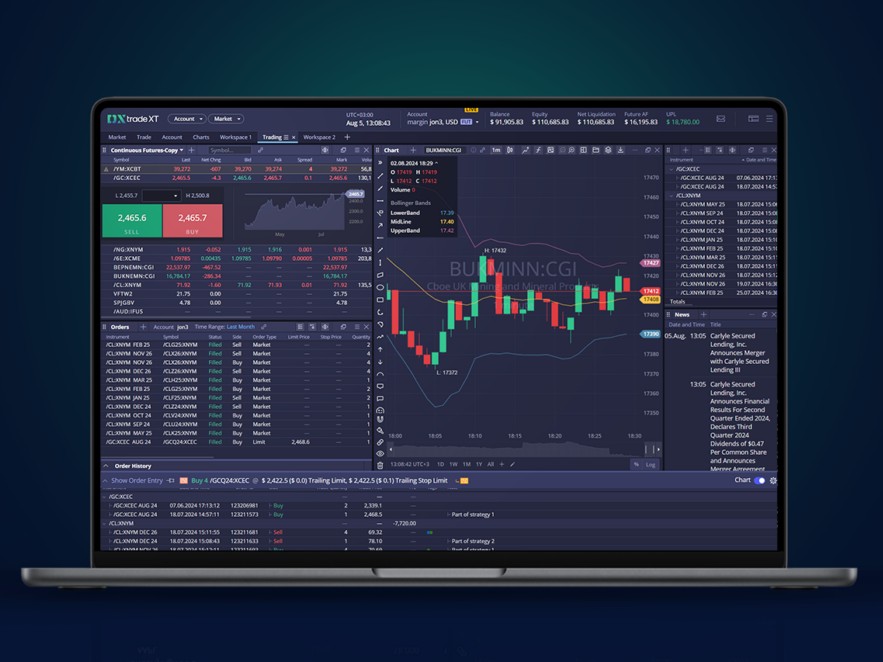
Blowing a funded account means you've violated the prop firm's risk management rules, typically by exceeding maximum daily or total drawdown limits, which results in immediate account termination and loss of access to the firm's capital.
It's rarely about losing money in the traditional sense. It's about crossing a specific contractual threshold that triggers automatic closure, ending your ability to trade that capital or receive payouts from it.
Consequences of Blowing a Funded Account
The consequences extend beyond just losing the account. Your initial evaluation fee is gone, non-refundable in most cases.
The positions you held get closed immediately, regardless of whether they might have recovered. And the psychological weight of that termination, the sudden shift from funded trader to starting over, creates emotional stress that often distorts your next attempt through fear-based decisions or overtrading patterns.
The Rule Breach That Ends it All
What catches most traders off guard is how little room exists between normal trading and account termination. A 5% daily drawdown limit sounds reasonable until you risk 1% per trade and hit five consecutive losses, a statistical certainty even with a 60% win-rate strategy.
Monte Carlo simulations used in risk analysis consistently show that profitable systems produce losing streaks of 4-6 trades regularly over 100-trade samples. Your strategy might be sound, your analysis correct, but probability alone can push you past the threshold.
News-Driven Risks in Funded Accounts
Volatile market moves during news events make this even more precarious. Spread widening or slippage can expand your planned 1% risk to 1.5% or 2% without warning, and suddenly, three losses instead of five breach the limit.
The firm's system doesn't distinguish between a calculated loss and a technical one. The rule is the rule, and the account closes the moment that line gets crossed.
When Recovery Isn't an Option
The structural design of funded accounts prevents what would happen in your personal trading, the natural recovery period, where positions move back into profit. Prop firm rules force premature exits, cutting off trades before they have time to work. A position down 3% at midday might recover to breakeven by close, but if it contributed to a daily drawdown breach at 2 PM, you're already terminated before that recovery happens.
Equity Curve Penalties
This creates a strange reality in which traders aren't necessarily wrong about market direction or the quality of trade setups. They're penalized for the path their equity curve takes, not just the destination.
End-of-day trailing drawdowns capture every intraday fluctuation, making the journey to profitability as important as the final result. Many traders with solid strategies fail because they haven't optimized for variance geometry, the specific pattern of equity movement that the evaluation structure demands.
Prop Firm Recovery Policies
Not all prop firms handle account termination the same way, though. Some offer grace periods, others allow immediate retries at reduced fees, and a few provide detailed performance reviews that help you understand exactly which rules you violated and when.
The difference between a firm that locks you out permanently and one that offers structured second chances with reset options can determine whether blowing an account becomes a learning experience or a dead end. But here's what most traders don't realize until after their first termination: the real challenge isn't just getting funded again.
Related Reading
What Happens if You Blow a Funded Account

The cycle starts immediately after termination. Traders often repurchase challenges within hours, driven by the belief that the next attempt will be different. According to Top One Trader, 90% of traders fail within their first year, yet many spend between $500 and $2,000 across multiple attempts before either securing funding or abandoning the pursuit entirely. The emotional impulse to recover losses quickly overrides rational assessment of what went wrong in the first place.
Trader Behavior After Loss
This pattern reveals something uncomfortable about how loss affects decision-making. After blowing an account, traders typically become more aggressive rather than more cautious. The frustration of watching weeks of disciplined work evaporate in a single session creates a compulsion to prove yourself immediately.
You tell yourself the market conditions were unusual, the timing was off, or you just need one clean run to get back on track. But that mindset, that urgency to reclaim what was lost, is precisely what makes the second attempt more likely to fail than the first.
The Profit You'll Never See
Unrealized gains disappear entirely when you breach drawdown limits, regardless of how close you were to payout eligibility. You might have built an 8% gain over three weeks, meeting every consistency requirement except the minimum trading days threshold.
One volatile session pushes you past the daily loss limit, and the account closes with all that profit locked away permanently. The firm doesn't prorate payouts or offer partial withdrawals. Binary rules create binary outcomes.
Hidden Costs of Payout Delays
This structure punishes traders who haven't yet satisfied every payout condition, creating a hidden opportunity cost that extends far beyond the challenge fee. When firms require 10 trading days, specific profit targets, and consistency metrics before allowing withdrawals, every day you're funded but not yet eligible represents accumulated profit at risk.
Traders working toward that first payout face the highest stakes because they're building value they can't yet access, and a single rule violation wipes it all out.
How Firms Track Your History
Multiple failures with the same prop firm create a performance record that influences future applications. Some firms flag accounts exhibiting patterns of repeated rule violations or aggressive risk-taking, making it more difficult to approve subsequent challenges.
Others share trader performance data through informal networks within the proprietary trading community, meaning your history with one firm can affect your reception at another. The industry is smaller and more interconnected than most traders realize.
Reputation and Repeat Failures
Reputation damage compounds over time because each failure reinforces a narrative about your risk management capabilities. When firms evaluate whether to fund traders who've blown multiple accounts, they're not just assessing current skill but predicting future behavior based on past patterns.
Demonstrating genuine improvement requires more than just passing another evaluation. It means showing measurably different decision-making, tighter risk controls, and the kind of consistency that only comes from addressing the root causes of previous failures rather than just attempting the same approach with more determination.
Comparing Prop Firm Policies for Second Chances
Most traders approach prop firm selection by comparing challenge costs and profit splits, but the policies around account failures matter just as much. Firms differ dramatically in how they handle terminations. Some offer reset options at reduced fees, others provide detailed performance analytics showing exactly which trades triggered violations, and a few allow grace periods or partial recovery opportunities.
Platforms like the best prop trading firms help traders compare these policies side by side, making it possible to find firms whose second-chance structures align with your risk tolerance and learning style rather than discovering their termination policies only after you've already failed.
Reasons Why Funded Accounts are Blown

The most common reason traders blow funded accounts isn't a lack of market knowledge. It's the mismatch between how they naturally trade and the specific constraints that prop firms impose.
Risk management violations, overconfidence, and emotional decision-making create the immediate triggers, but beneath those surface behaviors lies a deeper pattern. Traders attempt to force strategies designed for personal capital into environments built with entirely different risk tolerances and measurement systems.
Poor Risk Management Creates Unforgiving Math
Risk management failures happen when traders underestimate how quickly small position sizes compound into account-ending losses. A 1% risk per trade sounds conservative until you recognize that seven consecutive losses, statistically probable even with a 65% win rate, pushes you to a 7% drawdown.
If your firm's maximum is 8%, you're operating with a one-trade margin for error. Stop-loss orders slip during volatile sessions, position-sizing calculations ignore correlations between trades, and suddenly, what felt like controlled risk becomes a breach notification.
Risk Misalignment
The problem intensifies because most traders set their risk parameters based on personal comfort rather than mathematical survival. They risk 2% because it "feels right" without calculating how many consecutive losses their account structure can withstand before termination.
According to ForTraders, 90% of traders fail funded challenges, and inadequate position sizing relative to drawdown limits accounts for a significant portion of those failures. Daily drawdown limits measure every intraday fluctuation, meaning a position that recovers by close still counts against you if it dipped 4% at midday.
Overconfidence Distorts Decision Quality
Traders who pass evaluations often develop inflated assessments of their edge, interpreting recent success as proof of superior skill rather than as evidence of favorable market conditions or statistical variance. This cognitive bias manifests as trading too frequently, holding positions too long, or dismissing warning signals that contradict their thesis.
When you believe your analysis is consistently superior, you stop questioning whether the setup actually meets your criteria or whether you're forcing a trade because you're convinced you "see something others miss."
Confirmation Bias Risk
Confirmation bias compounds this. You seek information supporting your existing position while filtering out contradictory data.
A trader convinced the market will reverse finds reasons to hold a losing trade past their stop, adding to the position as it moves against them because they're certain the turn is coming. The account does not blow up from a single bad trade, but from the refusal to acknowledge when the original thesis was wrong.
Trading Without Structure Invites Chaos
Operating without a documented trading plan leaves you vulnerable to every emotional impulse and external pressure the market generates. When you haven't defined your edge, identified specific entry criteria, or established position management rules, each trade becomes a subjective decision influenced by recent results, current mood, or what you saw someone post online.
The absence of structure means no consistent framework for evaluating whether a setup actually matches your strategy or whether you're reacting to fear of missing opportunity.
Undefined Strategy Risk
This lack of definition makes it impossible to distinguish between strategy failure and execution failure. If your approach isn't documented with specific rules, you can't determine whether losses resulted from a flawed system or from deviating from the system.
Every losing streak becomes a crisis of confidence because you have no objective standard for whether you should adjust your approach or simply execute it more consistently.
Desperation Produces Expensive Mistakes
Chasing the market after missing a move or trying to recover from a loss creates the exact conditions that lead to account termination. You enter trades at unfavorable prices because you're focused on what you missed rather than what's actually available. The urgency to "get back in" or "make it back" overrides the patience needed to wait for your setup to be completed.
Platforms like the best prop trading firms help traders compare which firms offer rules and drawdown structures that accommodate different trading frequencies and styles, but no firm structure protects you from decisions driven by desperation rather than analysis.
Psychological Shift After a Loss
The real damage isn't the single impulsive trade. It's how that trade shifts your entire psychological framework from a process-focused to an outcome-focused one.
Once you're trading to hit a specific profit target or recover a specific loss rather than executing your system, every subsequent decision becomes contaminated by that goal. You hold winners too long, hoping they'll cover previous losses, cut losers too early, fearing they'll deepen the hole, and the entire sequence spirals away from disciplined execution.
Recovery Strategies After Blowing Your Funded Account

Stop and assess what actually happened before you do anything else. Most traders skip this entirely, jumping straight into repurchasing another challenge while emotions are still running high. Pull up your trading history and identify the specific trades that triggered the violation.
Was it a single catastrophic position, a series of small losses that accumulated, or a rule you didn't fully understand? The pattern matters more than individual trades because it reveals whether you have a risk-management problem, a psychological control issue, or a knowledge gap about the firm's structure.
Daily Drawdown Miscalculations
According to Pax Market Funds, most prop firms enforce a 5% maximum daily drawdown limit, yet traders consistently underestimate how quickly normal trading variance can push them past that threshold.
Three losing trades at 2% risk each puts you at 6%, already beyond the boundary. Understanding the math behind your failure prevents you from repeating it with slightly different trades while keeping the identical underlying behavior.
Accept What You Can't Change
You lost the account. The fee is gone. The unrealized profits disappeared. Dwelling on what could have happened if you'd held one more day or cut the position five minutes earlier serves no practical purpose.
The market doesn't care about your intentions, and the prop firm's automated systems don't distinguish between bad luck and bad judgment. What matters now is whether you extract usable insight from the experience or just carry forward the same vulnerabilities wrapped in new determination.
Recovering From Funded Account Setbacks
Traders who successfully recover demonstrate a specific pattern. They acknowledge their role in the outcome without catastrophizing it.
They recognize that passing an evaluation once proves they have some level of skill, but blowing the account reveals a gap between their capabilities and the specific constraints funded trading imposes. That gap is closeable, but only if you stop defending your original approach and start adapting it to the environment you're actually operating in.
Build a Different Plan
Repurchasing the same challenge with the same strategy produces the same result unless something fundamental changes in your execution. Reduce your position size by half, even if it feels excessively conservative. If you were risking 1% per trade, drop to 0.5%. The goal isn't maximum profit during the evaluation.
It's surviving long enough to reach payout eligibility, and smaller positions create the buffer you need when variance inevitably produces losing streaks. Firms vary dramatically in how they structure second chances and recovery pathways. Some offer reset fees at 20-30% of the original challenge cost, others provide detailed analytics showing exactly which trades violated which rules, and a few maintain permanent records that affect future applications.
Start Smaller Than You Think Necessary
When you're ready to trade again, the instinct is to jump back in at full size to quickly recoup lost time and money. Resist it. Begin with the smallest position sizes your strategy allows, focusing entirely on execution quality rather than profit targets.
Track whether you're following your entry rules, respecting your stops, and managing positions according to your plan. Profitability will follow consistency, but consistency requires proving to yourself that you can execute the system under pressure without letting outcome bias corrupt your decisions.
Recurring Account Failures
The traders who blow multiple accounts in succession share a common trait. They treat each new attempt as a fresh start rather than a continuation of an unresolved pattern. But your psychological tendencies, risk preferences, and decision-making habits don't reset when you purchase a new challenge.
They travel with you into every subsequent attempt until you deliberately address them through smaller positions, tighter rules, and the patience to rebuild competence before chasing performance.
How to Save Your Funded Account From Being Blown
Calculate your maximum dollar stop-loss before you touch the buy button. If you're trading a $50,000 account with a 2% daily limit, that's $1,000. Not "around a thousand" or "somewhere near that." Exactly $1,000. When losses start accumulating, you won't have the mental clarity to do math.
The emotional weight of watching positions move against you creates the exact conditions in which traders freeze like deer in the headlights, unable to execute the stop they should have hardwired from the start. Your personal circuit breaker needs to override everything, because the alternative is letting losses climb until the prop firm's automated system terminates your account for you.
Set Position Sizes That Match Your Emotional Threshold
A $0.20 stop-loss with 2,000 shares produces the same $400 loss as a $2.00 stop with 200 shares. The math is identical, but the psychological experience isn't. Traders who normally risk 2,000 shares struggle to accept a $ 2.00-per-share stop, even when position sizing is smaller, because the price movement feels too wide. This disconnect between mathematical risk and emotional comfort destroys accounts.
Scale your position sizes gradually while staying aligned with what you can actually tolerate watching fluctuate. If you're alternating between scalping and swing trading, consciously pin the dollar-amount loss to the sizing. Smaller positions allow wider stops without increasing total risk, but your nervous system needs time to acclimate to that reality.
Know Your Exit Before You Know Your Entry
Play the opposite side of every trade in your mind before execution. If you're buying at $20 with an $18.50 stop, you've quantified the $1.50 per-share risk. But that number means nothing if you haven't determined what price action would invalidate your thesis. Systematically evaluate each premise as a lever that could disqualify your reasons for holding.
The trigger price and the dollar amount at risk are the two factors you must know ahead of time, because once you're in the position, objectivity evaporates. Stops aren't failures. There are pauses that let you reassess without accumulating additional losses while the market proves you wrong.
Honor Stops Even When It Hurts
Setting a stop-loss accomplishes nothing if you don't execute it. Traders justify staying in positions by recalculating wiggle room after entry, convincing themselves the original stop was too tight. That rationalization is how accounts blow. Calculate proper buffer beforehand and factor it into your stop placement, then treat that level as non-negotiable.
If you struggle with mental stops, use hard stops. The discomfort of taking a loss and re-entering with a new stop is infinitely preferable to the devastation of watching a manageable loss expand into an account violation because you couldn't admit the trade wasn't working.
Related Reading
Blowing Accounts Repeatedly? It Might Not Be Your Strategy, It’s Your Firm's Choice
If you keep losing funded accounts despite having a working strategy, the real issue may be that you're trading in conditions that are set up against your style. Tight drawdowns, hidden restrictions, or rules you didn't fully account for create a frustrating cycle where you pay for new challenges, adjust emotionally, and still end up violating rules that were avoidable with better upfront research.
The problem isn't always your discipline or market analysis. Sometimes it's the structural mismatch between how you trade and what the firm actually allows.
Smart Prop Firm Selection
TradingPilot helps you break this cycle before you risk another account. Instead of guessing, you can compare prop firms based on the exact rules that cause most account blow-ups (like daily loss limits, news trading policies, and payout conditions) so you don't end up in a setup where failure is likely from the start.
Go to TradingPilot and shortlist prop firms that match your trading style, compare their rules side by side to spot restrictions that could trigger violations, and choose a firm where your normal trading behavior fits within the rules. This way, you're not just trying harder. You're trading smarter in an environment that actually allows you to succeed.
Related Reading
• Funded Account Brokers
• How Much Do Funded Traders Make
• Largest Prop Trading Firms
• Are Funded Accounts Legit
• Prop Firms With No Minimum Trading Days
• Prop Firms With No Time Limit