
Initial Margin vs Variation Margin

If you've ever wondered how much stock traders make, you'll quickly discover that profitability isn't just about picking winning trades. Understanding margin requirements, specifically initial margin and variation margin, directly impacts your capital efficiency and risk management as a trader. These two margin types determine how much money you need upfront to open positions and how market movements affect your account throughout the trading day. This article breaks down the key differences between initial margin and variation margin, helping you grasp collateral requirements, maintenance margins, and daily settlement processes that can make or break your trading career.
For traders looking to maximize their earning potential without tying up excessive capital, finding the right prop trading firm becomes essential. TradingPilot's comprehensive directory of the best prop trading firms allows you to compare margin policies, leverage offerings, and payout structures across multiple platforms. Whether you're evaluating futures contracts, options trading, or equity positions, understanding how different firms handle margin calls and mark-to-market adjustments helps you find the best prop firms that align with your trading style and financial goals.
Summary
-
Margin requirements function as mathematical guardrails that prevent position sizes from exceeding what account capital can actually support. FINRA mandates that traders deposit 100 percent of the purchase price when buying securities on margin, establishing baseline protection against immediate overleveraging. This structural friction forces traders to pause before committing capital they cannot afford to lose, making the discipline of risk management harder to ignore during moments when enthusiasm might otherwise override judgment.
-
Initial margin determines whether you can enter a trade, while variation margin determines whether you can stay in it. Initial margin is typically calculated to cover potential losses over a 5- to 7-day risk horizon, according to Risk.net, whereas variation margin adjusts daily based on actual market movements. For most beginners, initial margin deserves attention first because mistakes occur before the trade even begins, with oversized positions and poor capital allocation creating problems that variation margin only exposes later.
-
Leverage magnifies losses significantly faster than most traders anticipate, with a 10% market decline against a fully leveraged position potentially producing a 50% loss according to TradeZero Blog's 2025 analysis. A trader controlling $100,000 in futures contracts with $5,000 in capital faces complete account destruction from a 5% adverse price swing, which is typical during earnings season or periods of geopolitical uncertainty, rather than a worst-case scenario.
-
Free margin buffers determine survival during volatility spikes, with studies showing accounts operating close to margin constraints are significantly more likely to experience forced liquidation during stress events. Maintaining 40% to 60% of margin capacity unused allows traders to absorb mark-to-market adjustments and preserve decision space, rather than facing forced liquidations at the worst possible moments.
-
Correlation during market stress increases dramatically, amplifying losses across positions that traders mistakenly believe are diversified. Long positions across MNQ, MES, and NQ contracts equal the same exposure rather than three independent trades, meaning a 2% market drop becomes a triple-position loss because all three contracts move together during volatility events.
Best prop trading firms allow traders to compare margin requirements, drawdown limits, and liquidation policies across platforms before paying for evaluations, helping them identify which firms let specific strategies operate within their rules rather than discovering incompatibility after funding an account.
Importance of Margin Requirements for Risk Management

Margin requirements force you to maintain capital buffers that match your actual exposure. They prevent you from taking positions so large that normal market movement can wipe out your account in a single session. According to FINRA's margin regulation, traders must deposit 100% of the purchase price when buying securities on margin, establishing a baseline protection against immediate overleveraging.
This isn't bureaucracy. It's the mathematical reality that leverage magnifies losses faster than most traders anticipate, and margin rules exist specifically because undercapitalized positions have historically triggered both individual account failures and broader market instability.
Leverage Creates Asymmetric Loss Potential
Controlling $100,000 in futures contracts with $5,000 in capital sounds efficient until the market moves against you. A 5% adverse price swing equals your entire account value. That's not a worst-case scenario. That's a typical Tuesday during earnings season or geopolitical uncertainty. The Bank for International Settlements examined derivatives markets and found that leverage magnifies losses significantly beyond initial capital committed, making robust margin systems essential for maintaining market stability.
The speed of loss acceleration catches traders off guard because they focus on profit potential while underestimating how quickly small percentage moves translate to catastrophic dollar losses when position size exceeds capital cushion.
Margin Systems Reduce Systemic Contagion
When individual traders can't meet obligations, the damage spreads beyond their accounts. Research from the Federal Reserve Bank of Chicago demonstrates that futures margin systems ensure market participants can meet financial obligations during adverse conditions. Following major market disruptions, properly calibrated margin requirements helped limit default risk and maintain market functioning during extreme volatility.
This matters because your counterparty's failure becomes your problem when clearinghouses step in to honor contracts. Margin requirements create collective protection by requiring every participant to maintain skin in the game in proportion to their exposure.
Exchanges Adjust Margins Because Risk Isn't Static
During the 2020 COVID-19 market crisis, CME Group increased margin requirements across multiple futures products as volatility surged.
The logic was straightforward: higher volatility means larger potential losses, requiring bigger capital buffers to absorb overnight gaps and intraday swings.
If margin requirements were merely administrative checkboxes, exchanges wouldn't recalibrate them in real time in response to changing market conditions. Traders who ignore these adjustments often discover their positions are liquidated not because their analysis was wrong, but because their capital couldn't withstand the wider price fluctuations that their anticipated margin levels couldn't withstand.
Prop Firms Apply Margin Concepts Through Drawdown Rules
Most proprietary trading firms don't use traditional margin terminology, but their drawdown limits function identically. A firm offering $100,000 in buying power with a 10% maximum drawdown is effectively requiring you to maintain a $10,000 capital buffer relative to your exposure. Understanding how initial margin and variation margin work in traditional futures markets helps you evaluate whether a prop firm's rules allow your trading strategy to survive normal market volatility.
TradingPilot's comparison platform shows how different firms structure drawdown limits, leverage ratios, and position-sizing rules, helping you identify which evaluation programs align with your risk tolerance before you pay for an account that prohibits your approach. The firms with the tightest margin-equivalent restrictions aren't necessarily worse. They're just incompatible with strategies that require wider stop losses or overnight holding periods.
Related Reading
-
Day Trading Micro Futures
How Do Margin Requirements Help With Risk Management
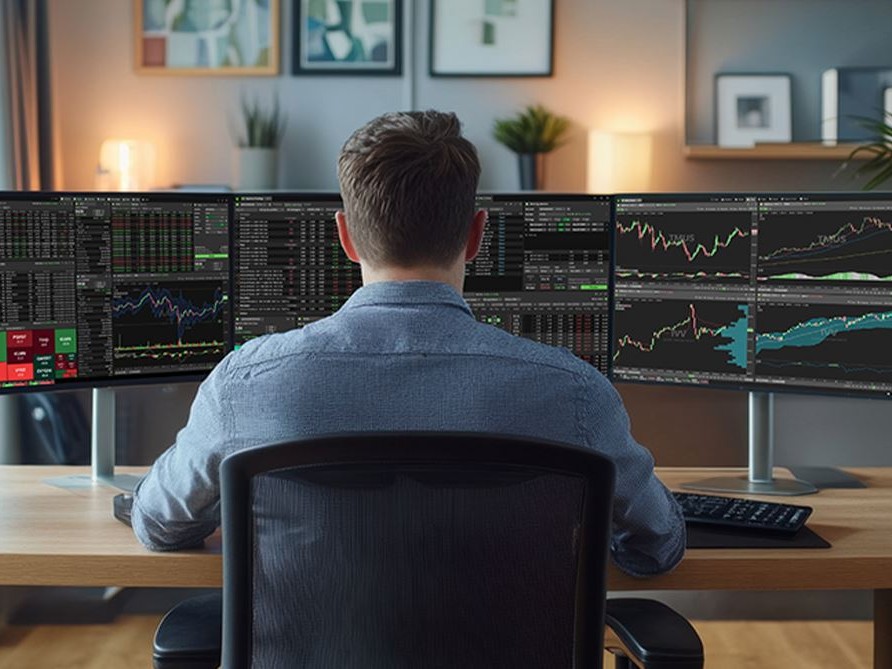
Margin requirements create structural guardrails that prevent the trading behaviors most likely to destroy accounts. They require traders to maintain minimum equity levels before opening leveraged positions, establishing a buffer between normal price fluctuations and the losses that trigger cascading failures. This isn't about limiting opportunity. It's about making overleveraging inconvenient enough that traders pause before committing capital they can't afford to lose.
They Limit Excessive Leverage
The fastest path to account destruction starts with controlling positions far larger than available capital can support. Margin requirements solve this by demanding a percentage of the position's value as collateral before the trade executes. Charles Schwab requires a 50% margin requirement on most equity positions, meaning traders must deposit half the purchase price upfront. This creates friction at exactly the right moment, when enthusiasm might otherwise override judgment.
Without these limits, a trader with $10,000 could theoretically control $100,000 in stock. A 10% adverse move would wipe out the entire account and leave a debt. Margin requirements compress that exposure, ensuring the position size stays proportional to the trader's actual financial capacity. The constraint feels restrictive until you realize it's the only thing standing between a manageable loss and a career-ending one.
They Create an Early Warning System
Margin requirements shift as equity declines. When losses push available capital toward maintenance thresholds, brokers issue margin calls before the account reaches critical underfunding. Chase enforces a 25% minimum equity requirement, triggering alerts when account value approaches that level. This gives traders a chance to reduce exposure, deposit additional funds, or tighten stops before losses spiral into forced liquidations.
Many traders ignore risk until it becomes unavoidable. Positions that appear manageable can turn dangerous when volatility suddenly expands, and without external pressure, it's easy to rationalize holding through drawdowns that should trigger exits. Margin requirements force that conversation earlier, when options still exist. The warning isn't pleasant, but it's better than discovering the problem after the broker has already closed your positions at the worst possible price.
They Encourage Better Position Sizing
Professional traders think in terms of risk per trade, not just potential profit. Margin requirements naturally reinforce this discipline by prompting traders to consider how much capital each position consumes, how many positions the account can support simultaneously, and how much room remains for adverse moves. This isn't abstract theory. It's the difference between a strategy that survives volatility and one that collapses during the first meaningful drawdown.
Most prop firms apply similar logic to their evaluation programs, setting drawdown limits and position size restrictions that mirror margin mechanics. The firms with tighter constraints aren't necessarily worse. They're filtering for traders who understand exposure management before risking firm capital. TradingPilot helps traders identify which firms allow their strategies to operate within those rules, preventing the costly mistake of paying for an evaluation that rules out your approach from the start.
They Protect Against Market Stress Events
During periods of extreme volatility, brokers and exchanges increase margin requirements to reflect heightened risk. This adjustment frustrates traders who suddenly find their positions require more capital to maintain, but the purpose is protective. When price swings expand beyond normal ranges, the probability of gap moves and slippage increases.
Higher margin requirements reduce the likelihood that a single violent move triggers mass liquidations that destabilize the broader market. Research on margin risk management shows that dynamic margin models help contain losses during stressed conditions by forcing position reductions before systemic contagion spreads.
The Structural Discipline of Margin Requirements
The real benefit isn't that margin requirements prevent losses. They don't. The benefit is that they make the discipline of risk management harder to ignore, creating structural pressure to maintain exposure at levels the account can withstand. For traders who want longevity, that's not a limitation. It's the foundation.
But understanding how margin requirements protect you doesn't answer the harder question: which type of margin actually matters for your strategy?
Initial Margin vs Variation Margin: Which One to Choose?

Initial margin determines whether you can enter the trade. Variation margin determines whether you can stay in it. Both matter, but the one you should focus on depends entirely on where your risk management breaks down most often.
If Your Goal Is Avoiding Over-Leverage, Focus on Initial Margin
Most traders see a low margin requirement and think they've found room to trade bigger. That's the beginning of the problem, not the opportunity. A $10,000 account with $1,000 initial margin per contract doesn't mean you can safely hold ten contracts. It means the broker will let you. There's a massive difference.
Initial margin tells you how much capital you're committing before price moves at all. It exposes position size decisions before emotion enters the picture. If you're prone to overtrading or scaling too aggressively, this is where discipline needs to live. Ask yourself: how many contracts can I survive if this trade goes wrong, not how many the platform will allow me to open.
If Your Goal Is Surviving Losing Trades, Focus on Variation Margin
Once a position is open, variation margin becomes the real issue. Every tick against you pulls equity from your account in real time. You might have entered a trade that looked affordable, but market volatility doesn't care about your initial plan. According to Risk.net, initial margin is typically calculated to cover potential losses over a 5- to 7-day risk horizon, whereas variation margin adjusts daily based on actual market movements.
The trade that felt manageable at entry can quietly become an account problem as unrealized losses compound. Traders focus on chart patterns and profit targets while ignoring the shrinking margin cushion that determines whether they'll still be in the position tomorrow. Variation margin exposes this reality whether you're watching or not.
Which Margin Matters More for Beginners?
For most beginners, initial margin deserves attention first. The mistake happens before the trade even begins. Beginner traders struggle with oversized positions, excessive leverage, and poor capital allocation. If you use nearly all your available margin to open a position, a small market move creates a large percentage drawdown. You lose flexibility. Emotional pressure builds. The problem wasn't variation margin. It started with position sizing.
Experienced traders, by contrast, generally focus more on variation margin. They already understand leverage and capital allocation. Their challenge becomes managing open exposure and controlling drawdowns as positions move. At higher account sizes, staying in the trade often matters more than getting into it. The strongest traders don't pick one. They use both as part of a complete risk-management process, asking before the trade how much capital they're committing and during the trade how close they are to margin pressure.
Aligning Prop Firm Margin Policies With Your Strategy
Many traders waste money on prop firm evaluations without understanding how margin mechanics interact with drawdown limits and position-sizing rules. A firm might allow your strategy on paper but enforce maintenance requirements that liquidate positions during normal volatility. TradingPilot helps traders filter firms by specific margin policies, drawdown thresholds, and leverage restrictions, so you're not paying for evaluations that will fail your approach before you even place a trade.
The goal isn't finding the firm with the lowest initial margin. It's finding the one whose margin structure lets your strategy operate within the rules. But knowing which margin type to prioritize still doesn't tell you how to actually use margin as a risk tool in practice.
Related Reading
-
Day Trading Leverage
-
Futures Options Trading
-
Best Time Frame For Crypto Trading
10 Ways to Use Margin for Risk Management

Understanding margin types matters less than knowing how to deploy them strategically. The real question isn't which margin applies when, but how you structure positions so that margin requirements work for you rather than against you. Most traders treat margin as a constraint to maximize. Better traders treat it as a boundary that keeps their accounts alive long enough to profit.
1. Treat Margin as a Risk Limit, Not a Buying Power Limit
Your broker might allow ten contracts on a $10,000 account. That approval doesn't mean your risk tolerance does. According to the TradeZero Blog, a 2:1 leverage ratio is standard, but standard doesn't mean optimal for your strategy or psychological tolerance. The critical shift happens when you stop asking "How much can I trade?" and start asking "How much should I trade given my actual edge and volatility exposure?"
Use only a fraction of the available margin so you maintain flexibility when volatility spikes or better setups emerge. Traders who preserve margin buffers can add to winning positions or defend losing positions without being forced to exit. The goal isn't filling your margin capacity. It's keeping enough dry powder that market movements don't dictate your decisions.
2. Maintain a Large Free Margin Buffer
Initial margin gets you into a trade. Free margin determines whether you survive it. Free margin is what remains after accounting for open positions, and it absorbs the daily mark-to-market adjustments that variation margin creates. When equity falls, available margin shrinks. When margin shrinks, your room for error disappears.
Maintaining substantial free margin means leaving 40% to 60% of your margin capacity unused. It sounds conservative until volatility doubles overnight and your positions move against you by 3%. Traders without buffers face margin calls. Traders with buffers face decisions rather than forced liquidations.
3. Reduce Position Size Before Increasing Leverage
More leverage feels like more opportunity. What it actually creates is less room for error. Two traders with identical $10,000 accounts take opposite approaches.
-
Trader A uses moderate leverage and smaller positions.
-
Trader B maximizes leverage to control larger positions.
When volatility spikes during a Federal Reserve announcement, Trader A absorbs the move and stays in the market. Trader B receives a margin call because a 5% adverse move exceeded available equity.
Smaller positions with moderate leverage often produce better long-term survivability than large positions with maximum leverage. The math is unforgiving. A 10% market decline in a fully leveraged position can result in a 50% loss. That's not a drawdown you recover from quickly.
4. Use Stop-Losses to Protect Margin
Every loss reduces equity. Every equity reduction tightens margin. This creates a direct connection between loss management and margin survival. Without a stop-loss, losses expand, equity declines faster, and margin pressure increases until the broker intervenes.
Determine your maximum acceptable loss before entering the trade, not after the market moves against you. A stop-loss at 2% of account equity caps the damage to a known amount, preserving margin for the next trade. Traders who wait to see if positions recover often discover they've lost the margin capacity to take advantage of the recovery when it finally arrives.
5. Adjust Margin Usage Based on Volatility
Using identical position sizes regardless of market conditions is how traders blow up during CPI releases or Federal Reserve announcements. Markets don't behave consistently. Your margin usage shouldn't either. Research on futures margin modeling shows that intraday volatility creates significantly different risk levels than traditional daily measures suggest.
When volatility rises, reduce leverage and position size. When markets calm, you can expand exposure again. This dynamic approach prevents volatility from turning a manageable trade into a margin problem. The traders who survive long enough to profit are the ones who scale risk down when uncertainty scales up.
6. Set a Maximum Margin Usage Rule
Successful traders often establish personal caps that override broker allowances. Examples include never using more than 30% of the available margin, never risking more than 1%-2% of account equity per trade, or reducing exposure after two consecutive losses. These rules prevent emotional decisions during periods of overconfidence or frustration.
The rule matters less than having one and following it. Without a predetermined limit, margin usage tends to creep upward during winning streaks and contract too slowly during losing streaks. The result is predictable. Accounts survive the wins but don't survive the inevitable drawdowns.
7. Monitor Margin Levels Like You Monitor Price
Most traders constantly watch charts, indicators, and profit and loss. Few monitors use margin, free margin, account equity, or leverage ratios with the same diligence. This creates a dangerous blind spot. Margin pressure develops gradually. By the time a margin call arrives, the underlying risk problem has existed for days or weeks.
Regularly reviewing margin utilization helps identify risks before they become urgent. If the used margin climbs above 60%, that's a signal to reduce exposure, not wait for the market to force the decision. Monitoring margin turns risk management into a proactive process instead of a reactive scramble.
8. Diversify Risk Instead of Stacking Margin Into One Trade
Allocating most available margin to a single high-conviction trade feels right when confidence is high. The problem is that one unexpected market move can severely damage the account. Spreading risk appropriately across multiple positions reduces the impact of any single adverse event.
Diversification doesn't mean taking more trades. It means not concentrating margin exposure in a single idea, sector, or correlated group of positions. When margin is distributed, a loss in one position doesn't cascade into forced exits across the entire portfolio.
9. Plan for Margin Calls Before They Happen
Professional traders prepare for margin calls in advance. Most traders think about them only after receiving one. Ask yourself what happens if volatility doubles, if you experience five losing trades in a row, or how much equity you can lose before margin becomes a problem. Thinking through these scenarios beforehand prevents reactive decisions later.
Planning includes knowing which positions you'd exit first, which you'd defend, and at what equity level you'd stop taking new trades. Without a plan, margin calls force decisions at the worst possible moment, when emotions are high and options are limited.
10. Use Tools to Calculate Risk Before Opening Positions
Traders misuse margin because they focus on trade potential rather than account impact. Before entering a trade, calculate dollar risk, margin utilization, leverage exposure, worst-case drawdown, and scaling implications. This shifts margin management from guesswork to measurement.
TradingPilot helps traders compare margin requirements, position sizes, risk exposure, and capital allocation before entering trades. When you can see how a position affects your total margin usage and equity buffer, you make better decisions about whether to take the trade at all, and if so, at what size. The goal is to turn margin management into a proactive process, not a reactive scramble after positions move against you.
10 Other Risk Management Strategies for Margin Trading

You can't control whether a trade wins or loses, but you can control how much damage any single loss inflicts. The strategies below treat margin not as extra buying power, but as a constraint that forces better decisions before you enter a position. Each rule exists because someone lost money ignoring it.
1. Cap Leverage to a Fixed Risk Ratio (Not Available Margin)
The failure pattern repeats itself across thousands of accounts: traders use all available margin because the broker allows it, then discover that small price movements trigger catastrophic losses. Research published by the Bank for International Settlements in 2023 confirms that leverage increases the probability of forced liquidation and accelerates losses during volatility spikes. When you control $100,000 in futures with $5,000 in equity, a 5% adverse move doesn't just hurt; it ends your account.
Keep effective leverage under 2x to 5x if you're still learning how margin behaves under stress. Avoid using more than 30%-40% of the available margin, even when the broker permits higher exposure. Why does this work? Because even normal volatility swings of 2% to 5% can wipe out highly leveraged accounts, while moderate leverage allows you to survive through typical market noise without forced exits.
2. Keep a Minimum 50% Free Margin Buffer
Studies on margin call risk show that accounts operating close to margin constraints are significantly more likely to undergo forced liquidation during periods of volatility. If your broker requires a $2,000 margin for your positions, safe usage means deploying only $1,000 to $1,200, leaving $800 to $1,000 free. This isn't conservative; it's survival math.
When volatility spikes, margin requirements and unrealized losses increase simultaneously, creating a double-pressure effect that crushes accounts with no buffer. The free margin absorbs mark-to-market losses and gives you decision space instead of forcing immediate liquidation at the worst possible moment.
3. Reduce Position Size During Volatility Spikes
Research on futures markets published in the Journal of Financial Markets shows that the probability of a margin call increases sharply with volatility expansion. During CPI or FOMC events, the Nasdaq (MNQ) intraday range can expand from roughly 80 points to 150+ points, doubling the margin stress on identical position sizes. Cut position size by 30% to 60% on high-volatility days so normal volatility doesn't cause margin stress.
This isn't about missing opportunity; it's about preventing normal market movement from becoming an account-ending event. The same position that feels manageable on a quiet Tuesday can trigger forced exits on a volatile Wednesday if you don't adjust size to match conditions.
4. Never Let a Single Trade Consume Too Much Margin
A key finding from leverage studies is that forced liquidation risk rises dramatically when exposure is concentrated. One trade should not use more than 10% to 20% of the total account margin. If a single position controls too much margin, small adverse moves trigger forced exits, diversification benefits disappear, and your entire account becomes hostage to one trade's outcome.
Spread margin usage across multiple uncorrelated positions so that a single bad trade results in a manageable loss, not a systemic account failure. When you allocate 50% of margin to a single position, you're betting the account, not managing it.
5. Use Stop-Losses That Match Margin Reality
Margin losses compound quickly because leverage magnifies every percentage point of movement. A 25% drop in position value can create a 50% equity loss in leveraged accounts, and a 50% drop approaches the account-wipeout threshold for many traders. Set stop-losses so that risk per trade equals 1% to 2% of total equity, not based on chart convenience alone.
The stop-loss must reflect how much equity you can afford to lose, not just where support levels sit on a chart. If your technical stop would risk 5% of equity, the position is too large, the leverage is too high, or both.
6. Avoid Correlated Margin Exposure (Hidden Risk Multiplier)
Studies show that correlation during stress increases dramatically, amplifying losses across positions that traders mistakenly believe are diversified. Long MNQ plus long MES plus long NQ equals the same exposure, not three independent trades. A 2% market drop becomes a triple-position loss because all three contracts move together.
Treat correlated assets as one risk unit, not multiple trades. If you want genuine diversification, spread margin across assets that don't collapse together during volatility spikes, such as equities, commodities, and currencies.
7. Plan for Margin Calls Before They Happen
Research using ruin theory shows that the probability of a margin call increases with leverage and volatility exposure, and that margin calls are not random; they are mathematically predictable under poor sizing. Ask yourself: "What happens if I lose five trades in a row?" If the margin becomes tight in that scenario, your position is too large before the first trade even executes.
Planning for margin calls means stress-testing your exposure before it becomes a crisis. If your account can't survive a realistic losing streak, reduce position size until it can.
8. Scale Into Positions Instead of Using Full Margin Upfront
Large single entries increase liquidation risk because they commit all margin immediately, leaving no room to adjust if the trade moves against you or if volatility expands. A better approach:
-
50% entry
-
Then 25% add
-
Then 25% add
This reduces immediate margin exposure, emotional overcommitment, and the risk of forced liquidation.
Scaling also gives you the flexibility to average into better prices if the trade initially moves against you, rather than watching a full-size position bleed equity with no capital left to defend it.
9. Stress-Test Your Margin Usage Before Trading
Academic models show that leverage constraints can trigger forced selling even during normal volatility regimes, not just during crashes. Simulate ten losing trades in a row. If your account survives, your margin usage is safe. If not, you're overleveraged before you place the first trade.
This simulation reveals whether your sizing is resilient or fragile. Most traders discover they're one bad week away from a margin call, not because their strategy is flawed, but because their position sizing assumes perfection.
10. Use Platform-Based Margin Analysis Before Choosing a Broker
One of the most overlooked risk factors is not trade strategy but differences in broker margin structures. Margin requirements vary significantly across platforms, liquidation rules differ, and intraday margin changes affect survival rate. Two traders with identical strategies can have completely different outcomes due to platform margin rules alone.
Most traders pick a broker based on commissions or interface design, then discover too late that the margin rules don't support their strategy. Best prop trading firms allow you to compare margin requirements, drawdown limits, and liquidation policies across firms before you pay for an evaluation, so you can identify which platforms let your strategy operate within the rules instead of discovering incompatibility after you've already funded an account.
Turn Margin From a Hidden Risk Into a Controlled System
The real problem is not that the margin is dangerous. It's that most traders only discover its mechanics after they've already lost control. You notice margin when the broker restricts your next trade, when a position gets liquidated during a volatility spike, or when a drawdown accelerates faster than you thought possible.
By then, the damage is done. The solution is not to avoid margin, but to measure and map it before you commit capital, so you understand exactly how much exposure you're actually taking and what happens when the market moves against you.
Check Full Exposure Before Trading
Before you open your next futures or margin-based position, run a full exposure check.
-
Enter your account size
-
The contract you plan to trade
-
Your intended position size
-
Your typical stop-loss range
Then calculate how much of your account is truly exposed, not just how much margin the broker requires. See what your drawdown looks like under three to five consecutive losses.
Understand how volatility changes your margin safety buffer and whether your position would survive margin expansion during high-volatility events. This process takes roughly ten minutes, but it replaces guesswork with actual exposure numbers that show you whether your strategy can operate within the rules or if you're one bad day away from a forced exit.
Compare Firm Rules Before Funding
Best prop trading firms let you compare margin requirements, drawdown limits, and liquidation policies across firms before you pay for an evaluation. You can identify which platforms allow your strategy to function within their rules instead of discovering incompatibility after you've already funded an account. This removes the most expensive form of trial and error: losing evaluation fees because the firm's margin structure was never compatible with your approach in the first place.
Control Margin Before It Controls You
Most traders treat margin as something that happens to them. The ones who survive treat it as a system they control.
-
They know their exposure before the trade, not after.
-
They measure drawdown risk in advance, not when the margin call arrives.
-
They build buffers into their position sizing so that volatility spikes become manageable events rather than account-ending disasters.
The difference is not talent or experience. It's simply knowing the numbers before you need them.
Related Reading
-
Small Account Trading
-
Trading E Mini Futures
-
Best Crypto Leverage Trading Platforms
-
Day Trading Average Income
-
Small Account Options Trading
-
Crypto Trading With Leverage
-
Trading Goals
-
Best Futures To Day Trade
-
Futures Brokers With Low Intraday Margin