
Crypto Leverage Trading

If you have ever wondered how much stock traders make and whether crypto trading with leverage could push those numbers higher, you are not alone. Margin trading, leveraged positions, and borrowed capital have pulled in traders looking to amplify returns beyond what traditional markets offer, but the risks are just as real as the rewards. This article breaks down how leverage works in crypto markets, what it actually costs you when a trade goes wrong, and how to find the best prop firms that give you access to larger capital without risking everything you own.
That last point matters more than most traders realize, which is where TradingPilot comes in. TradingPilot gives you a clear, side-by-side look at the best prop trading firms so you can compare funding programs, leverage ratios, profit splits, and drawdown rules in one place. Instead of spending hours researching futures trading platforms or crypto prop firms individually, you get a straightforward comparison that helps you make a smarter decision faster.
Summary
-
Crypto leverage activity reached multi-year highs across CeFi, DeFi, and futures markets in Q2 2025, according to Galaxy Research. More traders than ever are operating in conditions where small errors carry outsized consequences. The survivorship bias on social media, where winning screenshots spread while liquidations remain invisible, has accelerated participation without improving outcomes.
-
Liquidation rarely occurs due to a crash. Research on perpetual Bitcoin futures found that traders who suffered forced liquidations were using an average leverage of 60x, and that reducing it to roughly 3x-5x would substantially reduce that risk. Crypto markets can move 10% or more in a single day under ordinary conditions, meaning high leverage leaves almost no buffer for routine price swings.
-
Spot trading eliminates liquidation risk entirely, but it introduces a different set of costs that most traders underestimate. Without leverage, capital efficiency drops, short-selling disappears as a tool, hedging portfolio exposure becomes harder, and returns are capped at the market's pace. Avoiding leverage is not the same as managing risk. It means trading one category of risk for several others.
-
Confidence and experience are not the same variable, and leverage should reflect experience rather than ambition. Beginners are typically advised to start with 2x to 5x leverage and scale only after demonstrating consistent execution. Copying leverage levels from experienced traders without understanding the underlying strategy produces the same result as borrowing a race car setup for a track you have never driven.
-
Strategy-leverage mismatches account for a significant share of retail losses. CMC Markets reports that 58% of retail investor accounts lose money trading CFDs, and much of that loss traces back to applying the wrong level of leverage to a given strategy rather than to poor market analysis. Trend trades, swing trades, and scalping each require a different leverage posture, and treating them interchangeably is one of the most consistent ways for a sound directional read to still end in a loss.
TradingPilot's best prop trading firms comparison addresses this by allowing traders to evaluate firm-level drawdown models, instrument restrictions, and verified payout data before committing capital.
Is High Leverage Important in Crypto Trading?
High leverage is not the most important factor in crypto trading success. It is a multiplier, and multipliers do not discriminate. They scale discipline and recklessness with equal efficiency.
The myth persists because social media rewards the outlier. A trader who turns $300 into $30,000 using 100x leverage gets the screenshot. The thousands who were liquidated before reaching that return remain silent. That survivorship bias creates a deeply distorted picture of what high leverage actually produces at scale.
According to Galaxy Research's State of Crypto Leverage Q2 2025, crypto leverage resumed its upward trajectory in Q2 2025 after declines in Q1, with CeFi, DeFi, and futures markets all showing multi-year highs, meaning more traders than ever are operating in territory where small mistakes carry outsized consequences.
Why Liquidation Happens on Ordinary Days
The failure point is usually not a crash. It is a Tuesday. Crypto markets experience forced liquidations on nearly every trading day because high leverage compresses the distance between your entry price and your liquidation price to almost nothing. Research on perpetual Bitcoin futures found that traders who suffered forced liquidations were using an average leverage of 60x, and that reducing it to roughly 3x-5x would substantially reduce liquidation risk even under extreme conditions. The market need not collapse to end a highly leveraged trade. It only needs to move.
Leverage Buffer First
Most traders handle position sizing by choosing the highest leverage available and working backward from there. That approach feels logical because bigger leverage appears to mean bigger returns per dollar risked. But as complexity grows and volatility spikes, that logic inverts fast. A position sized for 50x leverage leaves almost no buffer for the kind of routine price swings that IG AU's analysis of leverage trading in crypto describes, where crypto markets can move 10% or more in a single day, amplifying both gains and losses simultaneously.
TradingPilot addresses this directly by letting traders compare prop firm drawdown rules and leverage caps side by side, so the decision about how much leverage is appropriate happens before entering a trade, not during one.
What Separates Professional Leverage Use From Retail Leverage Use
Professional traders rarely ask about the maximum available leverage. They ask what the minimum leverage is that still makes the trade worth taking. That reframe changes everything about position sizing, stop placement, and emotional management during drawdowns. Oversized leveraged positions do not just increase financial risk. They amplify fear during normal pullbacks, trigger impulsive exits, and fuel revenge trading after liquidations, creating a feedback loop that compounds losses beyond what the market alone would cause.
Leverage as a Risk Management Tool
The critical difference is not access to leverage. It is the discipline to treat leverage as a capital efficiency tool rather than a return amplifier. Experienced traders adjust leverage based on volatility, account size, and stop-loss distance, preserving enough flexibility so that a single losing trade does not close the door on future opportunities.
That restraint is what separates traders who stay in the game from those who exit it involuntarily. But knowing how leverage works in a prop firm environment adds a layer most traders never consider until it costs them.
Related Reading
Trading Crypto Without Leverage

Spot trading feels safer. And in one specific way, it is this: according to CryptoSlate, spot traders face 0% liquidation risk, whereas leveraged traders can lose entire positions. But zero liquidation risk is not the same as zero cost. Trading without leverage carries its own set of trade-offs, and most traders never see them clearly until they've already paid for them.
What Spot Trading Actually Costs You
Here is what happens when you remove leverage from your crypto trading entirely:
1. Your Capital Works Less Efficiently
Without leverage, controlling a $10,000 Bitcoin position requires the full $10,000 committed upfront. With 10x leverage, the same market exposure costs roughly $1,000 in margin. That difference matters because every dollar tied to one trade is a dollar that cannot respond to the next opportunity.
2. Your Returns Grow at the Pace of the Market, Nothing Faster
According to WunderTrading, without leverage, a 10% price move yields exactly a 10% return on capital. That ceiling is fine during quiet markets. It becomes a structural disadvantage when you're trying to build an account without continuously injecting new capital.
3. Short-Selling Disappears as a Tool
Spot trading profits only when prices rise. Perpetual futures and leveraged derivatives allow traders to take short positions, enabling them to generate returns during market downturns. Without that option, a prolonged bear market becomes a waiting game rather than a trading environment.
4. Hedging Your Portfolio Gets Harder
Experienced traders use leveraged derivatives not just to amplify gains but to offset losses in existing spot holdings during high-volatility periods. Without access to those instruments, your portfolio absorbs the full force of every drawdown with no counterbalance.
5. You May Be Forced to Choose Between Holding and Trading
Long-term crypto holders often don't want to sell their positions every time a short-term setup appears. Leverage lets traders gain additional market exposure without liquidating core holdings. Without it, you're frequently choosing between your long-term conviction and a short-term opportunity, not balancing both.
6. Your Portfolio Loses Flexibility
Capital locked in large spot positions cannot be redeployed quickly. Responsible leverage use preserves liquidity for diversification, risk adjustments, and new setups. A rigid portfolio is slower to adapt, and in crypto, slow adaptation is expensive.
7. You May Confuse No Leverage With Managed Risk
This is the most costly misconception. Risk is a function of position sizing, stop-loss discipline, and capital allocation. A trader using 2x leverage with tight risk management may expose far less of their account than someone who puts their entire portfolio into a single spot position with no exit plan. Avoiding leverage does not mean avoiding risk. It means avoiding one specific type of risk while potentially ignoring others.
The Real Question Isn't Whether to Use Leverage
The bottom line is this: spot trading reduces liquidation exposure, but it also removes capital efficiency, short-side access, hedging capability, and portfolio flexibility. The goal was never to avoid leverage at all costs. The goal is to understand when leverage genuinely improves your strategy and when it simply adds pressure that your risk management cannot absorb.
Most traders who avoid leverage entirely aren't being disciplined. They're being avoidant. And avoidance is not a strategy.
Choose Firms That Fit Your Leverage Strategy
This is where firm selection becomes part of the equation. Most traders decide on a leverage approach first, then look for a prop firm that accommodates it. That order creates expensive mismatches. Firms restrict instruments, cap leverage levels, and enforce drawdown rules that can make a perfectly sound crypto strategy non-viable before the first trade is placed.
Best prop trading firms let traders compare firm-level restrictions, drawdown models, and verified payout data side by side, so the firm you choose actually supports the way you trade rather than quietly working against it. Knowing whether to use leverage is one decision. Knowing exactly how much leverage fits your strategy, your account size, and the current market is a completely different one.
How to Choose the Best Leverage for Crypto Trading in 9 Steps

Choosing the right leverage for crypto trading starts with one honest question: how much can you afford to lose before this trade no longer makes sense? Every decision after that, from position size to stop-loss placement, flows from that answer. Leverage is not a dial you turn up for bigger wins. It is a constraint you set to keep losses within a survivable range.
1. Start With Risk Tolerance, Not the Maximum Available
The fact that an exchange offers 50x or 100x leverage tells you nothing about what you should use. Available leverage and appropriate leverage are two completely different numbers, and confusing them is one of the most common ways traders destroy accounts with real potential.
Before selecting any multiple, ask yourself three questions:
-
How much of this account am I willing to lose if the trade fails?
-
Can I absorb normal price swings without hitting liquidation?
-
Would I stay rational if the position moved against me by 15% before reversing?
If any answer makes you hesitate, your leverage is already too high.
2. Match Your Leverage to Market Conditions
The same leverage that works in a calm, range-bound market can be catastrophic during a high-volatility event. A major Bitcoin announcement, a surprise regulatory decision, or a sudden liquidity shift can move prices 10% to 20% in minutes. Lower leverage during those windows is not timidity. It is arithmetic.
A common pattern across struggling traders is that they were not wrong about direction. They were simply overleveraged and got liquidated by ordinary price noise before the market moved where they expected. The trade was right. The leverage killed it.
3. Scale Leverage to Your Experience, Not Your Confidence
Confidence and experience are not the same thing, and leverage should reflect the latter. According to Crypto.com's guide to trading crypto with leverage, beginners are typically advised to start with 2x to 5x leverage to limit liquidation risk, scaling up only after demonstrating consistent execution and risk management.
Copying the leverage used by a seasoned trader without understanding the strategy behind it is like borrowing someone else's race car setup for a track you have never driven. The settings are calibrated to their reflexes, not yours. Start lower, build a track record, then adjust.
4. Size Positions From Risk, Not From Profit Goals
The failure point is usually this: a trader decides how much they want to make and works backward to find the leverage required to achieve that amount. Professional traders reverse the process entirely. They start with the stop-loss, calculate the maximum acceptable loss, and let that determine position size and leverage.
If your position sizing is already undisciplined, higher leverage does not fix it. It just makes the consequences arrive faster and harder. Leverage is a multiplier on whatever process already exists, disciplined or not.
5. Adjust Leverage for Your Trading Style
Scalpers and swing traders operate in fundamentally different time environments, and their leverage should reflect that. A scalper entering and exiting within minutes faces a narrow window of volatility. A swing trader holding for days or weeks faces compounding uncertainty, making high leverage increasingly difficult to sustain without being stopped out by routine fluctuations.
If your strategy requires holding through normal market noise, your leverage needs to give the trade room to breathe. Positions placed so close to liquidation that ordinary movement closes them are not trades. They are lottery tickets with worse odds.
6. Give Every Trade a Buffer for Normal Movement
The fastest way to lose a trade that was directionally correct is to leave yourself no margin for the market's natural rhythm. Price rarely moves in a straight line, even when the trend is clear. A leveraged position needs enough space to absorb that movement without triggering liquidation before the analysis plays out.
This is not about being conservative for its own sake. It is about staying in the trade long enough for your reasoning to be tested by the market, not by your margin balance.
7. Never Use Leverage as a Substitute for a Stop-Loss
Leverage is not a risk management tool. It is an amplifier. Every leveraged crypto position should carry a predefined stop-loss, a maximum acceptable loss threshold, and a clear exit plan that you set before the trade opens, not while it is moving against you.
Waiting for liquidation to close a position means you have already lost control. The stop-loss should define when the trade ends. The liquidation price should never enter the decision at all.
8. Choose a Platform That Shows You Consequences Before You Commit
Most traders enter leveraged positions without fully modeling what happens if the trade moves against them by 10%, 20%, or 30%. They feel the setup, estimate the upside, and click confirm. The downside analysis gets skipped because it is uncomfortable, not because it is unimportant.
The familiar approach is to choose leverage based on gut feel or habit, enter the trade, and manage risk reactively once the position is open. As positions grow and market conditions shift, that reactive approach creates gaps that compound quietly until a single bad trade wipes out weeks of gains.
Match Leverage to the Right Firm
Best prop trading firms comparison platforms like TradingPilot let traders evaluate firm-level drawdown rules, instrument restrictions, and leverage caps before committing capital, so the firm's structure actually supports the leverage approach you intend to use rather than quietly limiting it mid-strategy.
Leverage ratios in crypto trading can range from 2x to 100x or more, depending on the platform. That range is not a menu. It is a spectrum of risk, and knowing where you belong on it requires honest self-assessment rather than ambition.
9. Review Your Leverage After Every Trade Series
After a run of trades, the question is not just whether you made money. It is whether your leverage was appropriate for each setup. Were you stopped out because your analysis was wrong, or because your leverage left no room for the trade to develop? Did you risk more than your plan allowed?
Successful traders treat leverage as a variable they continuously calibrate, not a fixed setting they apply uniformly. The data from your own trade history is the most honest feedback you will ever get. Use it.
Knowing how to size leverage correctly is one layer of this. Knowing which specific strategies actually work within those constraints is where the real edge lives.
Related Reading
7 Best Crypto Leverage Trading Strategies 2026

Knowing which strategies actually perform within leverage constraints is where execution separates serious traders from everyone else. Seven approaches consistently hold up across different market conditions, and each one demands a specific leverage posture to work properly.
1. Trend Trading: Trade With Momentum, Not Against It
Trend trading means identifying an established directional move and opening leveraged positions that follow it, using tools such as moving averages, trendlines, and patterns of higher highs and higher lows to confirm the direction. The relief traders feel when they stop fighting momentum is real. You stop trying to predict reversals and start reading what the market is already telling you. Moderate leverage works well here because the trend itself does part of the work.
2. Breakout Trading: Enter Only After Confirmation
The failure point in most leveraged breakout trades is timing. Traders enter before the price has cleared resistance or broken support, turning a speculative guess into a leveraged loss. Waiting for a decisive, high-volume move to confirm the breakout before entering reduces false signals substantially.
According to LiteFinance, Bitcoin has experienced price swings of over 80% in bear markets, which illustrates exactly how expensive premature entries become when leverage amplifies every move against you.
3. Scalping: Small Moves, Strict Rules
Scalping involves opening and closing multiple short-duration positions to capture incremental price movements, using leverage to make those small moves meaningful. It is one of the most popular leveraged crypto strategies, and also one of the most punishing for traders who skip predefined exits. A series of small gains can disappear in two bad trades if execution discipline breaks down. This approach suits experienced traders in highly liquid markets, not beginners looking for a shortcut.
4. Range Trading: Let Price Come to You
When no clear trend exists, the price often oscillates between defined support and resistance levels. Range traders buy near support and sell near resistance, using technical analysis to identify those boundaries rather than forcing trades that do not exist. A common pattern is traders chasing breakout setups in sideways conditions and taking losses that a patient range approach would have avoided entirely. Matching your strategy to the current market environment is not optional. It is the difference between trading and gambling.
5. Swing Trading: Lower Leverage, Wider Breathing Room
Swing trading targets medium-term price movements over several days or longer, which means positions stay open through normal volatility cycles that shorter strategies never have to absorb. Higher leverage leaves almost no buffer for that volatility, which is why lower leverage with wider stop-losses is the appropriate structure here. The longer a position stays open, the more uncertainty accumulates around it. Giving the trade room to develop is not a weakness. It is mechanics.
6. Hedging: Leverage as Protection, Not Just Amplification
A widespread misconception is that leverage only serves one purpose: increasing returns. Professional traders regularly use leveraged derivatives to protect existing spot holdings. The practical version looks like this: you hold Bitcoin in a long-term portfolio and open a short futures position during a period of elevated uncertainty. If the market drops, short gains offset losses in the spot position. Used this way, leverage reduces overall portfolio risk rather than adding to it.
Most traders think about leverage purely in terms of upside amplification. Reframing it as a risk-management instrument changes how you evaluate every position you hold.
7. Match Strategy to Leverage, Not the Other Way Around
The truth is, most traders pick a leverage level first and then build a strategy around it. That sequence is backward. Your strategy should dictate your leverage based on the asset's volatility, the expected holding period, and the specific market condition you are trading. Trend trades may support moderate leverage. Swing trades call for lower leverage.
Scalping may tolerate higher leverage, but only with disciplined execution and predefined exits. Volatile altcoins typically require lower leverage than large-cap assets like Bitcoin or Ethereum, where price behavior is more predictable.
Choose a Firm That Matches Your Strategy
Here is where firm selection becomes a prerequisite, not an afterthought. Most traders spend time building a strategy and selecting leverage, only to discover that the prop firm they chose bans the instruments or trading styles they planned to use. TradingPilot lets traders compare firm-level rules, drawdown models, and instrument restrictions side by side before committing to an evaluation, so the strategy you build actually fits the environment you are trading in.
Strategy Success Depends on Context
CMC Markets reports that 58% of retail investor accounts lose money when trading CFDs, and a significant portion of that outcome traces back to strategy-leverage mismatches rather than poor market analysis alone. Choosing the right strategy is only half the equation. Choosing the right leverage for that strategy, in that market, with that asset, is the other half.
The seven strategies above are not a menu from which to pick your favorite. They are a framework in which each approach has a specific context, a specific leverage range, and a specific market condition in which it performs. Use them that way, and the results look very different.
But knowing which strategy fits your style is only the starting point. What most traders underestimate is how much the specific rules governing their execution environment shape whether any of this works at all.
10 Tips to Use Leverage in Crypto Trading as a Beginner
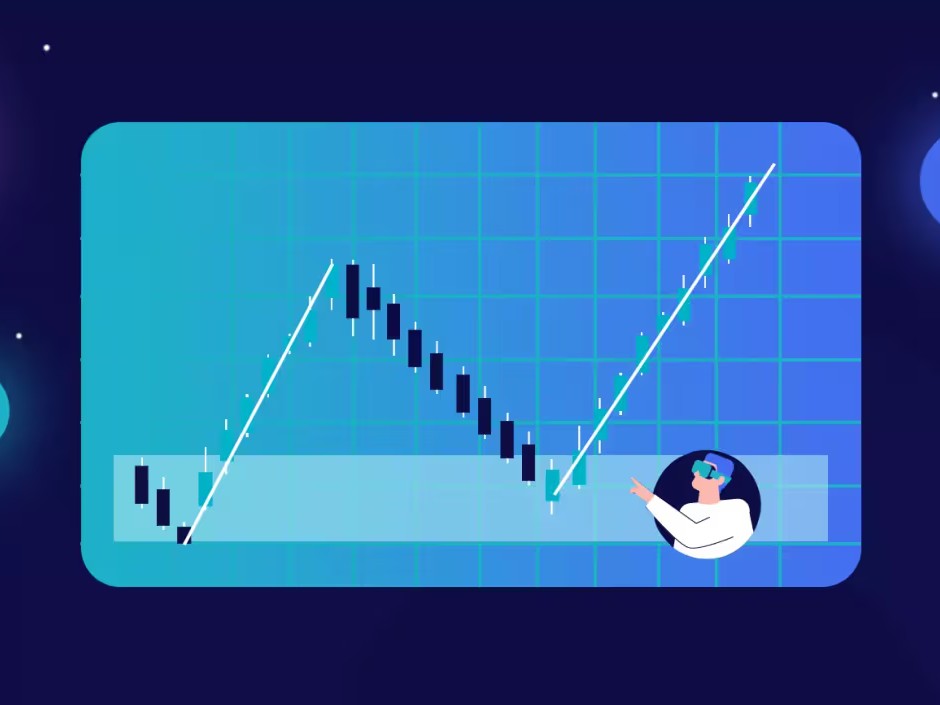
Choosing the right execution environment shapes whether any leverage strategy survives contact with real markets. The rules governing your platform, your position limits, and your risk tools are not background details. They are the infrastructure your strategy runs on.
1. Start With the Lowest Leverage Necessary
The failure point is usually not the direction of the trade. It is the leverage level chosen before the trade opens. Most traders select leverage by asking "how much can I make?" when the correct question is "how much do I need to execute this trade effectively?" If 2x achieves your objective, using 20x does not make you more precise. It makes you more fragile.
According to Changelly, a 10x leveraged position can be liquidated with just a 10% adverse price move. That is not a catastrophic crash. That is a normal Tuesday in crypto markets.
2. Define Your Risk Before You Choose Your Leverage
The correct sequence is: maximum acceptable loss first, stop-loss level second, risk-reward ratio third, percentage of account at risk fourth. Leverage comes last. Most traders reverse this entirely, picking a leverage level and then trying to fit the risk around it.
Successful traders treat leverage as a derived output of their risk plan, not an input. When you define your risk parameters first, leverage becomes a calculation rather than a guess.
3. Match Leverage to Market Conditions
Constraint-based reasoning applies directly here. If the market is moving through a major news event or a period of extreme volatility, your leverage ceiling drops. If conditions are calm and price action is orderly, you may have slightly more room. The leverage level that worked last week may not be appropriate today.
One of the most common reasons traders get liquidated is not a wrong directional call. It is using a leverage level calibrated for calm conditions during a volatile session. The market does not adjust to your position. Your position must adjust to the market.
4. Use Position Sizing and Leverage Together
Leverage without position sizing is like adjusting the volume without knowing what you are amplifying. Before entering any leveraged trade, calculate your position size, determine your stop-loss distance, and evaluate total account risk. Then, and only then, set your leverage accordingly.
These two variables work together. Ignoring one while managing the other creates the illusion of risk control without its substance.
5. Never Let Liquidation Be Your Exit Strategy
A stop-loss is a decision you make. A liquidation is a decision the market makes for you. The difference matters more than most traders acknowledge until it is too late.
Professional traders define their exit level before the trade opens. Treating liquidation as an acceptable outcome is not aggressive trading. It is the complete abandonment of risk management. The position does not fail because the market moved against you. It fails because you never decided where you would leave.
6. Adjust Leverage Based on the Asset
The same level of leverage that is reasonable on Bitcoin can be genuinely dangerous on a small-cap altcoin. Bitcoin and a highly volatile token are not the same instrument with different names. Their price swing ranges, liquidity profiles, and reaction patterns to market events are fundamentally different.
Apply lower leverage to assets with larger typical price swings. The goal is to keep your position alive long enough for your thesis to play out, not to maximize exposure on assets that can move 30% in a session.
7. Reserve Leverage for High-Conviction Setups
A common pattern emerges among traders who drain accounts unnecessarily: they apply leverage to mediocre setups simply because it is available. The best traders treat leverage as a resource with a limited daily budget. You do not spend it on trades that barely meet your criteria.
Use leverage when your setup meets predefined entry rules, risk is clearly defined, and market conditions actively support the trade. Selective use is not timidity. It is capital preservation with a purpose.
8. Choose the Right Platform Before You Choose the Leverage
Most traders pick a platform based on fees or interface familiarity, then figure out risk management afterward. That sequence has a hidden cost. Poor risk visibility turns even moderate leverage into guesswork because you cannot see how a position interacts with your total exposure until after the damage is done.
Before increasing leverage on any trade, your platform should clearly show position risk, allow you to compare leverage scenarios side by side, and surface how the trade affects your overall portfolio exposure. Most traders who use a platform that lacks these tools are not making leverage decisions. They are making leverage estimates.
Match Your Strategy to Firm Rules
This is also where firm selection becomes a prerequisite rather than an afterthought. Many traders executing leveraged crypto strategies within a prop firm discover too late that the firm restricts the instruments they can use, caps their leverage below what their strategy requires, or enforces drawdown rules that conflict with how they actually trade.
TradingPilot lets traders compare firm-level rules, drawdown models, and instrument restrictions side by side before committing to an evaluation, so the execution environment is understood before the first trade opens.
9. Monitor Total Portfolio Risk, Not Just Individual Trades
The failure mode here is subtle. Each individual position looks manageable in isolation. But three or four leveraged positions running simultaneously, especially in correlated assets, can create total portfolio exposure that no single trade review would reveal.
Successful traders monitor cumulative leverage across all open positions, track correlation between assets, and treat total account exposure as the number that actually matters. Several safe trades can combine into an unsafe portfolio.
10. Review Your Leverage Decisions Regularly
According to Mitrade Insights, 2x to 5x leverage is recommended for beginners in crypto trading, but the right level for any trader evolves over time. After every meaningful group of trades, ask whether the leverage was appropriate, whether volatility forced exits that better sizing would have avoided, and whether leverage helped or hurt the overall result.
The best leverage level is not static. It shifts with market conditions, account size, and accumulated experience. Traders who review these decisions systematically improve. Traders who do not tend to repeat the same expensive mistakes at progressively larger position sizes.
But knowing these ten rules is only half the equation, because the harder challenge is not understanding them intellectually. It is staying disciplined when the market is moving and the temptation to override every one of them is at its loudest.
How to Use Leverage Without Letting It Use You
Staying disciplined when a position moves against you is harder than any rule on a checklist. The traders who manage that pressure consistently are not smarter. They have simply built a process that removes the temptation to improvise at the worst possible moment.
If you are trading inside a prop firm, that process starts before you ever touch a leverage slider. Most traders treat firm selection as an administrative step, but choosing a firm whose drawdown rules and crypto restrictions conflict with your actual strategy is how disciplined traders still lose funded accounts.
Best prop trading firms like those compared on TradingPilot let you match your leveraged crypto approach against verified firm rules, profit splits, and payout data before you commit capital to an evaluation. That single step eliminates a category of risk that market analysis alone cannot protect you from.
Related Reading
• Forex Trading Profit Per Day
• Trading E Mini Futures
• Day Trading Average Income
• Crypto Trading With Leverage
• Maximum Leverage Ratio
• Best Crypto Leverage Trading Platforms
• Trading Goals
• Best Futures To Day Trade
• Small Account Options Trading
• Small Account Trading
• Futures Brokers With Low Intraday Margin