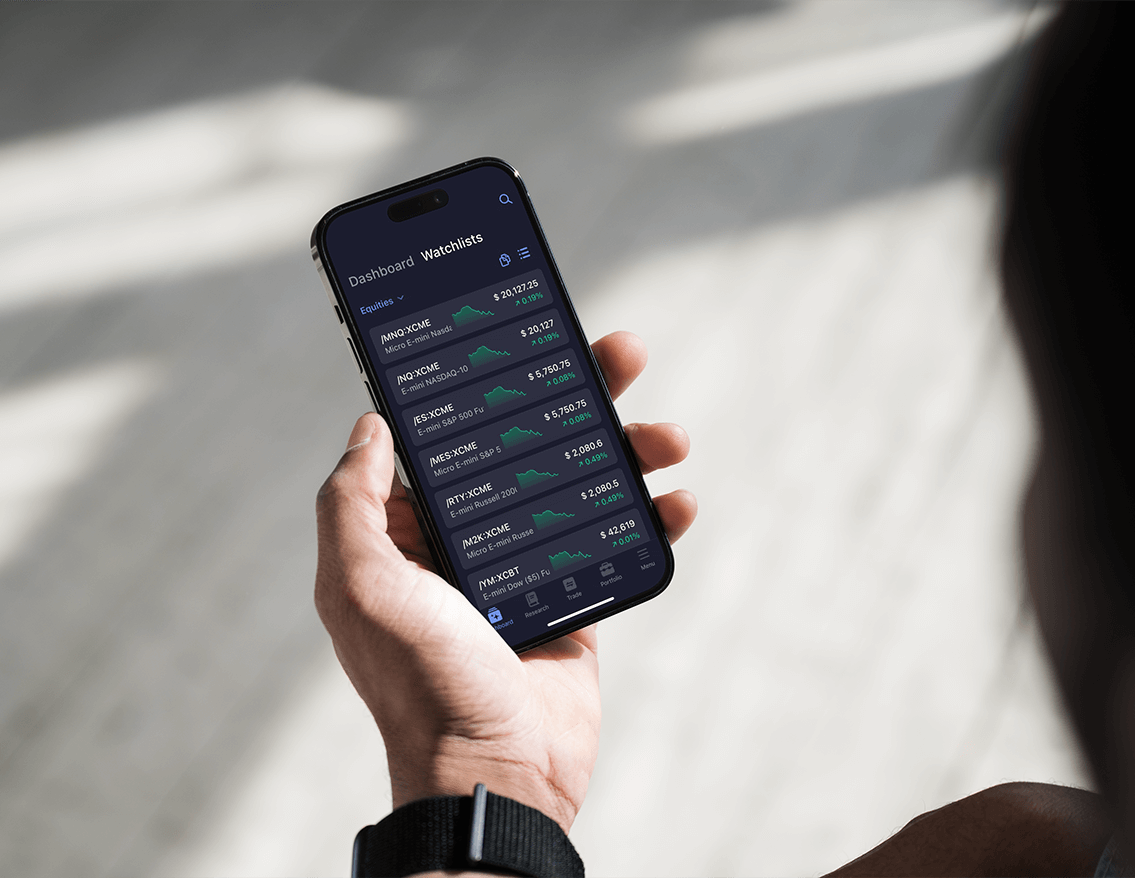
Trading E Mini Futures

If you have ever wondered how much stock traders make, E-mini futures trading is one answer worth examining closely. These contracts, which track major indices like the S&P 500, offer traders a way to participate in market moves with lower capital requirements than full-size futures. This article breaks down what E-mini trading actually looks like in practice and how finding the right prop firm can shape your results.
TradingPilot lists and compares the best prop trading firms so you can see exactly which ones support E-Mini futures trading, what their funding structures look like, and how their profit splits stack up. Instead of spending hours reading scattered reviews, you get a clear side-by-side look at your real options.
Summary
-
New futures traders consistently underestimate the gap between margin requirements and the capital actually needed to survive normal market conditions. The initial margin for one E-Mini S&P 500 contract sits around $12,650, yet a single 20-point intraday swing generates a $1,000 gain or loss per contract. For accounts under $10,000, Micro E-mini contracts are strongly recommended over standard E-mini contracts because the position-sizing math is more forgiving at smaller account sizes.
-
Failure in E-Mini trading follows predictable patterns rather than random bad luck. Washout rates for new futures traders are estimated at over 70 percent, and 99 percent of losing traders have goals that are not aligned with their resources. That misalignment rarely manifests as a single catastrophic decision.
-
Overtrading is a structural risk in E-Mini markets, not just a behavioral one. The same features that make these contracts attractive (tight spreads, fast execution, near-continuous access) remove the friction that would otherwise discourage low-quality entries. Research built on the Barber and Odean framework consistently shows that higher trading frequency correlates with lower net returns after costs, even when the underlying strategy is sound.
-
Execution costs quietly destroy profitability in ways that backtesting conceals. One tick of slippage on the E-Mini S&P 500 equals $12.50, which may sound small, but it compounds over 300 trades per year into thousands of dollars in performance erosion. The strategies that survive real markets are built around net expectancy after costs, not gross return figures from simulated environments.
-
Directional flexibility and near-continuous trading hours give E-Mini futures a structural advantage over equity-only approaches. These contracts trade nearly 24 hours a day, five days a week, allowing traders to respond to Federal Reserve statements, overnight macro shifts, and geopolitical developments as they happen rather than absorbing the impact at the next market open.
TradingPilot's best prop trading firms resource addresses this by letting traders compare evaluation structures, drawdown limits, payout terms, and trading restrictions side by side before committing capital.
Is Trading E-Mini Futures Profitable for Beginners?

E-Mini futures trading is profitable for a small number of beginners and genuinely difficult for most. That gap is not random. It almost always traces back to the same cluster of behaviors: oversized positions, poor cost awareness, and strategies that were never tested against real market conditions.
The numbers are sobering. According to the StoneX Futures Blog, washout rates for new traders are estimated at over 70%, and the same research notes that 99% of losing traders have goals that are not aligned with their resources. Read that second finding carefully. It is not saying traders lack skill. It is saying they are attempting to extract returns that their account size, risk tolerance, and strategy simply cannot support. That misalignment is the actual trap, not the E-Mini contract itself.
What Separates the Traders Who Survive
The failure point is usually position sizing, not market direction. A beginner trading one E-Mini S&P 500 contract controls roughly $230,000 in notional value at current index levels. That is a meaningful amount of exposure for an account holding $5,000 or $10,000. When a single tick moves against you, and your account represents a fraction of the contract's notional weight, you are not trading; you are speculating with leverage you cannot absorb. The traders who last long enough to build consistency almost always start by reducing exposure, not by improving their entry signals.
Matching Strategy to Firm Structure
Most beginners handle this by jumping straight into a funded challenge, chasing the largest account they can qualify for. The familiar logic is that a bigger account equals bigger payouts. But the hidden cost is that a larger account with tighter drawdown rules and no strategy-to-firm compatibility check creates a pressure environment that accelerates exactly the behaviors that cause failure.
Traders who use a comparison platform like TradingPilot can match their specific E-Mini approach to firms whose drawdown structures, trading-hour restrictions, and contract allowances actually fit how they trade, rather than discovering a mismatch mid-challenge when real money is on the line.
Does the Contract Size Actually Matter for Beginners
Contract selection shapes your risk exposure in ways that most beginners underestimate. The Micro E-Mini S&P 500 contract, for example, is one-tenth the size of the standard E-Mini, which means the same trade idea carries proportionally less capital risk per tick.
According to Optimus Futures, for accounts under $10,000, Micro E-mini contracts are strongly recommended over E-mini contracts, precisely because the position-sizing math is more forgiving at smaller account sizes. Starting on Micro contracts is not a concession. It is a calibration that keeps you in the game long enough to develop a real edge.
Capital Protection and Cost Management
Profitability in E-Mini trading is less about predicting the S&P 500 index and more about managing the cost structure of every trade you take. Commissions, exchange fees, slippage in the bid-ask spread, and overnight margin requirements all quietly compound against a trader who is not watching them.
The traders who build sustainable income from E-Mini futures are not necessarily the best at reading price action. They are the best at protecting capital between high-confidence setups. What most beginners never consider is that the advantages of E-Mini trading go far beyond lower capital requirements, and that realization tends to change everything.
Benefits of Trading E-Mini Futures
Trading E-Mini futures solves structural problems that most retail traders quietly accept as unavoidable. The advantages compound across capital efficiency, execution quality, market access, and directional flexibility in ways that genuinely change what is possible for an active trader.
Capital Efficiency Without Institutional Capital
The failure point for most retail traders is not strategy. It is a scale. A correct read on a 2% market move means almost nothing when position size is capped by account limitations. According to R.J. O'Brien & Associates Canada Inc., E-Mini futures require margin as low as 5% of the contract value, which means traders can control meaningful index exposure without locking up disproportionate capital. That structural leverage is not a shortcut. It is the mechanism that makes index-level participation accessible to traders who are not managing a nine-figure portfolio.
Liquidity That Actually Protects Your Edge
The E-Mini S&P 500 is one of the most actively traded futures contracts in the world, with millions of contracts changing hands daily. That volume matters in a specific, practical way: tight bid-ask spreads and consistent order fills mean your strategy gets tested on its merits, not distorted by execution friction. For active traders running dozens of setups per month, the difference between a 0.25-point and a 1-point average slippage compounds into real money over a full trading year.
Trading Hours That Match How Markets Actually Move
Most significant price action does not wait for the opening bell. Federal Reserve statements, geopolitical shifts, Asian session momentum, and overnight earnings reactions all move index futures before U.S. stock markets open. E-Mini futures trade nearly 24 hours a day, five days a week, which means traders can respond to events as they develop rather than absorbing the damage at the next open. For traders balancing other commitments, that flexibility is not a convenience. It is a competitive edge.
Aligning Prop Firm Rules With E-Mini Strategy
Most traders who discover these advantages eventually move toward prop firm evaluations to further scale their access. The familiar approach is to pick a firm based on name recognition or a popular YouTube recommendation, then discover mid-challenge that the firm restricts overnight holds, bans trading during news events, or applies drawdown rules that conflict with how E-Mini setups naturally develop.
Best prop trading firms let traders compare evaluation structures, drawdown rules, and trading restrictions side by side, so the firm you choose actually fits the way E-Mini futures are traded, not just the way the firm's marketing reads.
Directional Flexibility and Index-Level Focus
When equity markets decline sharply, stock-only traders run out of moves. E-Mini futures remove that constraint entirely. Going short an index futures contract carries the same mechanical simplicity as going long, and some of the most defined, high-velocity moves in futures markets occur during periods of fear and broad selling.
Beyond directional flexibility, trading an index like the S&P 500 or Nasdaq-100 removes the company-specific noise that derails otherwise sound setups. Earnings surprises, management scandals, and analyst downgrades become irrelevant when you are trading the aggregate behavior of institutional capital flows across hundreds of companies.
Transaction Costs That Do Not Quietly Erode Returns
Research by Barber and Odean consistently shows that transaction costs are one of the primary reasons retail traders underperform over time. E-Mini futures, because they are centrally cleared and highly liquid, carry lower, more transparent costs than most equity or options markets. The E-Mini S&P 500 contract moves $50 per index point, so even small improvements in cost efficiency translate into meaningful dollar differences over the course of a high-frequency trading year.
Over hundreds of trades, that adds up to the kind of edge that separates accounts that grow from accounts that slowly erode. But knowing the advantages of E-Mini futures is only half the picture, and the half that most traders skip is the one that actually determines whether they survive.
Related Reading
8 Reasons Why People Fail to Trade E-Mini Futures
Failure in E-Mini futures trading is not random. It follows predictable patterns, and once you recognize them, you stop mistaking bad outcomes for bad luck.
1. Underestimating How Fast Losses Scale
The math moves faster than most traders expect. One E-Mini S&P 500 point equals $50. A 20-point swing, which is completely ordinary intraday price action, means $1,000 per contract. A 40-point move doubles that. Traders enter positions thinking they are taking "small risk," but ordinary index volatility becomes account-moving volatility the moment position size is miscalculated.
The failure point is usually how traders size their positions. Instead of calculating exposure relative to volatility, most size is based on available margin. That creates oversized exposure, rapid drawdowns, and the kind of emotional decision-making that turns a bad trade into a blown account.
2. Overleveraging Small Accounts
Washout rates for new futures traders are estimated at over 70%. That number is not surprising when you consider the structural mismatch many traders walk into: one ES contract controls roughly $250,000 to $300,000 in notional exposure, yet traders attempt to hold that position with accounts that cannot absorb even a normal losing streak without hitting a mathematical point of no return.
The compounding drawdown problem is what makes this so dangerous. A small account under sustained pressure does not just shrink linearly. Each loss reduces the capital base, which means the next loss represents a larger percentage hit. Recovery becomes exponentially harder, not just harder.
3. Overtrading in a Low-Friction Market
The same features that make E-Minis attractive, tight spreads, deep liquidity, and fast execution, create a behavioral trap. When trading feels frictionless, traders enter more positions than their strategy justifies.
-
They take lower-quality setups.
-
They increase frequency without realizing that the accumulation of costs is quietly compressing their returns.
Research built on the Barber and Odean framework on active traders consistently shows that higher trading frequency correlates with lower net returns after costs. The strategy does not have to be wrong for overtrading to destroy profitability. Commissions, slippage, and small repeated losses do the work slowly and invisibly.
4. Ignoring Execution Quality Until It Is Too Late
Most beginners focus entirely on entry and exit signals while treating execution as an afterthought. In E-Minis, one tick equals $12.50. That sounds small until you run the numbers across a full trading year. Three hundred trades with one tick of average slippage per trade produce $3,750 in annual performance erosion, without changing your win rate by a single percentage point.
Slippage does not announce itself. It quietly degrades expectancy until a strategy that looked profitable in testing becomes a losing strategy in practice. Execution quality is not a secondary concern; it is part of the edge itself.
5. Trusting Backtested Results in Live Markets
The confidence that comes from a profitable backtest is one of the most expensive forms of overconfidence in futures trading. Simulated environments do not replicate latency, real-time slippage, volatility spikes, or the emotional weight of watching a live position move against you. Strategies that look clean in backtesting often break down the moment execution friction enters the equation.
The critical difference between a backtest and a live account is not the signal. It is the gap between intended execution and actual execution, repeated across hundreds of trades.
6. Inconsistent Risk Per Trade
Most traders understand fixed risk sizing in theory and abandon it in practice. After a winning streak, they increase their size. After a loss, they double down. Because E-Mini contracts amplify exposure quickly, inconsistent sizing does not just affect individual trades; it also accelerates portfolio-level volatility.
A fixed risk model of 0.5% to 1% per trade feels conservative until you see how inconsistent sizing affects a drawdown sequence. The math is unforgiving. Emotional sizing in a leveraged instrument is not a style choice; it is a structural failure.
7. Confusing Liquidity With Safety
The E-Mini S&P 500 trades millions of contracts daily. That liquidity guarantees easier entry and exit with tighter spreads. It does not reduce volatility, prevent losses, or protect against leverage mistakes. These are entirely separate things, and conflating them leads traders to assume they are operating in a safer environment than they actually are.
The pattern recurs: a trader feels comfortable because fills are fast and spreads are tight, only to be blindsided by a volatility spike their position size was never designed to survive. Liquidity is a market quality, not a risk management tool.
8. Scaling Capital Before Validating Execution
Many otherwise sound strategies fail because traders scale before they understand how their approach behaves under real conditions. Slippage behavior, fill quality, volatility sensitivity, and real cost per trade all need to be measured before adding size, not after. Skipping this step is how good ideas become expensive mistakes.
Auditing Firm Rules Before Evaluation
Most traders who choose prop firm evaluations face an additional layer of this problem. They select a firm based on name recognition or marketing, then discover mid-challenge that the firm's drawdown rules, trading restrictions, or overnight hold policies are fundamentally incompatible with how they actually trade.
TradingPilot addresses this directly by letting traders compare firms side by side across verified payout data, rule structures, and strategy compatibility before committing capital to an evaluation. Matching your specific trading behavior to a firm's rules is not optional; it is the prerequisite that most traders skip entirely.
The Compound Cost of Misaligned Goals
99% of losing traders have goals not aligned with their resources. That misalignment rarely shows up as a single catastrophic decision. It shows up as eight small, compounding failures, each one invisible until the account is already in serious trouble. And once you understand why traders fail, the next question cuts even deeper: how much capital does it actually take to give yourself a real chance?
How Much Money Do You Need to Trade E Mini Futures

Margin is entry permission, not protection. That distinction matters more than most traders realize before their first losing week.
The Motley Fool reports that E-mini S&P 500 futures require an initial margin of approximately $12,650 per contract, yet that figure tells you almost nothing about what you actually need to survive normal market conditions. The real number is shaped by volatility, not broker requirements.
What the Technical Floor Actually Means
NinjaTrader notes that Micro E-mini futures contracts require as little as $50 in margin to trade, which is technically accurate and practically dangerous if taken at face value. That $50 buys you exposure to a contract that moves $5 per point. A 10-point swing, which happens on a slow Tuesday, produces a $50 gain or loss. Your entire margin buffer is gone in a single unremarkable session.
The failure point is almost always the gap between what a broker permits and what the market demands. A $500 account trading MES contracts has roughly two or three normal daily swings before forced liquidation becomes a real risk. That is not a trading strategy. That is a countdown.
The Numbers That Actually Matter
Realistic capital thresholds break down by instrument and risk tolerance. For Micro E-mini contracts, $1,000 to $2,500 gives you enough room to absorb normal drawdowns without hitting margin calls on routine volatility. For standard E-mini contracts, $10,000 to $25,000 is where stable, rule-based trading becomes structurally possible, because a 20-point adverse move costs $1,000 per contract and a properly funded account absorbs that without forcing emotional decisions.
Evaluating Beyond Headline Account Size
Most traders approach firm selection the same way they approach capital requirements: they look at the headline number and stop there. They see a prop firm offering a $ 50,000-funded account and focus entirely on the payout split, ignoring whether the firm's drawdown rules, overnight holding restrictions, or news-trading bans are compatible with how they actually trade E-mini futures.
TradingPilot addresses this directly, letting traders match their specific strategy behavior to firm rules side by side, so the evaluation fee goes toward a firm that fits, not just one that looks attractive on the surface.
Why Undercapitalization Compounds Quietly
The math behind undercapitalized futures trading is straightforward, but the psychology is what actually destroys accounts. When your buffer is thin, every losing trade triggers a position-sizing adjustment, a tighter stop, or a skipped entry. Those micro-decisions compound into a trading pattern that no longer resembles your original strategy. You are no longer trading your system. You are trading your fear of losing the account.
The Capital Threshold for Strategy Survival
That quiet drift between strategy and survival mode is where most beginners actually fail, not in a single catastrophic trade, but across thirty small compromises made under financial pressure. Knowing the right capital threshold before you fund an account is the only way to keep those two things separate.
And knowing how much capital you need is only half the equation; the other half is knowing whether E-mini futures are the right instrument for your goals in the first place.
Related Reading
Should You Trade E Mini Futures

Whether E-Mini futures are right for you depends less on the instrument itself and more on what your trading system can actually handle under real market pressure. The honest filter is not enthusiasm or capital size. It is whether your risk framework is built to survive an instrument that converts small execution errors into large financial consequences.
What Do E-Mini Futures Actually Test
The failure point is usually invisible until it is not. Traders often enter E-Mini markets believing the product is the variable. It is not. A 20-point move in the ES contract costs $1,000 per contract, and it can happen in minutes during high-volatility sessions around Fed decisions, CPI releases, or geopolitical shocks. If your position sizing is not calibrated to absorb that kind of swing without triggering emotional decisions, the instrument will expose that gap faster than any other market you have traded.
Undisciplined traders consistently report that the fast execution environment in E-Mini markets amplifies overtrading rather than correcting it. Low friction is not a feature for someone who already takes on too many trades. It is an accelerant. And the near-continuous trading window, which covers overnight macro events that stock-only traders miss entirely, creates more opportunity to make impulsive decisions, not fewer.
When E-Minis Genuinely Fit Your Goals
The case for E-Mini futures is real, but it is specific. If you want exposure to the S&P 500, Nasdaq-100, or Russell 2000 without allocating stock-level capital, the leverage structure works in your favor when your risk per trade is defined before entry. For accounts under $10,000, Micro E-mini contracts are strongly recommended over standard E-mini contracts, which points to something important: the decision is not binary.
There is a progression, and starting with Micro E-mini contracts, which Charles Schwab notes are 1/10th the size of E-mini contracts, gives you real market exposure with proportionally smaller dollar risk per tick while you validate your execution.
Evaluating Strategy Compatibility and Firm Rules
Most traders approach this decision the wrong way. They ask, "Are E-Minis good?" when the real question is, "Does my current strategy survive an instrument that magnifies every sizing mistake?" That reframe matters because it puts the responsibility where it belongs: on the system, not the market.
Here is where prop firm selection becomes directly relevant. Many traders who decide E-Mini futures fit their strategy then make a second costly mistake: they pick a prop firm without checking whether that firm's rules are compatible with how they actually trade. Some firms ban overnight holds, restrict trading around news events, or prohibit certain execution styles.
Matching Trading Restrictions to System Strategy
If your E-Mini strategy depends on holding through a Fed announcement or carrying a position past the session close, a firm with those restrictions will not just limit your performance. It will disqualify trades you thought were valid.
TradingPilot addresses this directly by letting traders compare firms side by side on the criteria that actually matter:
-
Drawdown rules
-
Trading restrictions
-
Payout terms
-
Evaluation structure
So the firm you choose matches the way you trade, not just the capital you want to access. The question of whether to trade E-Mini futures is answerable. But knowing the answer is only the beginning of what you actually need to figure out.
How to Trade E Mini Futures Successfully in 10 Steps
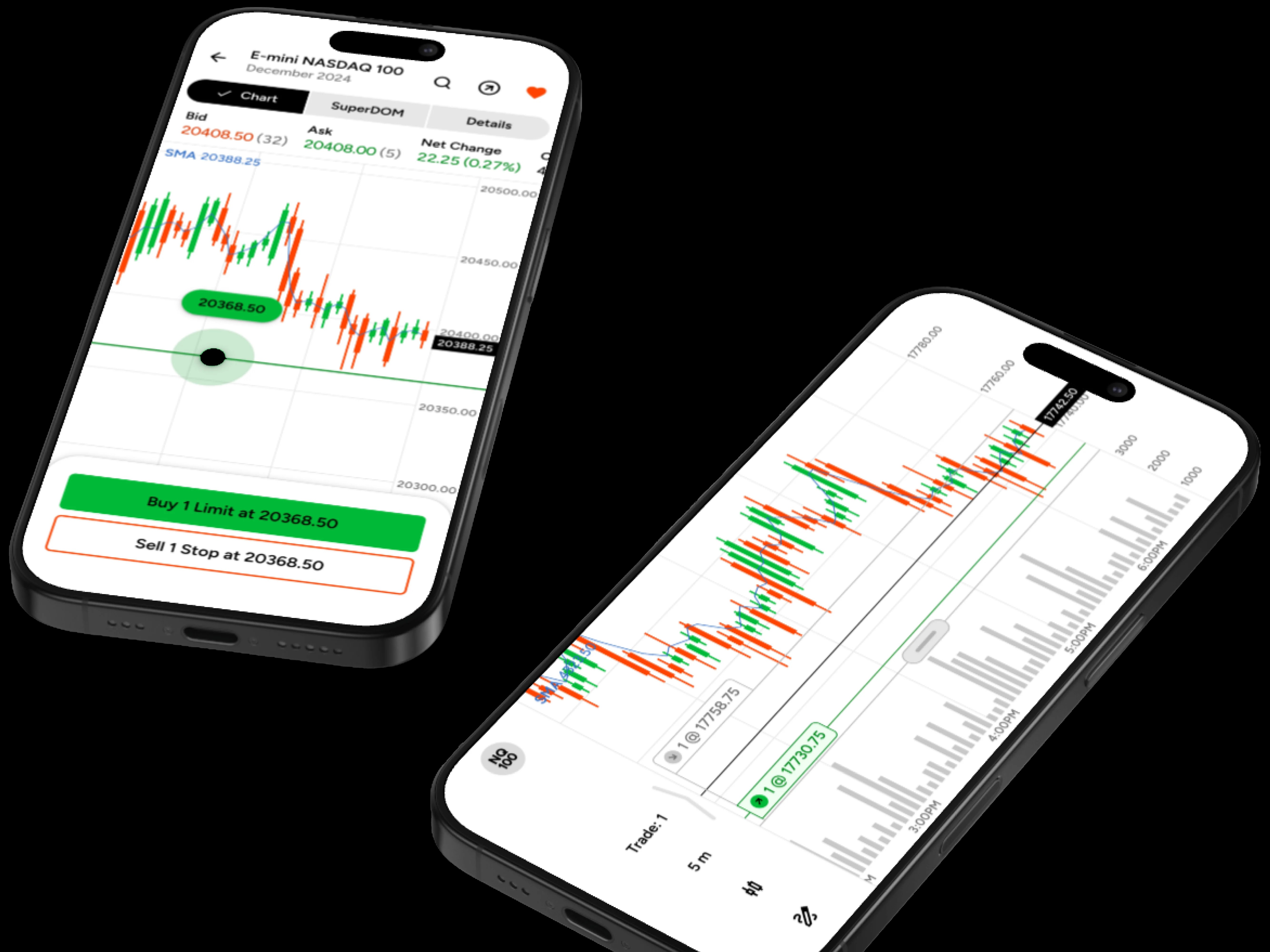
Trading E-Mini futures successfully is not about finding a secret strategy. It is about building a system where every decision, from position size to execution timing, is governed by rules you set before the market opens.
1. Start With the Right Capital Structure
The entry cost and the survival cost are two completely different numbers. Most traders conflate them, and that confusion is where accounts go to die. A single ES contract carries roughly $250,000 to $300,000 in notional market exposure, which means a 20-point move costs or earns $1,000 per contract regardless of how little margin you posted to open the trade.
What separates traders who last from those who do not is how they think about that gap. Successful E-Mini traders hold two numbers in their heads simultaneously: the capital required to enter, and the capital required to absorb normal volatility without being forced out.
Micro E-Minis as a Structural Starting Point
According to TradeStation's guide on micro E-mini futures, Micro E-mini contracts require approximately $630 in initial margin, compared to $6,300 for standard E-mini contracts, making MES contracts the rational starting point for anyone building toward full ES size without gambling their account on the learning curve.
Starting with MES is not a consolation prize. It is a structural decision that lets you test your execution, your discipline, and your system under real market conditions before the stakes are high enough to end the experiment permanently.
2. Stop Thinking in Margin, Start Thinking in Risk Per Trade
The failure point is usually a mental accounting error. Traders see a low margin requirement and conclude they are taking less risk. They are not. Risk in E-Mini futures is defined entirely by price movement and position size, not by the deposit sitting in your margin account.
A structured approach fixes this immediately. Risk 0.5% to 1% of your total account per trade, then work backward from your stop distance to determine position size. If your stop is 10 points on ES, that is $500 of risk per contract. On a $20,000 account with a 0.5% risk limit, you have $100 of allowable risk per trade, which means you are trading fractional micro sizing, not a full ES contract. That math is not optional. It is the architecture that keeps normal volatility from becoming account-ending volatility.
3. Trade Liquidity Properly
E-Mini S&P 500 and Nasdaq-100 futures are among the most liquid instruments on earth, but liquidity is only an advantage when you are positioned to use it. During the London-New York overlap, spreads on ES and NQ are consistently tight, and fills are predictable. Outside those windows, particularly during the overnight session or the hour before the London open, the same instrument behaves differently, with wider effective spreads and less reliable execution.
Successful traders treat session timing as part of their strategy, not an afterthought. Trading during low-liquidity windows quietly erodes the edge that tight spreads are supposed to provide.
4. Build a System That Accounts for Execution Costs
Even one tick of slippage per trade, compounded across 300 trades per year, can quietly remove thousands of dollars from a strategy that looks profitable on paper. The strategies that survive real markets are built around net expectancy, not gross returns.
Track every trade cost:
-
Commission
-
Slippage
-
Spread impact
Then recalculate your strategy's expectancy with those costs included. Many systems that appear viable in backtesting fail this test immediately. The ones that pass it are worth scaling.
5. Use a Platform Testing Layer Before Scaling
Most traders skip the step of validating how their strategy behaves under real execution conditions before increasing size. They assume that what worked in simulation will work at scale, and that assumption is where many otherwise solid systems collapse.
The practical fix is a controlled execution test:
-
Run 20 to 50 live or live-sim trades using your exact strategy rules
-
Then measure slippage per trade
-
Fill accuracy during volatility spikes
-
Cost-adjusted expectancy
-
Drawdown behavior under leverage
This process surfaces the hidden friction that paper trading conceals. It answers whether your system survives real execution before you find out the hard way with full-size contracts.
Preventing Strategy and Prop Firm Mismatches
Most traders who trade E-Mini futures through a prop firm face an additional layer of this problem.
-
They select a firm based on capital size or brand recognition.
-
Then discover mid-challenge that the firm's rules prohibit the exact conditions their strategy depends on.
-
Whether that is trading around news events, holding positions overnight, or using automated entries.
TradingPilot addresses this directly by letting traders compare firms on evaluation structure, drawdown rules, trading restrictions, and payout terms before committing, so the firm's rule set matches the strategy being tested, not just the account size being chased.
6. Focus on Expectancy, Not Win Rate
The truth is that win rate is one of the most misleading metrics in trading. A system that wins 40% of the time but captures $800 on winners and loses $200 on losers outperforms a 70% win-rate system with inverted ratios. The math is straightforward, but the psychology constantly fights it.
Successful E-Mini traders track three numbers obsessively:
-
Average win
-
Average loss
-
Net expectancy per trade
Everything else is noise. When those three numbers are positive and stable across at least 50 trades, the system is real. Before that, it is a hypothesis.
7. Avoid Overtrading in a Low-Friction Market
The same features that make E-Mini futures attractive, fast execution, tight spreads, and near-continuous access, also make overtrading dangerously easy. When entering a trade incurs almost no friction, the psychological barrier to a bad entry disappears.
The fix is structural, not motivational.
-
Set a fixed number of daily setups before the session begins.
-
Define your entry criteria precisely enough to automatically exclude ambiguous setups.
Trades that do not meet all criteria are not taken, regardless of how compelling they feel in the moment. Discipline built into the system beats discipline that depends on willpower.
8. Trade Only When Volatility Matches Your System
E-Mini futures behave differently depending on:
-
The session
-
The macro calendar
-
The market structure
A breakout strategy that performs well during trending conditions will bleed slowly during choppy, range-bound sessions. Trading the same way regardless of conditions is not consistent. It is randomness dressed up as a plan.
Define the volatility conditions your system requires before you trade. If the structure is not present, the trade does not exist. This single rule removes a significant portion of the unpredictable variance that can make results appear inconsistent even when the strategy is sound.
9. Scale Only After Consistency
According to E*TRADE's futures trading resource, futures margin requirements can range from 3% to 12% of a contract's notional value, which can make scaling up feel deceptively affordable. The margin to add a second contract is small. The risk is not.
The real scaling rule is behavioral, not financial. Two to three months of consistent profitability, a stable drawdown curve, and verified execution metrics are the minimum conditions before increasing position size. Scaling before those conditions exist is not confidence. It is impatience wearing the mask of confidence.
10. Protect Drawdown Before Chasing Profit
Because of leverage, recovery from large losses is non-linear. A 20% drawdown requires a 25% gain to break even. A 40% drawdown requires a 67% gain. The math punishes aggression in a way that is easy to ignore when you are focused on the upside.
Set a maximum monthly drawdown cap between 5% and 10% of your account. When that threshold is breached, stop trading for the remainder of the period. This rule feels conservative until the month it saves your account from a spiral that would have taken six months to recover from.
But knowing these ten rules and actually building a system that survives contact with a live market are two different problems, and the gap between them is where the most expensive mistake in E-Mini trading quietly lives.
How to Decide With Confidence (and Avoid the Most Expensive Mistake in E-Mini Trading)
The gap between knowing the rules and surviving real execution is exactly where most E-Mini traders lose money they never recover. Before you commit live capital to index futures trading, the practical move is to match your strategy's specific behavior, position sizing, and drawdown tolerance to a prop firm whose rules actually support how you trade. Most traders skip this step and pay for it during their first funded challenge.
That match matters more than most people realize. Best prop trading firms let you compare evaluation structures, drawdown limits, payout terms, and trading restrictions side by side, so you are not guessing whether your E-Mini approach fits a firm's rules after you have already paid the fee. The right firm for a disciplined ES scalper looks nothing like the right firm for someone trading overnight Nasdaq futures. Finding that fit before you fund is not optional preparation; it is the decision that separates traders who scale from traders who restart.
Related Reading
• Crypto Trading With Leverage
• Day Trading Average Income
• Best Crypto Leverage Trading Platforms
• Futures Brokers With Low Intraday Margin
• Trading E Mini Futures
• Small Account Trading
• Trading Goals
• Small Account Options Trading
• Forex Trading Profit Per Day
• Maximum Leverage Ratio
• Best Futures To Day Trade