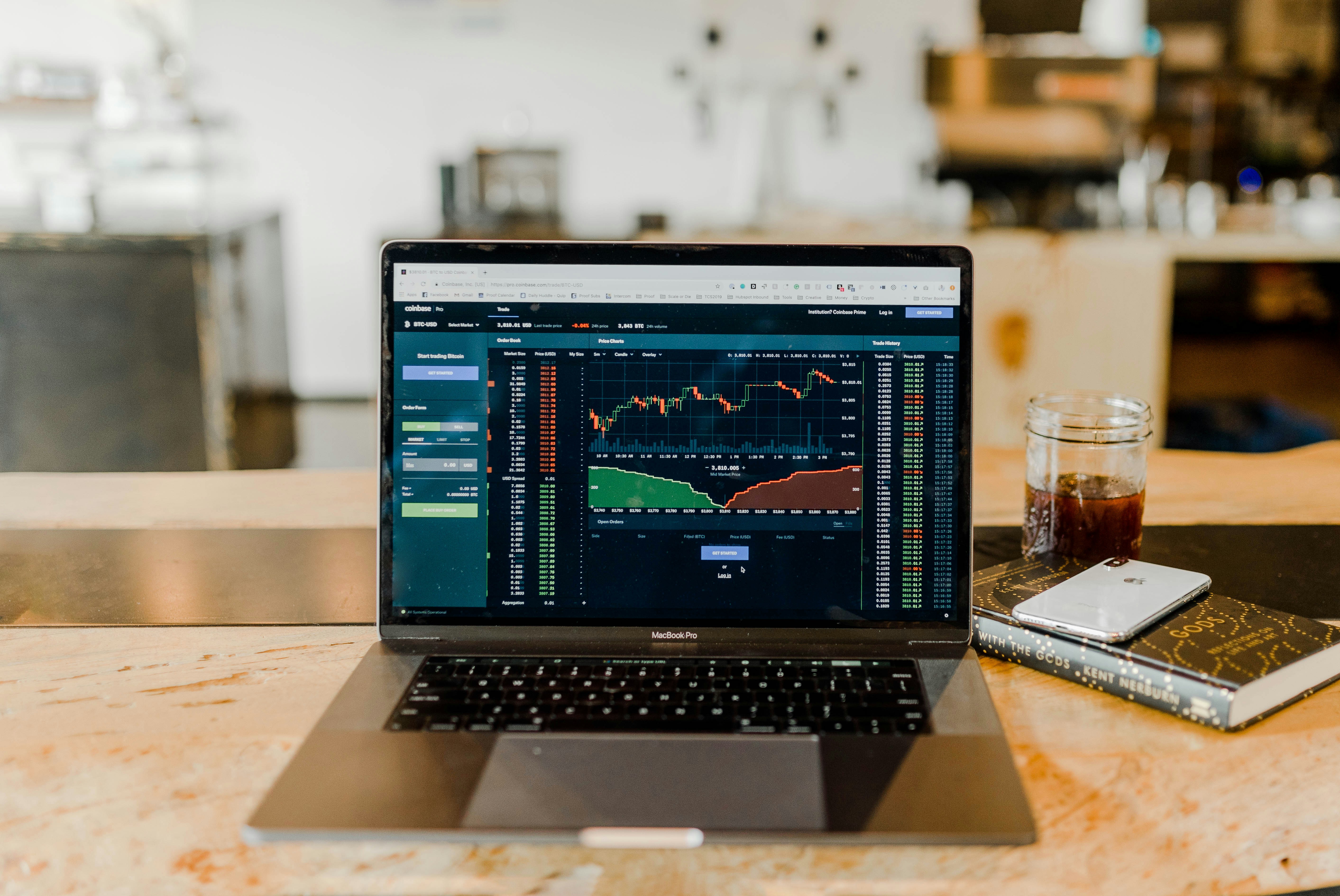
Forex trading profit per day

Forex trading profit per day

Safwan RamzanSafwan Ramzan

Many traders wonder how much stock traders make before they even consider switching to forex. The daily profit potential in forex trading is real, but it varies widely based on factors like leverage, pip movement, daily trading volume, and risk management strategy. Whether you are aiming for consistent returns or trying to understand realistic income expectations from currency pairs, this article breaks down what daily forex profits actually look like and how finding the right trading environment can make a measurable difference.

That trading environment matters more than most beginners realize, which is where prop trading firms come in. TradingPilot helps you cut through the noise by listing and comparing the best prop trading firms, so you can find one that aligns with your profit targets, risk tolerance, and trading style. Instead of spending hours researching funding programs, drawdown limits, and payout structures on your own, you get a clear side-by-side view of your options in one place.

Summary

  • The failure rate statistic in forex trading is widely misread. According to the Global Banking and Finance Review, 70 to 80% of retail forex traders lose money, but that number describes trader behavior, not market opportunity. The market itself processes extraordinary daily volume, meaning liquidity and opportunity exist in abundance. The gap between what the market offers and what most traders capture comes down to three specific behaviors: overtrading, misusing leverage, and ignoring expectancy in favor of win rate.

  • Win rate is the wrong target for most traders to optimize around. A system with a 45% win rate, where winners average $300 and losers average $150, produces a net gain of $5,250 across 100 trades despite losing 55 of them. Profitability is driven by expectancy, the relationship between average profit and average loss, not by being right on any individual position. 

  • Position sizing has more impact on account survival than strategy selection. A trader risking 1% per trade across ten consecutive losses ends with roughly $9,043 remaining. A trader risking 10% per trade across the same ten losses drops to $3,487, requiring a 187% recovery just to break even. That difference is not caused by the market. It is caused entirely by the sizing decision made before the trade was placed.

  • Execution costs are a structural variable that most beginners never model in advance. At 500 trades per year with $5 in spread and commission per round trip, a trader starts $2,500 behind before a single loss occurs. Benzinga reports that only 30% of retail forex traders are consistently profitable, and overtrading is one of the clearest behavioral patterns separating that minority from the majority. Frequency is not edge. Frequency is friction.

  • Daily profit figures for beginners are more useful as a diagnostic tool than as an income target. A beginner on a $1,000 account can realistically generate $10 to $20 per day under favorable conditions according to Trade That Swing, but the account size, not the strategy, determines whether forex produces meaningful income. 

  • Consistent small-account performance does not automatically transfer to a prop firm evaluation. Drawdown models, daily loss limits, overnight holding permissions, and restricted instrument lists all interact with how a strategy performs in practice. A scalping strategy built around tight spreads needs a firm with low-latency infrastructure and no restrictions on trade duration, while a swing strategy needs a firm whose drawdown model accommodates normal retracement without triggering a breach.

TradingPilot's best prop trading firms resource addresses this by letting traders compare drawdown structures, profit split percentages, scaling potential, and verified payout data side by side before committing capital to an evaluation challenge.

Is Forex Trading Profitable?

People Working - Forex trading profit per day

Forex trading is profitable. The evidence is clear on that. What's less clear is why so many traders walk away with empty accounts despite operating in the same market where institutions generate consistent returns.

The failure rate statistic gets misread constantly. According to the Global Banking & Finance Review, 70-80% of retail forex traders lose money, but that number describes trader behavior, not market opportunity. The market itself processes an extraordinary volume daily, which means liquidity and opportunity are abundant. The gap between what the market offers and what most traders capture comes down to three specific behaviors: overtrading, misusing leverage, and ignoring expectancy in favor of win rate.

Why Win Rate is the Wrong Target

A profitable trading system does not require winning most trades. Consider 100 trades with a 45% win rate, where winners average $300 and losers average $150. That produces a net gain of $5,250 despite losing 55 trades. The math works because expectancy, the relationship between average profit and average loss, drives daily forex profit far more than being right on any single position. Most beginners never run this calculation before entering a challenge or live account.

Position Sizing Has a Bigger Impact Than Strategy

The same pattern appears with leverage. Two traders using identical strategies on identical setups can produce completely different outcomes based purely on position sizing. 

  • Risk 1% per trade across ten consecutive losses and your account sits at roughly $9,043. 

  • Risk 10% per trade across the same ten losses and your account drops to $3,487, requiring an 187% recovery just to break even.

The market did not cause that difference. The sizing decision did.

How Trading Frequency Erodes Profitability

Most traders research entry signals obsessively and spend almost no time modeling their cost structure. 

  • At 500 trades per year with $5 in spread and commission per round trip, you start $2,500 in the hole before a single loss. 

  • At 1,000 trades, that number doubles.

Benzinga reports that only 30% of retail forex traders are consistently profitable, and overtrading is one of the clearest behavioral patterns separating that minority from the majority. Frequency is not an edge. Frequency is friction.

Why Prop Firm Rules Matter as Much as Your Edge

When traders do develop a genuine edge, the next question becomes whether their trading environment allows them to express it. Prop firm rules around daily drawdown limits, maximum position sizes, and restricted trading windows can quietly neutralize a strategy that works perfectly in a personal account. 

Most traders research entry signals and ignore firm structure entirely, which is where platforms like TradingPilot change the outcome. Instead of discovering a firm's restrictions after committing to a challenge, traders can compare drawdown models, profit split percentages, and scaling potential side by side before spending a dollar.

Related Reading

8 Challenges of Forex Trading for Beginners

Person Working - Forex trading profit per day

Forex trading is genuinely difficult, and the difficulty is not random. It follows predictable patterns that repeat across thousands of beginners, in the same order, for the same reasons.

70 to 80% of retail forex traders lose money, and that number has stayed stubbornly consistent for years. The market is not broken. The behavior is.

1. Overtrading Turns Opportunity Into a Cost Problem

More trades do not mean more profit. The famous Barber and Odean study, "Trading Is Hazardous to Your Wealth," showed that the most active traders consistently underperformed less active traders, not because they lacked skill, but because each additional trade added spreads, commissions, slippage, and decision-making errors that quietly drained their accounts.

The pattern looks like this: a trader has a strategy that justifies eight trades in a week, but by Friday, they have taken twenty-five. 

The account is not losing because the market is cruel. It is losing because activity has become completely disconnected from actual opportunity. More time in the market, less progress to show for it.

2. Leverage Makes Small Mistakes Extremely Expensive

A trader risking 1% per trade can absorb a losing streak and keep executing. A trader using excessive leverage and risking 10% per trade can lose more than half their account during a perfectly ordinary run of bad trades. Losing streaks are not rare events reserved for bad strategies. Even profitable systems experience them.

What happens next is predictable. 

  • The trader starts moving stop-losses

  • Increasing position sizes to recover losses faster

  • Abandoning the rules they built the strategy around

At that point, the challenge is no longer about reading the market correctly. It becomes about account survival.

3. Most Beginners Focus on Winning Trades Instead of Making Money

The desire to be right is more expensive than most traders realize. When avoiding a loss becomes the priority, traders hold losing positions too long and close winning ones too early. Risk-reward ratios collapse, and the account bleeds slowly even when the win rate looks respectable.

Many profitable trading systems operate with win rates between 40% and 55% because they focus on expectancy rather than prediction accuracy. A trader can win most of their trades and still lose money overall if the average loss is significantly larger than the average win. The math does not care about feelings.

4. Emotional Decision-Making Appears Exactly When Discipline Is Needed Most

Fear after losses, overconfidence after wins, hesitation after drawdowns. This cycle does not just affect comfort. It affects execution. The strategy a trader plans to follow and the strategy they actually trade under real conditions, are often completely different things.

Many traders spend months searching for better indicators when the real problem is inconsistent behavior. The strategy was never broken. The execution was. Recognizing that gap is harder than it sounds, because the emotional state that causes the problem also makes it difficult to see clearly.

5. Information Overload Creates Analysis Paralysis

One week is price action. Next, it is ICT concepts. Then smart money, then indicators, then AI signals. Every source claims to have the answer, and each new method resets the learning curve before the previous one has time to produce results.

The consequence is not just wasted time. It is a false sense of progress. Switching strategies feels like improvement, but it is actually avoidance. No approach can demonstrate its true edge if it is abandoned before enough trades have been taken to generate meaningful data.

6. Poor Risk Management Hides Until a Losing Streak Arrives

A strategy can look reliable during favorable market conditions. The real test comes when markets turn volatile or when five to ten consecutive losses occur. Most beginners never discover their risk management weaknesses until the damage is already significant.

The majority of trading accounts are not destroyed by a single catastrophic trade. They are worn down by repeated exposure to unmanaged risk across dozens of ordinary trades. By the time the pattern becomes obvious, the account is already in a difficult position to recover from.

7. Real Execution Costs Destroy Paper-Perfect Strategies

Evaluating a strategy using chart screenshots is not the same as trading it live. Spreads, commissions, slippage, and execution speed all introduce friction that does not appear on a historical chart. A system that looks profitable in backtesting can perform significantly worse once those costs are applied across hundreds of real trades.

This is one reason the most active traders in performance research consistently underperform. The market is not necessarily taking their money. The trading process itself is.

8. Most Traders Never Measure What Is Actually Causing Their Results

Without tracking leverage used, risk per trade, drawdown size, trade frequency, and execution quality, improvement becomes nearly impossible. A trader may believe their strategy is broken when the actual problem is overtrading, inconsistent position sizing, or poor execution at entry points.

Choosing a Prop Firm Beyond Fees

Most beginners choose a prop firm the same way, picking based on a headline profit split or a low challenge fee without examining how the firm's drawdown model, trading restrictions, or payout terms interact with their actual strategy. TradingPilot addresses this directly by letting traders compare drawdown structures, scaling potential, and verified payout data before committing to a challenge, so the firm's rules are visible before they become a problem.

When every loss gets blamed on the strategy, the real causes stay invisible. Overtrading, inconsistent risk, and poor execution keep repeating because no one is measuring them. Progress requires knowing what is actually driving the results, not just guessing.

Why Most Traders Fail Beyond Strategy

According to CPT Markets, only the top 5% of traders make sustainable profits in this market. That gap between 5% and everyone else is not explained by strategy alone. It is explained by the eight behavioral and structural problems above, most of which have nothing to do with market analysis and everything to do with how a trader manages themselves.

Once you understand what actually causes beginners to fail, the next question becomes obvious: what does realistic profit actually look like for someone who gets these things right?

Forex Trading Profit Per Day as a Beginner

Person Holding Coin - Forex trading profit per day

Knowing what failure looks like is useful. Knowing what success actually pays is more useful.

On a $1,000 account managed with proper discipline, a beginner's realistic daily profit range sits between $5 and $30 on winning days, with losing days pulling $10 to $20 in the opposite direction. A beginner forex day trader with a $1,000 account can realistically make $10 to $20 per day under favorable conditions, and that qualifier, favorable conditions, is doing a lot of work in that sentence. Favorable means disciplined position sizing, a clean setup, and no emotional interference. Most days are not that.

What the Math Actually Produces

The structural problem beginners hit quickly is this: a 50% win rate with a 1:1 risk-reward ratio sounds balanced, but it produces zero expected return before costs. Add spreads, commissions, and slippage averaging $2 to $5 per trade, and a theoretically neutral system becomes a slow bleed. 

Two to three trades per day across 20 trading days means 40 to 60 cost events per month, each quietly trimming what looked like a break-even system into a loss-generating one. The edge has to come from execution quality and risk-reward improvement, not from trading more often.

Why Monthly Targets Beat Daily Profit Goals

This is where most beginners misread the situation. They assume the market is the obstacle. The real obstacle is the cost structure they are trading inside of, combined with the behavioral drag of inconsistency. A beginner running 1% risk per trade on a $1,000 account, with a 1:2 risk-reward and a 45% win rate, can realistically produce a small positive monthly expectancy. But the moment they increase trade frequency to chase daily income targets, the math inverts. 

According to Goat Funded Trader, most beginner forex traders aim for 1 to 5% profit per month rather than per day, and that reframe from daily to monthly thinking is not a consolation prize. It is the actual framework professionals use.

Why Daily Profit Figures Mislead Beginners

Most traders who search for a daily profit number are really asking a different question: can this replace my income? That question deserves an honest answer. 

  • On a $1,000 account generating 5% per month, the net gain is $50. 

  • On a $10,000 account, it is $500. 

  • The account size, not the strategy, is what determines whether forex trading produces meaningful income.

This is exactly why prop firm structures matter so much more than most beginners realize. 

  • A trader managing $200,000 in funded capital at a 90% profit split earns dramatically more from the same percentage return than one grinding a personal $2,000 account. 

  • The daily profit question becomes almost irrelevant once you understand that the ceiling is set by capital access, not skill alone.

How Prop Firm Rules Affect Profit Potential

Most traders approach this by simply growing their personal account slowly over years. That path works, but it is slow and exposes personal capital to the full weight of the learning curve. Platforms like TradingPilot exist precisely because prop firm rules, drawdown limits, profit targets, and payout structures vary enough across firms that choosing the wrong one can make a sound strategy unprofitable on paper. 

A firm with a tight daily loss limit and a news-trading restriction will compress a beginner's realistic daily range in ways unrelated to their edge. Knowing those constraints before committing to an evaluation challenge changes the income math entirely.

Consistency Matters More Than Daily Profit

The truth is that daily profit figures for beginners are less a destination and more a diagnostic tool. They tell you whether your risk model is functioning, not whether you are ready to trade for a living. A beginner producing consistent $10 to $20 net days on a small account, with controlled drawdowns and no revenge trades, is building something real. That consistency, not the dollar amount, is what eventually justifies access to larger capital.

Related Reading

7 Tips to Make Forex Trading Profitable for Beginners

Person Trading - Forex trading profit per day

Profitability in forex is not a talent problem. It is a structural one. The traders who move from inconsistent to consistently profitable are not smarter or luckier; they have resolved specific, identifiable breakdowns in their approach to risk, execution, and decision-making.

1. Stop Predicting. Start Managing Risk

The most expensive assumption a beginner carries into forex is that the job is to predict where price goes next. Professional frameworks treat every trade as a risk management question first: how much do I lose if this is wrong? 

That single reframe cuts overtrading, emotional entries, and revenge positions faster than any strategy tweak ever will. Fewer trades, planned in advance, with defined exit conditions, produce better net returns than high-frequency guessing because every unnecessary trade incurs spread costs, slippage, and cognitive load.

2. Control Leverage Before it Controls Your Account

The same strategy, run at different leverage levels, produces completely different survival outcomes. At 10% risk per trade, a normal six-trade losing streak can erase more than half an account. At 1% risk, that same streak is a manageable setback. According to the Corporate Finance Institute, successful forex traders risk no more than 1 to 2% of their account per trade, not because they are conservative by temperament, but because survivability is the precondition for compounding. Leverage is not a profit multiplier. It is a volatility amplifier, and beginners who treat it as the former rarely stay in the game long enough to learn the difference.

3. Build Around Expectancy, Not Win Rate

A 45% win rate with a 1:2 risk-reward ratio produces positive expectancy. A 70% win rate with a 1:0.5 risk-reward ratio often does not. Profitability is a math problem, not a confidence problem. 

The formula is simple: multiply your win rate by your average win, subtract your loss rate multiplied by your average loss, and whatever remains is your edge per trade.

Beginners who chase accuracy end up exiting winners too early and holding losers too long, which inverts the math that makes trading work.

4. Reduce Opportunity Noise to Sharpen Execution

Overtrading is not ambition. It is anxiety dressed up as activity. The practical fix is narrow and specific: 

  • Define one to three valid setups

  • Assign fixed trading hours

  • Write out entry conditions before the session opens

When every trade requires a pre-defined reason to exist, the quality of each decision rises and the total number of trades drops. That combination, fewer trades with higher average quality, is where daily forex profit per trade starts to reflect real edge rather than random variance.

5. Account for Execution Costs as a Profitability Variable

If your strategy captures an average move of 0.8% but your round-trip cost per trade runs 0.3%, you are giving away more than a third of your gross edge before a single dollar clears. Spreads, commissions, and slippage are not footnotes. 

For beginners trading with high frequency on small accounts, these costs routinely turn break-even systems into losing ones. The fix is not to ignore costs but to factor them into your expectancy calculation before you ever go live, so you know the minimum edge your strategy needs to survive friction.

6. Choose Your Sessions Deliberately

The 24-hour forex market feels like an unlimited opportunity. In practice, it is a fatigue trap for traders without session discipline. Liquidity concentrates during the London and New York sessions, when spreads tighten and prices move with greater directional conviction. 

Trading outside these windows, especially during the Asian session for major USD pairs, often means wider spreads, slower movement, and setups that look clean on a chart but carry far more noise than signal. Fixed session trading is not a limitation. It is a filter that protects your daily profit per trade from being eroded by random market exposure.

7. Track Performance at the Trade Level, Not the Account Level

Most beginners check their account balance and call it performance tracking. That tells you the outcome but nothing about the cause. Real performance tracking means:

  • Logging entry reason

  • Setup type

  • Session

  • Risk amount

  • Result for every trade

Over 30 to 50 trades, patterns emerge: 

  • One setup type is profitable, another is not

  • Morning trades outperform afternoon trades

  • Positions held past a certain time consistently give back gains

Without this data, you cannot diagnose what is working, and you end up making emotional adjustments to a system you do not yet fully understand.

Why Trade Tracking Needs Structure

Most traders approach this by keeping a rough mental record or scanning their broker's trade history at the end of the month. As the number of trades grows, that method breaks down. Patterns get lost, losing setups get rationalized, and there is no structured way to connect firm-specific rules, like drawdown limits or restricted trading windows, to actual performance outcomes. 

Platforms like TradingPilot are built specifically for this gap, helping traders match their strategy to prop firm structures that either support or silently work against how they actually trade, before they commit capital to an evaluation.

Convert Forex's Structural Advantages Into a Defined System

High liquidity, macro-driven movement, and the ability to trade both directions are real advantages. But they translate into consistent daily forex returns only when attached to a system. Liquidity means tight spreads during peak sessions, which support precision entries for intraday strategies. 

Macro events like central bank decisions and jobs data create predictable volatility windows that reward prepared traders. Without a structure that specifies when to use each advantage and when to stay out, these features become background noise rather than tradeable conditions.

Why Forex Profit Potential Depends on Firm Rules, Not Just Strategy

Here is where most beginners hit a ceiling they did not expect. A strategy that generates consistent 1-3% monthly returns in a personal account does not automatically translate to the same outcome in a prop firm evaluation. 

All interact with how a strategy performs in practice. 

  • Drawdown models

  • Daily loss limits

  • Minimum trading day requirements

  • Restricted instrument lists

A trader who holds positions overnight, for example, may find that their preferred firm prohibits it, which not only limits flexibility. It changes the expected monthly return entirely.

How Prop Firm Terms Shape Real Income

This is why knowing your forex profit-per-day target is only meaningful once you understand which firm's rules your strategy can actually operate within. 

What shapes your real-world income ceiling:

  • The evaluation structure

  • The profit split percentage

  • The scaling path

  • The payout frequency

A 90% profit split on a $200,000 account is a fundamentally different earnings environment than a 70% split on a $50,000 account, even if the daily return percentage is identical.

The Final Structural Gap Most Beginners Miss

The failure point is usually not strategy. Beginners who reach the stage of consistent small-account performance often have a functional edge. What they lack is the ability to match that edge to a capital structure that rewards it. 

  • A scalping strategy built around tight spreads and fast execution needs a firm with low-latency infrastructure and no restrictions on trade duration. 

  • A swing strategy that holds for two to four days needs a firm with overnight holding permissions.

  • A drawdown model that does not punish normal retracement.

When those matches are wrong, the strategy does not fail because it is bad. It fails because the environment it is operating in was never designed for it. That distinction matters enormously for anyone trying to build toward consistent forex trading income, because the solution is not to change the strategy. It is to find the structure that fits it.

How to Choose the Right Forex Trading Platform in 7 Steps

Person Working - Forex trading profit per day

Choosing the right forex trading platform is not a matter of preference. It is a structural one. The platform you trade on shapes your execution quality, your cost reality, and your ability to measure what is actually happening to your edge over time.

1. Execution Speed (Prevents Slippage From Destroying Small Edges)

The failure point is usually invisible. Slippage does not announce itself the way a bad trade does. It quietly shaves 0.1% to 0.3% off entries and exits, and because it happens at the order level, most traders never connect it to their deteriorating results. A slow platform does not just inconvenience you. It restructures your risk per trade without your permission, making your stop-loss less reliable and your system edge smaller than your backtesting ever showed.

What to look for: 

  • Low-latency order execution

  • Stable fills during news events

  • Minimal requotes

A strategy that works on paper but runs on a sluggish platform is not being tested fairly. It is being quietly sabotaged.

2. Transparent Spreads, Fees, and Swap Costs (Prevents Hidden Losses)

The critical difference between a strategy that breaks even and one that loses consistently is often not the trade logic. It is the cost structure sitting underneath it. 

  • Spreads that widen during volatility

  • Commissions that compound across high-frequency sessions

  • Overnight swap charges that accumulate on held positions can collectively erase an edge before it ever registers as profit.

Traders who cannot see their true cost per trade cannot measure their real profitability. Look for platforms that:

  • Display fixed or clearly variable spreads

  • Transparent commission schedules

  • Visible swap rates before you place a single live trade

3. Leverage Control and Margin Transparency (Prevents Account Blow-ups)

According to Capital Street FX, leverage of up to 1:10,000 can be offered on trading platforms, which makes evaluating leverage options and associated risk controls one of the most consequential decisions a trader makes during platform selection. 

That number is not a feature. It is a warning. Without real-time margin visibility, a trader can unknowingly overexpose multiple positions simultaneously, and a normal 2% drawdown becomes an account-threatening event before they even realize the pressure is building.

The platform should:

  • Show clear use of margins at all times.

  • Display real-time liquidation levels.

  • Allow adjustable leverage per asset class.

A built-in risk calculator is not a bonus feature. It is a baseline requirement for anyone serious about surviving long enough to improve.

4. Trading Tools That Reduce Overtrading (Solves One of the Biggest Retail Mistakes)

The same issue surfaces across beginner accounts regardless of strategy: the platform becomes the trigger for impulsive behavior. Constant chart exposure, rapid order entry, and noisy signal interfaces all accelerate the kind of emotional trading that compounds losses faster than any single bad trade.

A well-designed platform should function more like a circuit breaker than a slot machine. 

  • Built-in alerts that replace constant monitoring

  • Clean interfaces that reduce decision fatigue

  • Journaling features that create friction before entry are not cosmetic

They are behavioral architecture. The best platform is one that makes it slightly harder to overtrade, not easier.

5. Performance Tracking Integration (Where Pattern Recognition Becomes Profit)

Most traders treat their trade history as a record of outcomes. The better use is as a diagnostic tool. Without systematic tracking of leverage used per trade, real cost impact including spread and slippage, and behavioral patterns across different session types, losses feel random even when they are not.

Traders who rely on manual spreadsheets or memory to evaluate performance tend to switch strategies too quickly, misattributing execution problems to strategy failure. Platforms that integrate with or allow export to dedicated performance layers give traders the ability to separate the three actual sources of loss: strategy, execution, and behavior. That distinction is what makes improvement possible rather than theoretical.

Matching Trade Data to Prop Firm Rules

Most traders try to solve this by eyeballing their account history at the end of the month, looking for patterns in wins and losses. The problem is that without tracking leverage exposure, cost drag, and session-specific behavior simultaneously, the real cause of underperformance stays hidden. 

Best prop trading firms listed on TradingPilot surface verified payout data and firm-specific rule structures, which means traders can cross-reference their tracked performance against the exact drawdown models and profit targets of the firms they are evaluating, rather than guessing whether their results would qualify.

6. Stability During Volatility (Prevents System Failure During High-Impact Events)

Interest rate decisions, inflation releases, and employment reports do not just move prices. They stress-test your platform. Spreads widen, liquidity shifts, and execution quality degrades in ways that can trigger premature stop-outs or distort your entry fills so significantly that the trade you took is not the trade your system intended.

A platform that freezes during a news spike is not just inconvenient. It converts a calculated risk into an uncontrolled one. Stable pricing feeds, consistent execution during volatility windows, and no platform-level freezing are non-negotiable requirements, not differentiating features.

7. Mobile and Desktop Sync (Prevents Missed Execution Opportunities)

The forex market operates 24 hours a day, five days a week, making platform accessibility and uptime critical factors when choosing where to trade. That continuous window means your risk management does not stop when you step away from your desk. A stop-loss that fails to update across devices is not a minor technical glitch. It is an open exposure you did not authorize.

The platform should sync positions, orders, and alerts seamlessly between mobile and desktop. Execution consistency across devices keeps your risk parameters intact wherever you are when the market moves.

Choosing a Forex Platform Without Guesswork (Using TradingPilot as the Validation Step)

The other half is knowing whether the platform you choose actually fits the prop firm rules you are trading under. 

  • Slippage tolerances

  • Spread behavior during volatility

  • Leverage structure do not exist in isolation

They interact directly with drawdown limits, profit targets, and payout terms set by your firm. A platform that distorts execution by even a small margin can push you past a max loss threshold you never intended to breach.

Choosing Prop Firms by Strategy Fit

That is where best prop trading firms change the decision from a guess into a structured comparison. Instead of testing platforms in a vacuum, TradingPilot lets you match execution environments to verified firm-specific rules, so you know before committing to a challenge whether your trading style fits the firm's structure. Profit split percentages, scaling potential, and payout reliability are already surfaced and verified. You stop optimizing a platform for a firm whose rules quietly work against how you actually trade.

Related Reading

  • Maximum Leverage Ratio

  • Small Account Trading

  • Trading E Mini Futures

  • Best Crypto Leverage Trading Platforms

  • Day Trading Average Income

  • Small Account Options Trading

  • Crypto Trading With Leverage

  • Trading Goals

  • Best Futures To Day Trade

  • Futures Brokers With Low Intraday Margin