Day Trading Average Income

Day Trading Average Income

Safwan RamzanSafwan Ramzan

If you have ever wondered how much stock traders make, you are not alone. Many people are drawn to day trading by the idea of earning a full-time income from the markets, but the reality of day traders' salaries, profit potential, and trading income can be hard to pin down. This article breaks down the numbers honestly, from average day trader earnings to what separates traders who make consistent returns from those who struggle, so you can set realistic expectations and make smarter decisions about where to trade.

One of the biggest factors that shapes a trader's income is the firm they choose to trade with, and that is where TradingPilot comes in. TradingPilot gives you a clear, side-by-side look at the best prop trading firms, so you can compare trading capital, payout structures, and profit split percentages without spending hours on research. Whether you are looking to boost your trading capital or find a firm that fits your income goals, having the right information in one place makes the decision far less complicated.

Summary

  • Approximately 70-80% of day traders lose money over the long term, but this figure is often misread. A high failure rate does not mean trading is inherently unprofitable. It means most participants enter the market underprepared, undercapitalized, or lacking the cost discipline that separates breakeven traders from profitable ones. A measurable minority succeeds consistently, and their performance persists across multiple years in ways that rule out luck as the explanation.

  • Capital base is the income ceiling most traders hit first, and skill alone cannot raise it. A trader generating a sustainable 3% monthly return on a $10,000 account earns $300 that month. The same trader applying identical performance to a $100,000 account earns $3,000. The math does not change with a better strategy. It changes with a larger base to work from, which is why experienced traders prioritize capital preservation and compounding over chasing higher percentage returns.

  • Transaction costs operate like a slow leak that most traders never measure directly. A trader executing 200 trades per month at just $5 per trade in combined spread, commission, and slippage pays $12,000 annually before earning a single dollar of net profit. Research from Charting Your Mind notes that transaction costs, including commissions, spreads, and slippage, can consume up to 30% or more of a day trader's gross profits, meaning gross performance and actual take-home income are two very different numbers once execution friction is properly accounted for.

  • Win rate is the wrong scorecard, and optimizing for it while ignoring the reward-to-risk ratio is one of the most consistent ways profitable-looking strategies quietly drain accounts. A trader winning 75% of trades but allowing losses to run at twice the size of winners will finish the month negative. Expectancy, calculated as the average outcome per trade when win rate and reward-to-risk are combined, is the number that actually determines whether a strategy makes money over time.

  • Behavioral leakage is a measurable income problem, not a personality flaw. Revenge trading after losses, scaling up after winning streaks, and exiting winners early all introduce a gap between what a strategy should produce and what it actually produces in live conditions. Research consistently identifies this behavioral drift as a primary reason profitable systems underperform in real trading, and closing that gap adds directly to net monthly earnings without changing a single rule in the underlying strategy.

  • According to Trade That Swing, approximately 97% of day traders who persist for more than 300 days lose money, which means persistence alone, without a validated edge and proper structure, is not enough to generate consistent returns. The traders who eventually reach annual earnings in the $40,000 to $120,000 range share one common trait: they stopped treating income as the primary goal and started treating capital preservation, cost control, and firm selection as the levers that make income possible.

TradingPilot's best prop trading firms resource gives traders a structured way to compare profit splits, drawdown rules, and payout conditions side by side, so the firm they choose reinforces a verified edge rather than quietly working against it.

Is Day Trading Profitable?

trade logs - Day Trading Average Income

Day trading is profitable, but only for a very small group of people who approach it with specific advantages, not just enthusiasm. The evidence is clear: profitability exists, but the barriers to reaching it are far higher than most beginners expect, and the gap between "trying day trading" and "earning consistently from it" is measured in years, not weeks.

According to the CapTrader Blog, approximately 70-80% of day traders lose money over the long term, yet this statistic is widely misread. A high failure rate among participants does not mean the activity itself is unprofitable. It means most participants enter the market underprepared, undercapitalized, or lacking the cost discipline that separates breakeven traders from profitable ones.

The same data that show most traders fail also confirm that a measurable minority succeed consistently, and that their performance persists across multiple years in ways that rule out luck as the explanation.

What Actually Determines Day Trading Income?

The failure point is almost never the strategy. Traders who lose money over the long term most often fail because of position sizes that are too large, trading frequency that is too high, and account sizes too small to convert solid percentage returns into livable income. A trader earning 5% monthly on a $3,000 account takes home $150. That same skill applied to a $100,000 account produces $5,000 per month.

The math does not change; the capital does. This is why so many traders feel like they are working hard and going nowhere, because they are generating real percentage returns that simply cannot scale into meaningful day trading income without a larger base to work from.

The Invisible Drain of Execution Costs

Cost control compounds this problem in ways most beginners never account for. A trader executing 200 trades per month at just $5 per trade in combined spread, commission, and slippage pays $12,000 annually before earning a single dollar of net profit. That is not a hypothetical edge case; it is a structural reality that quietly consumes whatever advantage a developing trader builds.

Most traders respond to slow results by increasing trade frequency, which raises costs and further reduces net returns. The cycle is self-reinforcing and almost invisible until the damage is already done.

Profit Splits and Capital Leakage

The familiar approach for many traders is to evaluate their results purely through win rate, chasing setups that feel correct rather than tracking expectancy, drawdown, and cost-adjusted returns. As account complexity grows and market conditions shift, that approach creates a dangerous blind spot. Traders find that even a 65% win rate produces losses when the average losing trade is twice the size of the average winner.

TradingPilot addresses a different but equally important variable: the prop firm a trader chooses can directly determine how much of their gross profit they actually keep, with profit splits ranging from 70% to 90% and potential to scale to $2M or more across accounts. Choosing the wrong firm is its own form of cost leakage, one that never shows up in a trade journal but quietly reduces take-home earnings every single month.

Protecting Capital for Sustainable Income

A realistic daily profit target for experienced day traders is around 0.5-1% of trading capital per day, which may sound modest until you apply it consistently across a properly sized account. The traders who reach sustainable day trading income are not the ones making the boldest calls; they are the ones who protect capital first, keep costs tight, and scale their position sizing only after proving an edge over hundreds of trades.

Skill matters, but skill without capital structure, cost awareness, and the right trading environment rarely translates into the kind of monthly income that justifies the effort. But knowing that profitability is possible and knowing exactly why most traders never reach it are two very different things.

Related Reading

Why Do Traders Lose Money in Day Trading

woman focused - Day Trading Average Income

Traders lose money in day trading for reasons that are almost never about strategy. The edge usually exists. The execution, the psychology, and the cost structure are what quietly dismantle it.

They Mistake Activity for Progress

The failure point is usually volume. A trader making 15 trades per day across 20 trading days generates 300 monthly transactions. At just $4 in combined spread, commission, and slippage per trade, that is $1,200 per month in friction costs before a single dollar of net profit is counted. Most traders running this pace never realize they are operating a business with a five-figure annual expense structure built entirely against them.

Profitable traders ask a different question. Instead of "how many setups can I find today," they ask "which setups are actually worth the capital risk." That shift from volume to selectivity is where most of the income difference between winning and losing traders actually lies.

They Run Out of Money Before Their Edge Proves Itself

A strategy with a 50% win rate and positive expectancy can still produce 8 to 12 consecutive losses under completely normal statistical conditions. That is not a broken strategy. That is variance doing exactly what variance does.

The problem is position sizing. A trader risking 10% per trade who absorbs 10 consecutive losses has lost roughly 65% of their account. Recovering from that requires approximately a 186% return just to get back to the starting balance. Most traders never make it back, not because their strategy was wrong, but because they did not survive long enough to find out.

They Chase Win Rate Instead of Expectancy

The truth is that being right and being profitable are entirely different measurements. A trader can win 75% of their trades and still finish the month in the red if their losses are disproportionately large.

The math is unforgiving: eight winning trades at $100 each generate $800, but one undisciplined loss at $1,200 wipes the entire gain and then some.

This creates a painful behavioral loop. Traders move stop-losses to avoid booking a loss, let positions run against them, and watch one bad trade erase a week of careful work. Expectancy, meaning the average outcome per trade when win rate and reward-to-risk are combined, is the number that actually determines whether a strategy makes money. Win rate alone tells you almost nothing.

They Let Emotions Control Position Sizing

Emotional decision-making is not a personality flaw in trading. It is a structural hazard that affects nearly every developing trader at some point. The pattern is consistent: a few strong wins create overconfidence, position size creeps up, and then one impulsive trade erases weeks of disciplined performance.

A trader who normally risks 1% per trade but suddenly risks 10% after a winning streak is no longer executing a strategy. They are reacting. The account equity becomes a scoreboard for emotional state rather than a reflection of systematic execution, and that distinction is where most monthly income potential quietly disappears.

They Trade Without a Tested Edge

Most traders cannot answer a basic operational question: what is your strategy's historical expectancy across at least 100 trades? According to Tradeciety's analysis of trader performance data, 97% of day traders who persist for more than 300 days lose money, which suggests that persistence alone, without a measurable, validated edge, is not enough to generate consistent returns.

Profitable traders treat their strategy as a statistical process before risking meaningful capital on it. They know their expected win rate, average drawdown, and reward-to-risk ratio because they have tested them across enough trades to filter out noise. Trading without that baseline is not a calculated risk. It is an expensive guess.

They Ignore Execution Costs Until the Damage is Done

A strategy generating an average profit of $15 per trade looks healthy on paper. Add $3 in slippage and spread widening per trade, and that strategy has just lost 20% of its edge without a single rule change. Across 500 annual trades, that $3 increase represents $1,500 in lost profitability, entirely invisible to a trader who never measured execution quality.

Charting Your Mind's statistical breakdown of trader profitability notes that transaction costs, including commissions, spreads, and slippage, can consume up to 30% or more of a day trader's gross profits. That figure changes the entire conversation about what "average daily trading income" actually means in practice, because gross profit and net income are two very different numbers once execution friction is properly accounted for.

Selection Criteria Beyond Headline Split

Most traders who choose a prop trading firm pick based on the headline profit split and ignore how the firm's platform, instrument restrictions, and execution infrastructure affect real-world slippage. That oversight compounds the cost problem.

TradingPilot lets traders compare firms side by side on the criteria that actually affect take-home income, including payout structures, drawdown rules, and trading restrictions, so execution costs become part of the selection decision rather than an afterthought.

They Quit Before Compounding Has Time to Appear

The profitable traders identified in academic performance studies share one trait that is easy to overlook: they stayed long enough.

  • Refining a strategy

  • Improving execution habits

  • Building emotional discipline

It is not a skill that arrives in weeks. They compound slowly, the same way account equity does when managed well.

A common pattern among traders who eventually reach consistency is a 10-month-or-longer period of losses, diagnosis, and incremental adjustment before anything resembling repeatable income appears. Most traders exit that window early, expecting weekly income from a process that rewards years of systematic refinement. The compounding effect of consistent, disciplined trading is real, but it only shows up for traders who are still in the game when it does.

Day Trading Average Income

man winning - Day Trading Average Income

The profitable minority tells a specific story. According to Trade That Swing, less than 1% of day traders make a living from day trading after accounting for fees. That number reframes the entire income conversation because it means most discussions about "average trader income" are actually describing the experience of people who are losing money at varying speeds, not building careers.

What Profitable Traders Actually Earn

The real income range sits far below what social media suggests. Consistently profitable retail traders in their early stages typically generate somewhere between $500 and $2,000 per month. Experienced traders with larger accounts can reach $3,000 to $10,000 per month, but that level usually requires several years of development and considerably more capital behind the trades.

The Limits of a Small Capital Base

The capital problem is where most beginners hit a wall they didn't see coming. A trader earning a strong 3% monthly return on a $5,000 account takes home $150. The same return on a $100,000 account produces $3,000. The skill is identical. The math is not. This is why experienced traders obsess over preserving and compounding capital rather than chasing bigger percentage swings: the income ceiling on a small account is frustratingly low, no matter how good the strategy is.

Most traders respond to that ceiling by doing the one thing that destroys them: increasing leverage to manufacture larger returns from smaller capital. That impulse is understandable. It is also how profitable traders become unprofitable ones. The sustainable path runs through scaling capital carefully, not squeezing harder from the same small base.

Environmental Structure vs. Strategy Performance

This is where the structure of your trading environment matters as much as your strategy. Most retail traders approach income in isolation, focusing only on their win rate and monthly return percentage, while ignoring that their take-home pay is also shaped by profit splits, scaling access, and payout speed.

Traders who compare best prop trading firms side by side often discover that a firm offering a 90% profit split with a clear scaling path to $500,000 in funded capital produces meaningfully different income outcomes than one offering 70% with a $50,000 cap, even when the underlying trading performance is identical.

The Survival Trait of Consistent Earners

Approximately 97% of day traders who persist for more than 300 days lose money, which makes the income question feel almost secondary. Survival comes first. Income follows structure. And the traders who eventually produce consistent annual earnings in the $40,000 to $120,000 range share one common trait:

  • They stopped treating income as the goal and started treating the process.

  • Capital preservation.

  • Firm selection is the levers that make income possible.

But knowing what traders earn is only half the picture, because what you earn and what you could earn are shaped by forces most traders never think to examine.

8 Factors Affecting Day Trading Income in 2026

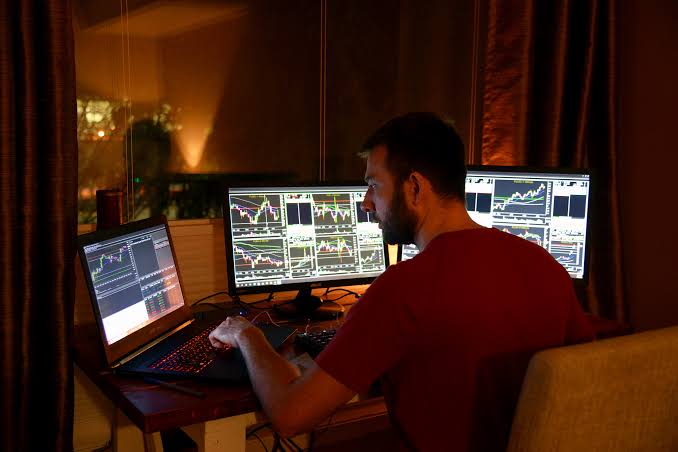
man working - Day Trading Average Income

Eight factors shape what a day trader actually earns, and most of them have nothing to do with picking the right stock. They operate quietly in the background, compressing or expanding income before a single position closes.

1. Transaction Costs: The Invisible Tax on Every Trade

The failure point is usually not the strategy. It is the friction surrounding the strategy. Bid-ask spreads, commissions, and slippage work like a slow leak in a tire: individually small, collectively devastating. Active traders running high-frequency approaches can lose 3 to 9% of monthly equity purely to trading costs, not to bad calls, but to the structural price of participation.

Zero-commission brokers create a false sense of cost-free trading. Spreads are still embedded in the execution pricing, meaning every market order carries a hidden charge that compounds across dozens of trades. A trader targeting a 1% daily gain who loses 0.3 to 0.8% daily to friction is not running a profitable system. They are running an expensive one that occasionally looks profitable.

2. Trade Frequency: Why More Trades Often Means Less Money

The same issue arises in both retail trading data and behavioral finance research: higher activity does not produce higher income. It results in higher costs and greater opportunities for behavioral error. Selectivity is not a personality trait. It is a mathematical requirement for preserving expectancy per trade.

Traders who overtrade are not simply impatient. They are compounding cost exposure with every additional entry. The income ceiling for an active trader is not set by how many trades they take. It is set by how efficiently each trade converts edge into net profit after friction.

3. Leverage: The Tool That Distorts Income Stability

Leverage is one of the most misunderstood income variables in day trading. It does not increase long-term expectancy. It increases the volatility of outcomes and the probability of catastrophic drawdown. A 1 to 2% adverse price move can translate into a 4 to 10% equity loss, depending on the leverage applied, meaning a single bad session can undo weeks of consistent gains.

The income instability that leverage creates is not a risk warning in fine print. It is a structural reality that reshapes what monthly earnings actually look like. Consistent income and high leverage are rarely compatible, because leverage turns normal variance into account-threatening events.

4. Asset Selection: Profitability Starts Before the Trade

Two traders with identical strategies, identical win rates, and identical risk management can produce completely different income outcomes based purely on what they trade.

  • High-liquidity instruments like major FX pairs or large-cap indices compress slippage and tighten execution.

  • Low-liquidity assets like thinly traded altcoins or micro-cap stocks can introduce multi-percent execution gaps on ordinary market orders during volatility spikes.

Asset selection is not a secondary decision. It is an income decision made before any analysis begins. The trader who chooses their instruments carefully has already protected a portion of their edge before the market opens.

5. Strategy Expectancy: The Math That Actually Drives Income

A 70% win rate strategy can still lose money. A 40% win rate strategy can generate consistent income. The difference is expectancy, calculated as the product of win rate and average win size, minus the product of loss rate and average loss size. Win rate without reward-to-risk context is a meaningless number.

This distinction matters because most traders optimize for feeling right rather than for mathematical edge. Chasing high win rates while ignoring average loss size is how profitable-looking strategies quietly drain accounts over time. Income follows expectancy, not confidence.

6. Capital Base: The Ceiling Most Traders Hit First

According to AmeriSave, only 10% or less of day traders are consistently profitable over time, and even within that group, capital base remains the primary income constraint. A trader generating a sustainable 3% monthly return on a $10,000 account earns $300 that month. The same trader with $100,000 earns $3,000. The skill level is identical. The income is not.

This is the constraint that skill alone cannot solve. Income scales with capital, and capital grows slowly under responsible risk management. Traders who understand this stop chasing higher percentage returns and start focusing on growing the account that makes those percentages meaningful.

Most traders handle this by attempting to force larger returns from small accounts, taking on excessive risk to compensate for limited capital. That approach accelerates drawdowns rather than income. Best prop trading firms offer a different path:

  • Access to funded accounts with significantly larger capital bases

  • Profit splits typically range from 70 to 90%

  • Scaling potential up to $2M or more across accounts

The evaluation criteria, drawdown rules, and payout structures vary considerably between firms, which means the choice of firm directly shapes take-home income in ways that strategy alone cannot.

7. Execution Quality: Where Sound Strategies Go to Die

The critical difference between a strategy that works in backtesting and one that works in live markets is often execution quality, not logic.

  • Delayed fills

  • Partial fills

  • Spread widening during volatile sessions

Introduce a measurable disadvantage in slippage relative to institutional participants. A setup that looked clean on a chart becomes a losing trade when the fill arrives 0.3% worse than expected.

Platform reliability, order routing speed, and spread conditions during high-volatility windows are not technical footnotes. They are income variables. Two traders using the same system on different platforms can produce meaningfully different monthly results purely from execution friction.

8. Behavioral Discipline: The Gap Between Backtested and Real Income

Every trader has experienced the version of themselves that follows the system and the version that does not.

  • Revenge trading after a loss

  • Scaling down out of fear after a drawdown

  • Exiting as a winner early

Because it feels good does not reflect a strategic flaw. They reflect the gap between theoretical performance and real execution.

Plugging the Holes of Behavioral Leakage

Research consistently identifies behavioral leakage as a primary reason profitable systems underperform in live trading. The system works. The system breaks down under emotional pressure. Closing that gap is not a mindset exercise. It is a measurable income improvement because every avoided revenge trade and every held position that hits its target adds directly to net monthly earnings.

Knowing which factors drain income is clarifying. But knowing exactly which adjustments to make, in which order, with which tools, is where most traders still get stuck.

Related Reading

15 Tips to Make Day Trading Profitable in 2026

tips to remember - Day Trading Average Income

Turning a leaky system into a profitable one comes down to removing the right friction in the right order. Most traders already know the theory. The gap is in the execution details they keep skipping.

1. Trade Only What You Can Prove

The failure point is usually a strategy that has never been tested against enough data to mean anything. Before risking real capital, backtest a minimum of 100 to 300 trades and track four numbers:

  • Win rate

  • Average win versus average loss

  • Maximum drawdown

  • Expectancy per trade

A strategy with positive expectancy is not a guarantee, but it is the only honest foundation for a stable monthly income. Without it, you are not trading a system. You are gambling with extra steps.

Approximately 70 to 80% of day traders lose money over any given year, and the traders who beat that statistic almost always share one trait: they traded proven setups instead of reacting to market noise.

2. Fewer Trades, Sharper Results

A common pattern surfaces in traders at every experience level: the more they trade, the worse their net returns. Overtrading inflates friction costs and pulls you into low-quality setups that dilute your edge. The fix is a strict filter. Only enter trades that match your historically tested setup criteria, and sit out the in-between conditions where the market offers no clear signal. Fewer trades with higher individual expectancy outperform high-frequency activity almost every time, once you account for real execution costs.

3. Cap Risk Before You Think About Reward

TMGM Trading Academy recommends risking no more than 1 to 2% of trading capital on a single trade, and that ceiling exists for a specific reason. A 10% risk-per-trade model can wipe out 65% of an account across ten consecutive losses, a sequence that is statistically normal in volatile markets. Capping risk at 0.5 to 2% per trade keeps drawdowns survivable and allows compounding to actually work. Compounding only functions when the account is still alive.

4. Win Rate Is the Wrong Scorecard

The truth is, a 70% win rate can still produce a losing account. If your average loss is three times your average win, the math does not care how often you are right. Shift focus to risk-to-reward ratio and average trade value instead. A 40% win rate with a 3:1 reward-to-risk ratio generates consistent net profit. Optimizing for expectancy rather than accuracy is the adjustment that separates traders who look profitable from traders who actually are.

5. Stop Using Leverage to Chase Size

Leverage does not improve your edge. It amplifies the volatility of your returns without changing the underlying probability that any trade will work. The traders who blow up accounts are rarely underskilled. They are usually skilled traders who use leverage to increase risk per trade rather than to size positions efficiently within a fixed risk model. Use leverage to execute your position cleanly, not to take on more exposure than your risk cap allows.

6. Choose Liquidity, Then Strategy

Low-liquidity assets punish execution. Wider spreads and unpredictable slippage quietly drain returns on every single trade, regardless of how good the setup looks on a chart. Focusing on major FX pairs, high-cap indices, and liquid futures reduces that hidden cost leakage. This is not about avoiding risk. It is about making sure the risk you take is the risk you intended to take, not the extra tax that illiquid markets charge at entry and exit.

7. Fix Position Sizing Before Fixing Strategy

Emotional position sizing is one of the most consistent account killers in retail trading. A trader who sizes up after a loss to recover faster, or scales down out of fear after a winning streak, is introducing noise into the one variable they can fully control. A fixed risk model removes that noise entirely. Position size is determined by your risk cap and stop distance, not by how yesterday's session felt. This single change prevents the rare but catastrophic loss that erases weeks of disciplined gains.

8. Avoid News Events or Reduce Size Sharply

During CPI releases, NFP reports, and central bank announcements, spreads widen and fills become unpredictable. A setup that would cost you two pips in normal conditions might cost eight during a volatility spike.

The income impact is direct: execution costs that spike during news events turn profitable setups into break-even or losing trades. Either reduce position size significantly during major releases or step away entirely. Protecting execution quality is protecting net income.

9. Log Every Cost, Every Trade

Most traders underestimate what they actually pay per trade once spreads, commissions, and slippage are combined. Logging true cost per trade in real time, not estimated at month end, reveals whether a strategy is profitable after execution or only profitable on paper. This is not an administrative task. It is the difference between knowing your edge is real and assuming it is.

The familiar approach for most traders is to evaluate performance by looking at wins and losses, without ever isolating execution costs as a separate line item. As the account scales, that oversight compounds. TradingPilot helps traders compare prop firm environments side by side, including fee structures, payout speeds, and profit splits ranging from 70 to 90%, so execution costs and income potential are visible before capital is committed rather than discovered afterward.

10. Test Execution Before You Scale Capital

A strategy that performs well in backtesting can underperform in live conditions because backtesting does not replicate real slippage, partial fills, or spread expansion during volatility. Running 20 to 50 trades in a live simulation environment and measuring fill quality, slippage per trade, and performance drift versus your backtest closes that gap before it costs real money. This is not optional preparation. It is the diagnostic step that tells you whether your edge survives contact with actual markets.

11. Commit to One Strategy Long Enough to Know

The same issue recurs among traders who never achieve consistency: they switch strategies before any single approach has produced a statistically meaningful sample. 100 to 300 trades are the minimum required before a strategy can be fairly evaluated. Abandoning a potentially profitable edge after thirty trades because of a drawdown is like canceling a business after one slow month. Patience here is not a personality trait. It is a measurable income protection decision.

12. Use Time Filters to Cut Noise

Not all trading hours carry equal signal quality. Low-volume periods generate noise that appears to be opportunity but carries no real edge. Applying time filters, trading only during high-liquidity sessions, and avoiding the dead zones between major market opens improves the signal-to-noise ratio of every setup you take. Fewer, cleaner signals mean higher expectancy per trade and lower cost drag over the month.

13. Scale Only After Consistency Is Documented

The failure mode here is specific:

  • A trader has two good weeks.

  • Increases position size significantly.

  • Then hits a normal drawdown that now causes outsized damage because the size was premature.

Scale position size only after two to three months of consistent profitability with controlled drawdowns. Consistency documented over time is the only honest signal that an edge is real and repeatable, not just a favorable streak.

14. Protect Drawdown Before Chasing Profit

Setting a maximum monthly drawdown limit, typically 5 to 10% of account equity, is not a conservative move. It is a survival mechanism. Traders fail not because they lack skill but because they do not stay in the game long enough for compounding to work. A hard drawdown ceiling forces a reset before a bad stretch becomes unrecoverable. Compounding requires continuity. Continuity requires limits.

15. Treat Every Trade as a Business Decision

Income in trading equals expectancy minus costs minus behavioral losses. That formula is not abstract. It is the actual calculation behind every month's net result. Evaluating each trade by its expected return, cost of execution, and probability-weighted outcome removes the prediction mindset and replaces it with a structured performance process.

The traders who build a stable monthly income are not better at forecasting. They are better at running a cost-adjusted operation where every variable is tracked and every leak is closed. But knowing your numbers and knowing whether those numbers are actually good enough are two very different things, and that gap is where most traders quietly stall.

Related Reading

  • Forex Trading Profit Per Day

  • Maximum Leverage Ratio

  • Small Account Trading

  • Trading E Mini Futures

  • Best Crypto Leverage Trading Platforms

  • Day Trading Average Income

  • Small Account Options Trading

  • Crypto Trading With Leverage

  • Trading Goals

  • Best Futures To Day Trade

  • Futures Brokers With Low Intraday Margin

Turning Profitability Into Something Measurable (Not Assumed)

The gap between knowing your numbers and trusting them is exactly where income stalls. Most traders assume their strategy works because it felt profitable in backtests or over a short live run. That assumption, left unverified, is what quietly caps earnings at a level that never compounds into anything real.

Traders who close that gap tend to do one thing differently: they compare their execution results against structured benchmarks before scaling capital. TradingPilot helps with this directly by giving traders a side-by-side view of prop firm profit splits, drawdown rules, and payout conditions, so the firm you choose reinforces your verified edge rather than working against it.

Finding the right-fit firm through the best prop trading firms is not a secondary decision. For most traders, it is the single most controllable variable left once strategy and execution are already dialed in.